A warehouse faces an unexpected increase in orders. A hotel needs additional room attendants for a busy weekend. Meanwhile, an event organiser discovers gaps in the upcoming security rota. These situations create immediate staffing requirements, but they do not always justify permanent recruitment.
Recruitment agencies can help employers find suitable short-term personnel while keeping recruitment arrangements aligned with operational demand. Rather than committing to long-term appointments for temporary requirements, businesses can explore agency support for defined shifts, projects or busy periods.
Based in Hounslow, West London, H&D Recruitment supports employers across Security, Warehouse & Logistics and Hospitality. This guide explains how recruitment agencies work, what employers should compare and how to prepare a clear staffing request.
How Do Recruitment Agencies Help Employers Find Short-Term Staff?
Recruitment agencies help employers define staffing requirements, source potentially suitable candidates and coordinate temporary assignments. Businesses can request personnel for specific roles, shifts or periods, depending on candidate availability and assignment conditions. This approach supports changing operational needs without automatically creating an additional permanent position.
However, successful agency recruitment begins with accurate information. Employers should specify the role, required headcount, location, working hours, experience and expected duration.
Why Businesses Use Recruitment Agencies for Temporary Cover
Not every staffing shortage represents a permanent vacancy. Businesses regularly encounter short-term changes that affect daily operations.
For example, warehouse dispatch volumes may increase for several days, while a hotel could experience higher room occupancy during a conference. Similarly, a commercial site may need additional personnel for a temporary event.
Employers commonly explore temporary staffing for:
- Unexpected employee absences and annual leave
- Seasonal increases in customer demand
- Weekend and evening shifts
- Temporary production or distribution projects
- Short-term hospitality events
- Additional commercial security assignments
- Interim cover while permanent recruitment continues
Recruitment agencies can support these requirements through role-specific candidate sourcing. Nevertheless, businesses should confirm availability before depending on agency personnel for a particular shift.
Employers expecting holiday demand can also review recruitment agencies for holiday hiring to understand how advance staffing plans may support busy periods.
Short Term Staff vs Permanent Recruitment
Hiring short term staff differs from recruiting permanent employees because the underlying business requirement may last only a few shifts, weeks or months.
Temporary staffing generally focuses on defined assignments. Permanent recruitment, by contrast, aims to fill a continuing business position.
Before choosing between them, employers should consider:
- How long the requirement will continue
- Whether demand is predictable or temporary
- The recruitment and onboarding workload
- Required qualifications and experience
- Agency fees and other employment costs
- The amount of supervision required
- Whether the position could become permanent
Recruitment agencies may also support organisations that require a combination of temporary and permanent hiring.
However, short-term staffing does not automatically cost less than direct employment. Employers should compare the complete arrangements before deciding.
Comparing Temporary Staffing and Permanent Recruitment
| Staffing Arrangement | Typical Business Requirement | Important Considerations |
|---|---|---|
| Temporary agency staffing | Defined assignments or changing workloads | Candidate availability, agency rates and supervision |
| Short-term shift cover | Absences or isolated staffing gaps | Short notice and role requirements |
| Seasonal staffing | Christmas, summer or recurring demand | Advance planning and candidate demand |
| Part-time staffing | Recurring shifts with limited hours | Availability and working patterns |
| Permanent recruitment | Continuing business positions | Recruitment process and ongoing employment costs |
| Combined arrangements | Permanent core team with seasonal peaks | Coordination and consistent site procedures |
The right arrangement depends on business requirements, staffing duration, recruitment costs and operational priorities.
When Should Employers Hire Temporary Agency Workers?
Employers should consider temporary agency workers when they can identify a defined staffing gap but do not need an ongoing appointment.
For instance, a distribution centre may require extra pickers for a planned dispatch increase. Alternatively, a hotel might need additional housekeeping personnel while several employees take annual leave.
Recruitment agencies are particularly relevant when businesses know the duties, working hours and expected assignment duration.
Where shortages recur every week, employers should review their wider staffing plan rather than repeatedly treating the same issue as an isolated emergency.
How a Staff Supply Agency Supports Operational Continuity
A staff supply agency connects employer requirements with potentially suitable personnel. This can reduce some of the internal sourcing work involved in filling temporary positions.
However, effective staffing also depends on communication between the employer, agency and assigned personnel.
Shift instructions, reporting locations, supervisor details and changes to working hours should remain clear.
Recruitment agencies can help coordinate short-term requirements across different operating environments.
Meanwhile, employers remain responsible for establishing suitable site procedures, communicating workplace expectations and clarifying supervision arrangements.
Recruitment Agencies for Warehouse and Logistics Staffing
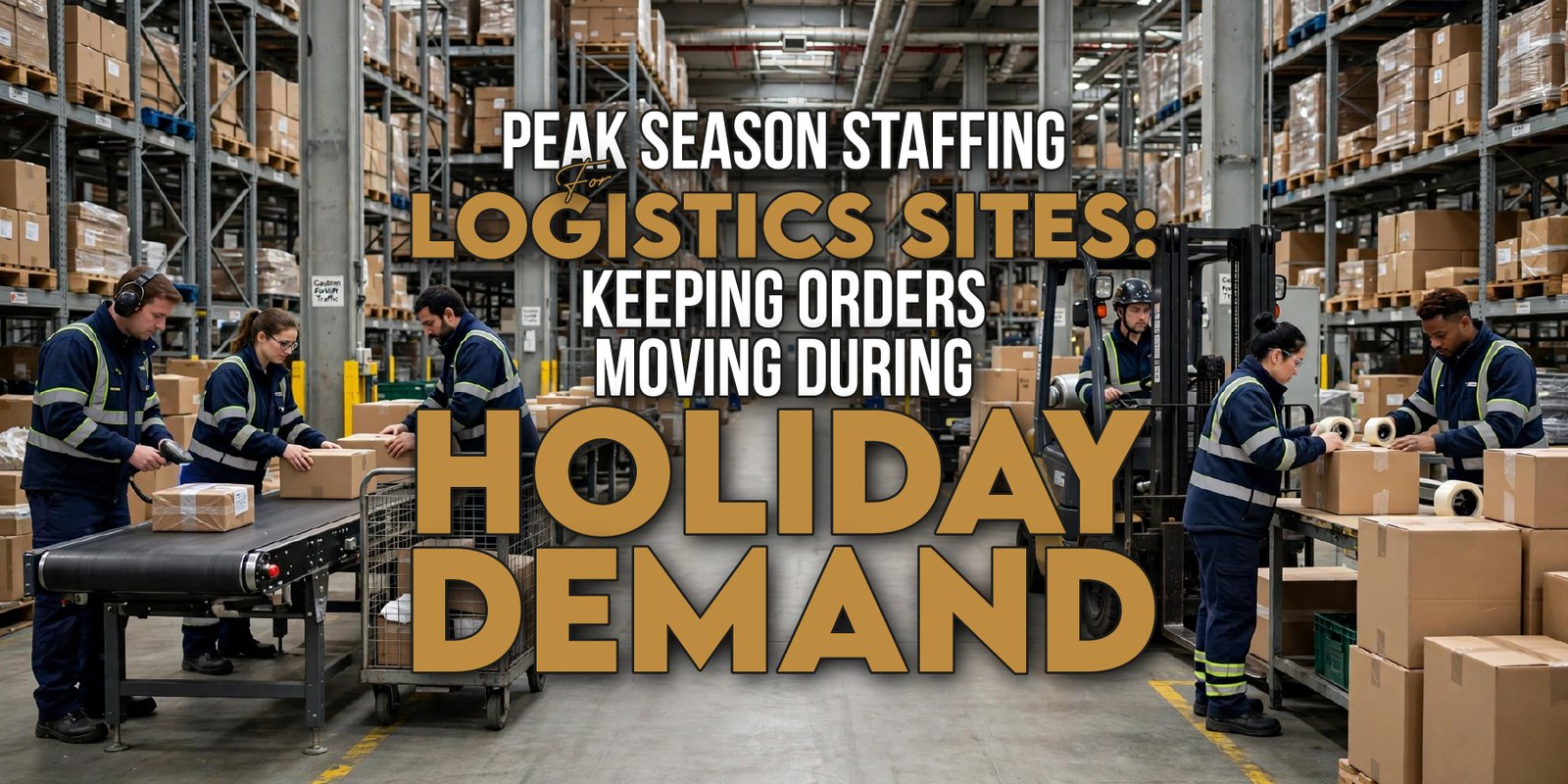
Warehouse operations often experience changing order volumes, dispatch deadlines and goods-handling requirements. Consequently, staffing requirements may increase during peak trading periods or when employees are absent.
H&D Recruitment supports relevant warehouse and logistics roles, including:
- Warehouse Operatives
- Pickers and Packers
- Forklift Drivers
- Reach Truck Operators
- Flexi Forklift Operators
- Van Drivers
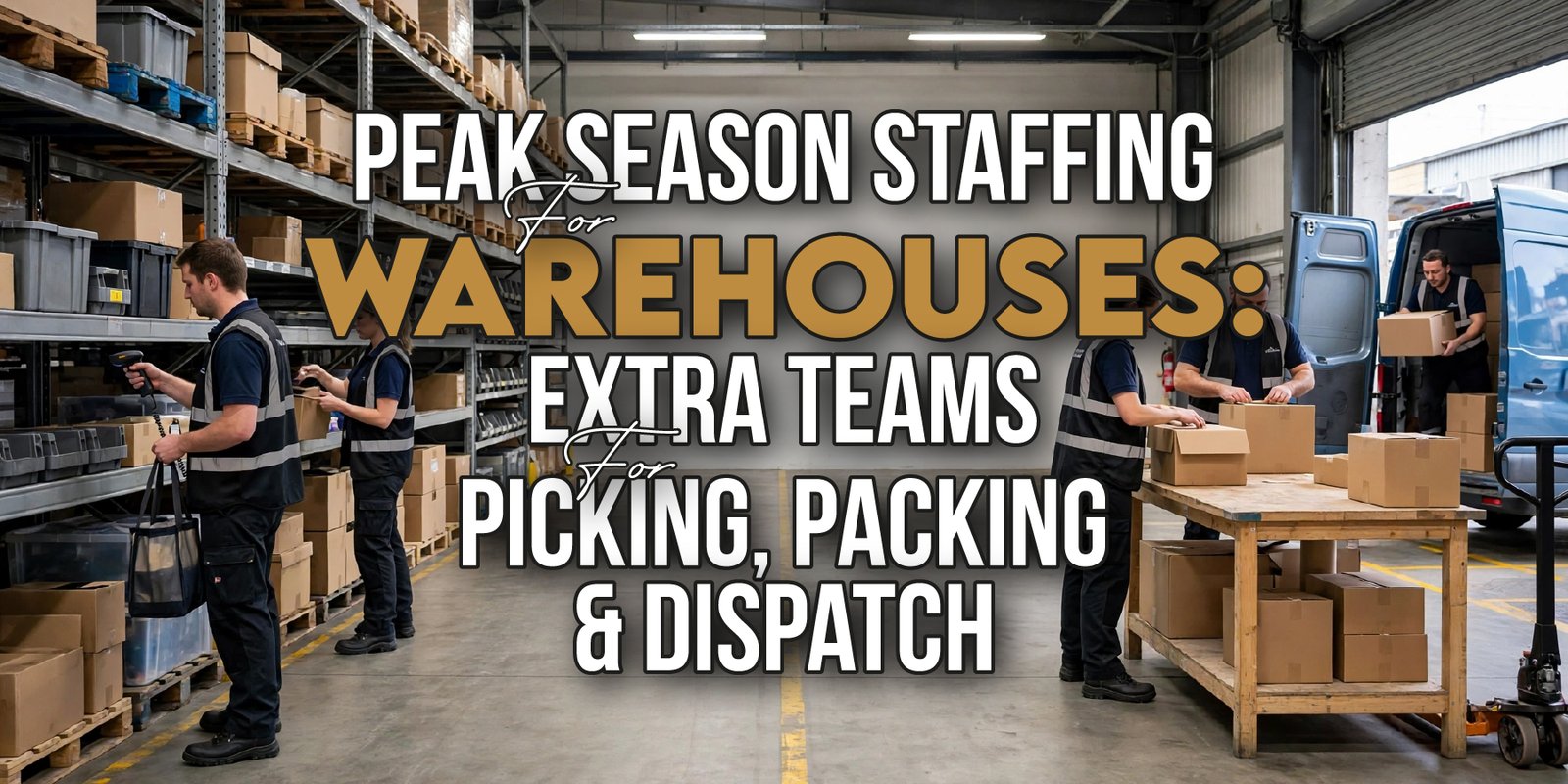
These positions support different activities. For example, pickers and packers help fulfil orders, while appropriately trained equipment operators may support stock movement and loading operations.
Equipment-related duties require suitable competence and any necessary employer-specific authorisation.
Employers operating locally can also explore temporary staffing support in West London when planning additional warehouse or logistics personnel.
Short-Term Hospitality Staffing for Hotels and Venues
Hospitality demand changes with room occupancy, conferences, events and weekend bookings.
Hotels may need more personnel during busy periods without increasing permanent headcount for every temporary requirement.
H&D Recruitment supports relevant hospitality roles, including:
- Housekeepers and Room Attendants
- Waiters and Waitresses
- Porters and Linen Porters
- Public Area Cleaners
- Bartenders
- Relevant reception and operational support
For example, a hotel expecting a high number of departures may need additional room attendants to support its housekeeping schedule.
Similarly, a venue hosting a corporate function may require temporary food and beverage personnel.
Recruitment agencies can assist with candidate sourcing for these needs. Nevertheless, employers should communicate expected duties, service standards, uniform requirements and the supervisor responsible for each assignment.
Temporary Security Staffing for Commercial Sites and Events
Commercial security requirements can change when venues host events, businesses arrange temporary access arrangements or employers experience gaps in their guarding schedules.
H&D Recruitment supports relevant positions such as SIA Door Supervisors, security personnel, CCTV Operators, Event Stewards and Event Supervisors.
However, the responsibilities and licensing requirements differ between roles.
Event stewarding does not automatically involve the same licensable duties as door supervision or other frontline security activities.
Therefore, employers should specify the assignment location, duties, event schedule and any relevant licensing requirements.
Recruitment agencies can then assess the staffing request against appropriate candidate profiles and availability.
Recruitment Agencies vs Direct Hiring: What Should Employers Compare?
Recruitment agencies and direct hiring can both support workforce requirements, but they involve different administrative and operational considerations.
Direct hiring may suit organisations building their permanent team. Agency recruitment, meanwhile, may be appropriate for temporary gaps or defined assignments.
Employers should compare candidate sourcing, internal recruitment time, onboarding requirements, supervision, assignment duration and the complete cost of each arrangement.
Furthermore, businesses should understand the applicable employment and agency worker responsibilities rather than assuming the recruitment provider handles every workplace obligation.
Review Your Short-Term Staffing Requirements With H&D Recruitment
Before requesting temporary personnel, establish which roles need cover, how many people are required and when each shift begins and ends.
Additionally, confirm the work location, experience requirements, expected assignment duration and reporting arrangements.
H&D Recruitment can discuss relevant staffing requirements across its Security, Warehouse & Logistics and Hospitality specialisms.
Employers can request a temporary staffing quote and provide details of their operational needs.
Candidate availability and suitable arrangements depend on the specific assignment.
What Information Do Recruitment Agencies Need From Employers?
Recruitment agencies can assess a staffing request more effectively when the employer provides accurate information at the outset.
A practical employer brief should include:
- Business name and worksite address
- Job role and main responsibilities
- Required number of personnel
- Shift dates and start and finish times
- Expected assignment duration
- Essential experience or qualifications
- Relevant licences where applicable
- Uniform and PPE requirements
- Site induction arrangements
- Supervisor and reporting contact
- Any relevant operational instructions
For example, requesting six warehouse operatives without identifying the shift hours may leave important questions unanswered.
Providing the complete brief helps the agency discuss suitable candidates and practical arrangements.
Recruitment Agencies in Hounslow and West London
H&D Recruitment operates from 4 Bell Parade, Bell Road, Hounslow, TW3 3NU, supporting employers with relevant staffing requirements.
The surrounding commercial areas include Heathrow, Feltham, Hayes, Southall, Brentford, Ealing, Richmond, Twickenham and Slough.
For businesses seeking recruitment agencies, location matters because shift timings, transport arrangements and workplace requirements can influence candidate suitability.
Employers can explore staffing solutions across West London and discuss their requirements with H&D Recruitment.
Service arrangements should be discussed according to the assignment location.
Short-Term Staffing During Holiday and Seasonal Demand
Seasonal changes create temporary staffing requirements across multiple industries.
Warehouses may experience increased fulfilment activity before Christmas, while hospitality venues may prepare for conferences, celebrations and holiday occupancy.
Recruitment agencies can help employers plan additional staffing around these periods, subject to candidate availability and role requirements.
However, seasonal staffing works better when managers communicate anticipated demand before the busiest shifts arrive.
Employers can review holiday staffing and seasonal recruitment as part of their wider workforce planning.
Businesses should also distinguish predictable seasonal demand from unexpected absences.
Common Mistakes Employers Make When Requesting Temporary Staff
Temporary recruitment becomes more difficult when essential assignment details remain unclear.
Common mistakes include:
- Requesting personnel without confirming exact duties
- Providing an inaccurate headcount
- Leaving start or finish times undecided
- Assuming all candidates have identical experience
- Overlooking site induction requirements
- Failing to identify relevant equipment or PPE
- Not providing a supervisor contact
- Changing the assignment without informing the agency
Recruitment agencies rely on accurate instructions to identify suitable candidates.
Therefore, employers should review the staffing brief before confirming the requirement.
For planned seasonal demand, planning temporary staff during busy holiday periods can help businesses organise roles and shift requirements earlier.
How H&D Recruitment Supports Employers With Short-Term Staffing
H&D Recruitment provides employer hiring support across three core sectors: Security, Warehouse & Logistics and Hospitality.
The company can discuss temporary staffing needs, role-specific candidate sourcing and assignment arrangements.
Consequently, employers can explain their operational requirements rather than beginning every staffing search independently.
Businesses across Hounslow and neighbouring commercial areas may also review West London employer staffing options when considering local recruitment support.
For individual assignments, employers can discuss their short-term staffing requirements with H&D Recruitment.
The appropriate next steps depend on the role, shift pattern, location and candidate availability.
How Agency Opportunities Differ for Employers and Jobseekers
Recruitment agencies support two related but different groups.
Employers request personnel for operational requirements, while candidates explore opportunities that match their skills and availability.
A business requesting temporary staff should use the employer enquiry process.
Conversely, candidates seeking assignments can explore current recruitment opportunities through the jobseeker route.
These separate pathways help businesses communicate staffing needs while allowing applicants to focus on relevant vacancies.
For candidates considering temporary and permanent assignments, H&D Recruitment also provides a route to view available roles with H&D Recruitment.
UK Employment and Agency Staffing Considerations
Temporary staffing arrangements require attention to applicable employment obligations, role requirements and workplace procedures.
Depending on the circumstances, employers and employment businesses may need to consider Right to Work checks, agency worker rights, relevant qualifications, workplace health and safety, assignment information and supervision.
For security assignments, relevant SIA licensing depends on the specific licensable activity.
Likewise, equipment-related warehouse roles may require suitable training, competence and site authorisation.
Recruitment agencies and employers should clarify their respective responsibilities before an assignment begins.
Individual requirements depend on the working arrangement and applicable law.
1. How do recruitment agencies help businesses find short-term staff?
Recruitment agencies help employers describe their staffing needs, identify potentially suitable candidates and coordinate relevant temporary assignments.
Employers normally provide the role, location, working hours and expected duration.
The agency can then discuss available options. Actual staffing arrangements depend on candidate suitability, availability and the assignment requirements.
2. When should employers use temporary agency workers?
Employers may consider temporary agency workers for annual leave, short-term projects, seasonal activity or defined staffing gaps.
However, organisations should assess whether the requirement is temporary or recurring.
Regular shortages may indicate a wider staffing issue that requires additional workforce planning.
3. Can recruitment agencies provide staff for just a few shifts?
Recruitment agencies may support assignments lasting only a few shifts, depending on the role, work location and available candidates.
Employers should provide exact dates, start and finish times, required headcount and relevant qualifications.
No staffing provider should be assumed to have immediate availability for every assignment.
4. What is the difference between temporary agency staffing and permanent hiring?
Temporary agency staffing generally covers defined assignments or changing workloads, while permanent recruitment addresses continuing positions.
Both require suitable candidates and appropriate workplace arrangements.
Employers should compare overall costs, expected duration, onboarding responsibilities and operational requirements before choosing between them.
5. Can H&D Recruitment supply warehouse, hospitality and security personnel?
H&D Recruitment supports recruitment across Security, Warehouse & Logistics and Hospitality.
Relevant roles include warehouse operatives, pickers and packers, room attendants, porters, SIA Door Supervisors and event personnel.
Availability depends on the location, dates, role specifications and suitable candidate supply.
6. What information should employers provide when requesting short-term staff?
Employers should provide the role, number of personnel, worksite address, shift dates, working hours, expected duration and essential experience.
Relevant licences, uniforms, PPE and induction arrangements also matter.
Clear information helps recruitment agencies understand the assignment and discuss appropriate staffing options.
7. Does H&D Recruitment support employers in Hounslow and West London?
H&D Recruitment is based in Hounslow, West London.
Businesses in surrounding areas, including Heathrow, Feltham, Hayes and Brentford, can discuss relevant staffing requirements.
Recruitment agencies must still assess each assignment according to the location, role and candidate availability rather than promising universal coverage.
8. How can jobseekers find opportunities through H&D Recruitment?
Candidates interested in warehouse, hospitality or security assignments can find temporary and permanent job opportunities through H&D Recruitment’s candidate route.
Applicants should review relevant roles and provide accurate information about their experience, qualifications and availability.
Employers requiring staff should use the separate enquiry process.
What Should Employers Prepare Before Requesting Temporary Staff?
Before contacting an agency, confirm the staffing requirement internally.
Identify which duties need cover, who will supervise the personnel and whether the assignment is temporary or likely to continue.
Next, review any role-specific qualifications, site instructions, uniform requirements and shift arrangements.
Furthermore, provide realistic dates and communicate any foreseeable changes.
Recruitment agencies can work with a clearer brief when employers describe the actual operational need rather than requesting personnel without supporting details.
Discuss Your Short-Term Staffing Needs With H&D Recruitment
Employers facing temporary staffing gaps can discuss their requirements with H&D Recruitment, based in Hounslow, West London.
The company supports recruitment across Security, Warehouse & Logistics and Hospitality, including relevant short-term operational assignments.
Whether your business needs warehouse operatives for an additional shift, housekeeping personnel for a busy hotel or suitable security staff for a defined assignment, start by confirming your required headcount, location, duties and working hours.
Recruitment agencies can then discuss potential staffing arrangements according to role requirements and candidate availability.
To begin, request a short-term staffing quote from H&D Recruitment.