A recruitment agency can help jobseekers explore temporary, part-time, full-time and flexible opportunities across different business sectors. However, the right role depends on current vacancies, experience, licences, location, transport, shift availability and individual employer requirements.
For candidates who want to explore warehouse, hospitality, security or operational work, understanding how agency recruitment works can make applications more focused. H&D Recruitment operates from 4 Bell Parade, Bell Rd, Hounslow TW3 3NU, and its current candidate-facing application journey covers security, warehouse and hospitality roles.
The wider brief also positions H&D Recruitment across warehouse and logistics, hospitality, security and industrial or manufacturing-related opportunities where available.
How Can a Recruitment Agency Help Jobseekers?
A recruitment agency can help jobseekers discover current vacancies, understand job requirements, match their experience and availability to suitable roles, submit applications and explore temporary or flexible work across different sectors. However, registering with an agency does not guarantee a job because vacancies, employer requirements and candidate suitability can change.
For candidates, one benefit is having a structured route between businesses that need people and individuals looking for suitable opportunities.
For example, someone with warehouse experience may consider picker, packer, loader or stock roles. Meanwhile, a candidate with customer-service experience may find hospitality or front-of-house positions more relevant where current vacancies exist.
A recruitment agency may also explain practical requirements such as shift patterns, site location, licences, experience or documentation before a candidate progresses.
What Does a Recruitment Agency Do for Jobseekers?
A recruitment provider typically connects vacancies with potentially suitable candidates. It may advertise jobs, collect applications, review candidate information, discuss availability, check documents where appropriate and introduce suitable applicants to employers.
The process does not automatically result in placement. Instead, suitability depends on the vacancy, candidate information, current employer requirements and any necessary checks.
What Is a Recruitment Agency for Jobseekers?
A recruitment agency works between employers that need people and candidates who are looking for suitable opportunities.
A simple relationship is:
Employer → Recruitment Agency → Vacancy → Candidate → Screening/Application → Placement
For example, an employer may need several warehouse operatives for a busy period. The agency can review the requirement, identify potentially suitable candidates and progress applications according to the employer’s criteria.
However, candidates should understand the difference between registration and placement. Registration means the agency has received your information. It does not mean a vacancy has been guaranteed.
Similarly, the same candidate may suit one role but not another because shift times, location, licences, experience or physical requirements can differ.
How Does a Recruitment Agency Work When You Are Looking for a Job?
Although the exact process varies, a recruitment agency commonly follows these stages:
- An employer identifies a vacancy or staffing requirement.
- The agency reviews the role, including duties, shifts, location and essential requirements.
- Jobseekers register or apply for relevant vacancies.
- Candidate suitability is reviewed against the role.
- Relevant applicants may be contacted for further information.
- Documents, licences or certifications may be checked where appropriate.
- Suitable candidates may be presented or matched to the requirement.
- An interview, briefing or further assessment may follow depending on the role.
- Successful applicants receive relevant role or shift instructions.
Because sectors differ, the process is not identical for every candidate.
For instance, licensed security work may require specific SIA credentials, while a forklift position can require relevant certification. A general hospitality position may instead place greater emphasis on customer service, presentation or previous experience.
Why Do Employers Use Temporary Recruitment?
Employers use temporary recruitment when staffing demand changes for a limited or uncertain period. Common reasons include seasonal peaks, staff absence, events, hotel occupancy, warehouse volume, production demand, new contracts, short projects and extended operating hours.
For candidates, this matters because temporary recruitment can create opportunities for short-term work, flexible shifts or additional experience.
For example, when an employer requires staff supply during a busy warehouse period, vacancies may arise for pickers, packers, loaders or warehouse operatives.
Likewise, employer recruitment support during a busy hotel period can create housekeeping, waiting or guest-service opportunities.
Meanwhile, workforce hiring around events or busy operational periods may create security or stewarding requirements.
Temporary roles do not all work in the same way. Some assignments may last for a defined period, while others depend on changing business demand.
What Jobs Can You Find Through H&D Recruitment?
H&D Recruitment’s current candidate journey covers security, warehouse and hospitality opportunities. Its live Find a Job page currently lists roles in those sectors, including warehouse picking and packing, hospitality and licensed security positions.
Actual vacancies change. Therefore, candidates should always check current role details before applying.
Warehouse and Logistics Jobs
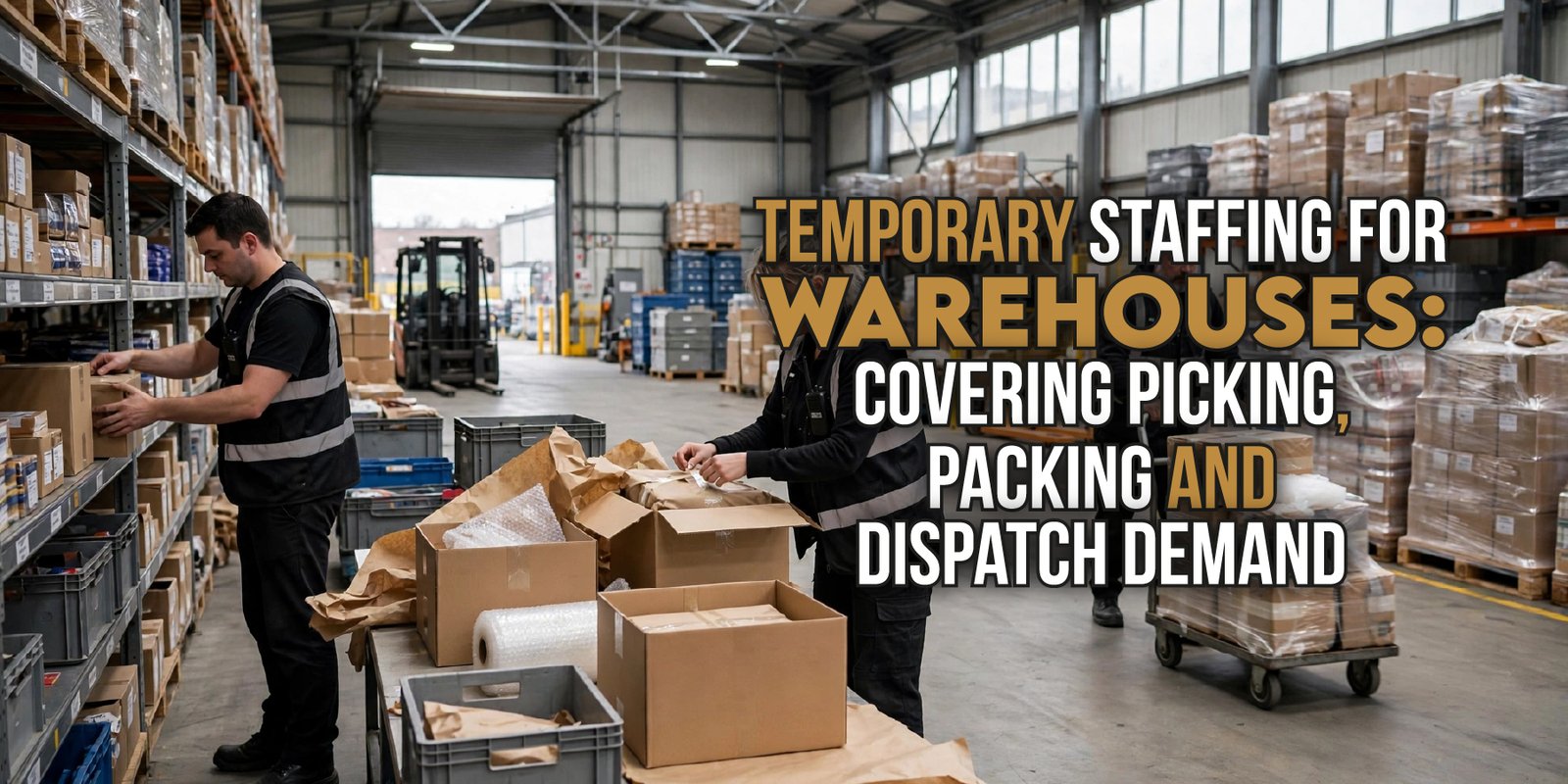
Warehouse and logistics opportunities may include:
- Warehouse Operatives
- Pickers
- Packers
- Loaders
- Forklift Drivers
- Stock Staff
- Dispatch Roles
- Returns Roles
- Reach Driver roles where available
- Flexi Driver roles where available
- Van Driver roles where available
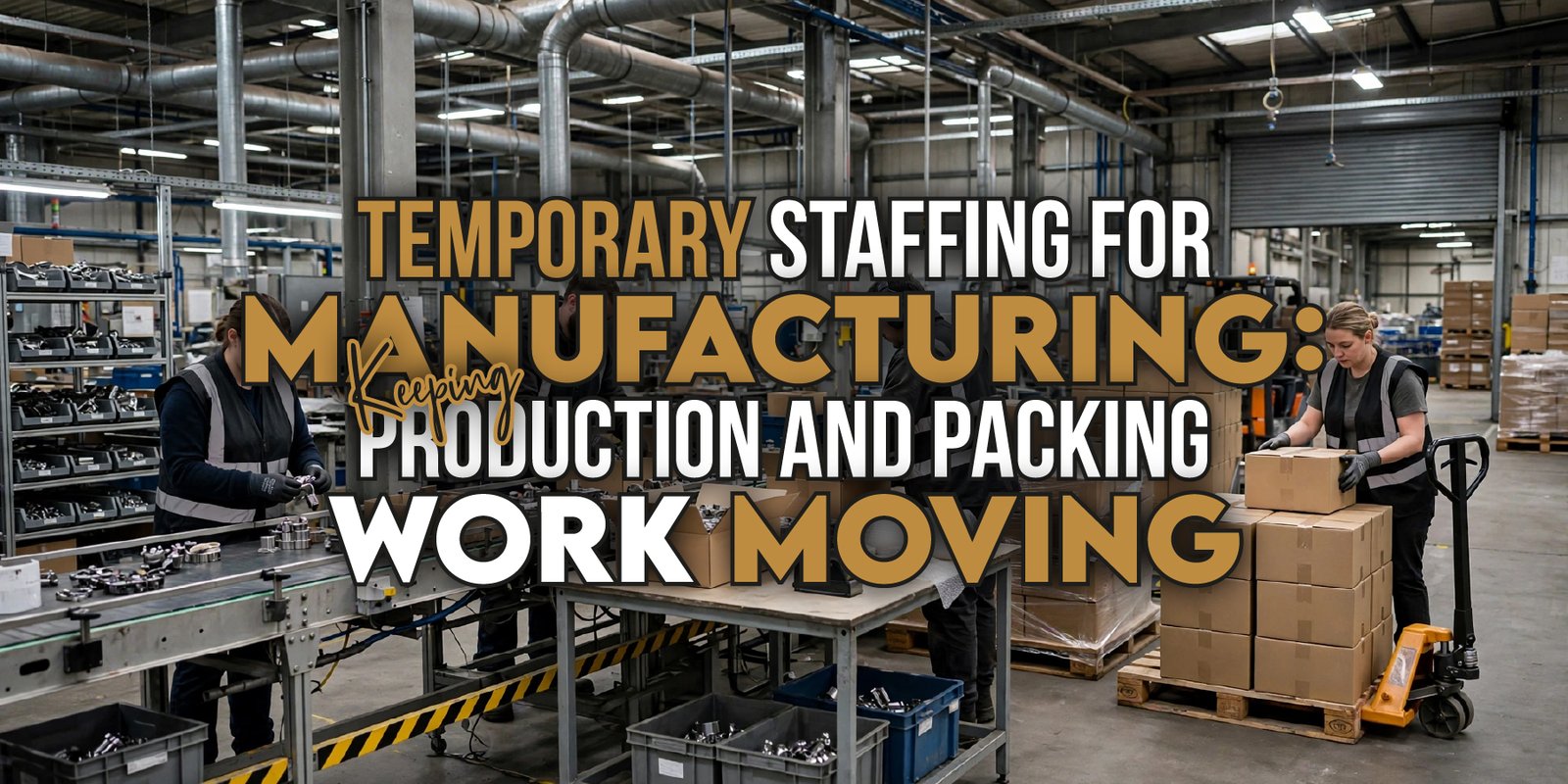
Current H&D content covers warehouse functions such as picking, packing, scanning, sorting, stock movement, dispatch and returns.
Before applying, consider the practical side of the job.
Some warehouse roles involve standing or moving for much of the shift. Additionally, early starts and night work can make transport planning important.
Forklift, Reach or Flexi positions may also require relevant certification and experience where specified. Therefore, candidates should never list licences they do not hold.
Candidates who want broader information about the sector can explore H&D Recruitment’s warehouse recruitment opportunities.
Hospitality Jobs
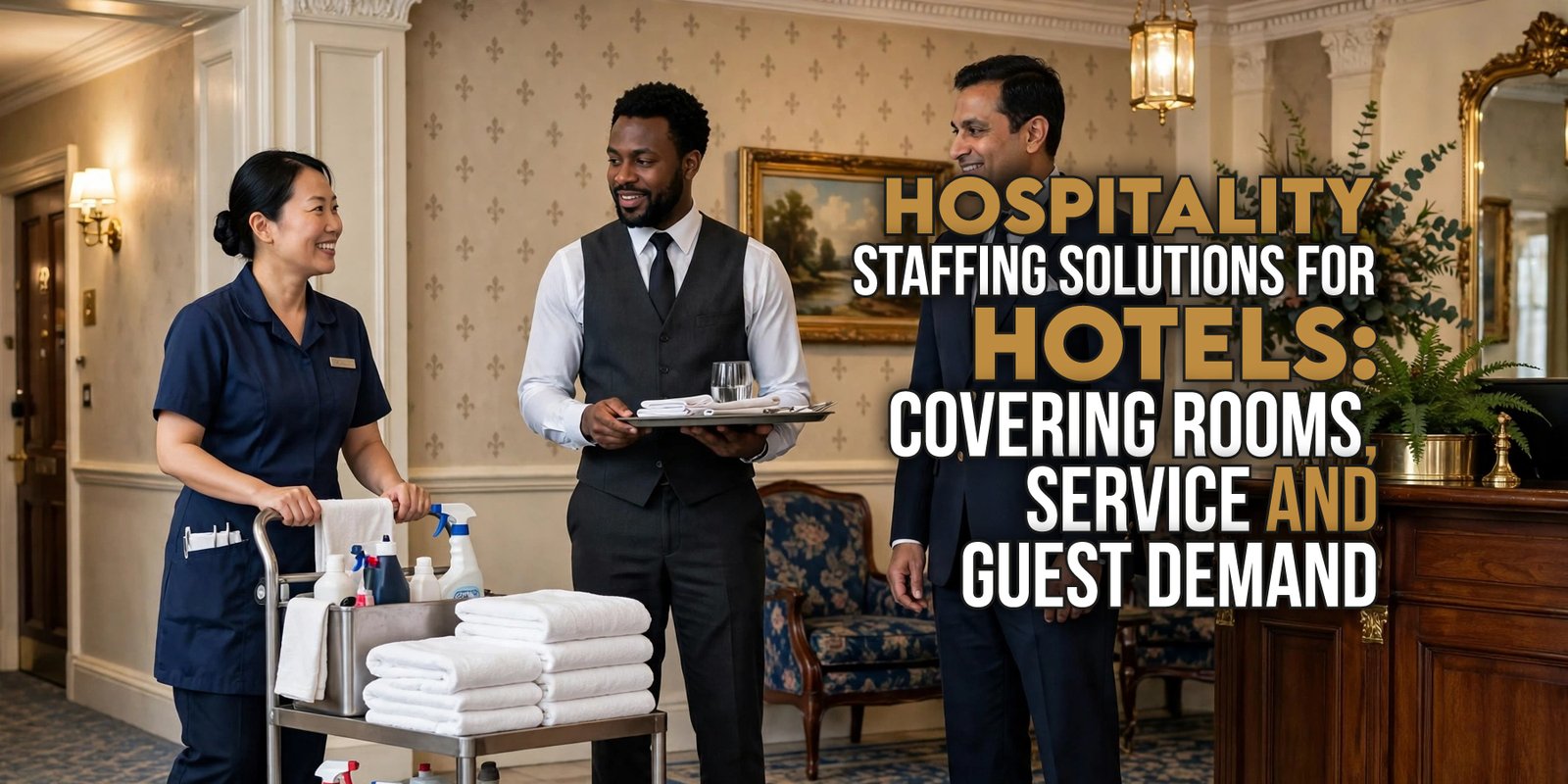
Hospitality opportunities may include:
- Waiters and Waitresses
- Housekeepers
- Room Attendants
- Porters
- Linen Porters
- Cleaners
- Receptionists
- Front-of-house roles
- Bartenders where available
- Concierge roles where available
- Chefs where available
Depending on current recruitment needs, opportunities may arise across hotels, restaurants, bars, venues or events.
Customer service can matter in many hospitality positions. Furthermore, employers may look for punctuality, presentation, communication and the ability to work around early, late or weekend service periods.
A recruitment agency may have different working patterns available at different times. However, candidates should check the actual vacancy rather than assuming that every hospitality role provides flexible shifts.
Security Jobs
Security opportunities can include:
- SIA Security
- SIA Door Supervisors
- CCTV Operators
- Event Stewards
- Retail Security
- Dog Handler roles where available
- Other specialist positions where available
Licensed roles need the appropriate licence for the work involved. H&D Recruitment’s current SIA Security vacancy information, for example, specifies a valid SIA licence as a requirement for that particular role.
Different security positions can require different credentials. Therefore, candidates should check the precise vacancy rather than assuming that one SIA licence applies to every security role.
In addition, employers may consider communication skills, availability, relevant experience and role-specific documents.
Industrial and Manufacturing Work
Industrial or manufacturing-related opportunities may include:
- Production Operatives
- Machine Operators
- Assemblers
- Material Handlers
- Production Supervisors
- Quality Control roles
- Packing roles
- Machine minders
- Related warehouse or logistics positions
The requirements depend on the site, production environment, machinery, shift and employer.
Someone with previous production-line experience may therefore be suited to different opportunities from a candidate entering the sector for the first time.
For broader sector information, candidates can explore H&D Recruitment’s industrial recruitment opportunities.
Temporary, Part-Time or Full-Time: Which Type of Work Suits You?
A recruitment agency may advertise different working arrangements depending on current employer demand.
| Work Type | How It Usually Works | May Suit |
|---|---|---|
| Temporary | Fixed-period or demand-based work | Candidates with short-term or changing availability |
| Part-time | Fewer regular hours | Students, carers or people combining work commitments |
| Full-time | Regular working schedule | Candidates seeking more consistent hours |
| Flexible/Shift Work | Hours can vary by rota or demand | Candidates with wider availability |
The vacancy determines the actual arrangement.
Therefore, check the shift pattern, assignment duration and terms rather than relying only on labels such as “temporary” or “flexible”.
Can a Recruitment Agency Help You Find Flexible Work?
Yes, depending on current vacancies and your availability. A recruitment agency may advertise day shifts, night shifts, weekends, event work, temporary cover, seasonal opportunities or part-time positions.
Flexible availability can widen the range of jobs you are able to consider. However, this does not guarantee that a preferred shift will always be available.
Be accurate about your schedule.
For example, if you can reliably work weekends, state that clearly. Meanwhile, if you cannot travel before public transport begins, avoid claiming availability for a 5 am shift unless you have another practical travel arrangement.
Can a Recruitment Agency Help You Find Temporary Work?
Yes. Agencies commonly support temporary recruitment where employers have short-term or changing requirements.
However, assignment length varies. Some temporary opportunities may cover individual shifts, while others can run for weeks or longer depending on the employer’s needs.
Finding Work Through a Recruitment Agency in Hounslow
H&D Recruitment operates from 4 Bell Parade, Bell Rd, Hounslow TW3 3NU. The current website displays that address across its candidate and company pages.
For people searching for jobs in Hounslow, jobs in West London or a recruitment agency near me, geography is only one part of the decision.
A role may look close on a map but still be difficult to reach at its actual start time.
For example, warehouse, hotel, logistics and security roles can involve:
- early-morning starts
- late finishes
- night shifts
- weekend shifts
- locations away from major stations
- industrial estates
- changing transport frequency
Therefore, check the exact site and shift before committing to work.
A recruitment agency based locally may understand regional employment areas, but candidates still need to assess their own commute.
Hounslow, Heathrow and West London Job Considerations
The Heathrow area forms part of a wider employment zone that includes hotels, logistics businesses, warehouses, events and other operational sites.
This geographic reference should not be interpreted as an official H&D Recruitment partnership with Heathrow Airport.
Before accepting or applying for a role, check:
- exact workplace postcode
- start and finish time
- first and last public transport
- overnight travel options
- whether your own transport is required
- walking distance from transport
- parking where relevant
- whether the role operates around the clock
For instance, a candidate living in Hounslow with reliable night-shift transport may be able to consider opportunities that would be difficult for someone dependent on daytime transport schedules.
Do You Need Experience to Register With a Recruitment Agency?
Not necessarily. Some vacancies can be entry-level, while others need previous experience, licences, certifications or specialist skills.
A recruitment agency assesses suitability against each role rather than applying one experience requirement to every vacancy.
For example:
- some warehouse operative jobs may accept transferable experience
- forklift positions may require relevant certification
- licensed security work requires the appropriate SIA licence
- hospitality requirements vary between employers and positions
- machine-based industrial roles may require previous operating experience
Accuracy matters.
Do not exaggerate your experience to appear suitable. Instead, explain genuine transferable skills such as teamwork, customer service, communication, reliability or previous shift work.
What Documents Might a Recruitment Agency Ask For?
Requirements vary, but a recruitment agency may ask for information such as:
- proof of identity
- appropriate Right to Work information
- contact details
- current address or postcode
- CV
- relevant licences
- role-specific certificates
- references where required
- availability
- transport information where relevant
Current government guidance requires employers to carry out prescribed Right to Work checks before applicable employment begins. The method depends on the individual’s circumstances and can include Home Office online checks, prescribed document checks or eligible digital verification routes.
Therefore, candidates should provide genuine documentation or appropriate digital information when requested.
Do Recruitment Agencies Charge Jobseekers?
UK employment agencies and employment businesses cannot charge work-seekers a fee for finding or trying to find them work, subject to specific exceptions such as parts of the entertainment and modelling sectors. GOV.UK also explains that separate optional services, such as some CV-writing or transport services, can have different rules.
Candidates should therefore read any separate service terms carefully.
What Happens After You Apply?
After applying through a recruitment agency, several stages may follow:
- Application received
Your information enters the candidate process. - Role suitability review
Your experience and details may be compared with available requirements. - Availability check
A recruiter may confirm days, working hours and shift preferences. - Experience review
Relevant previous work can be assessed. - Right to Work check
Appropriate verification may apply before employment begins. - Licence or certification check
This applies where the role requires one. - Candidate contact
You may receive a call, email or message about the next stage. - Employer matching
Suitable candidates may be considered against a live vacancy. - Interview or briefing
Some opportunities require an additional stage. - Placement or shift instructions
Successful candidates receive relevant information before starting.
The sequence can differ between employers and sectors.
Importantly, registering with a recruitment agency does not guarantee an immediate response, interview, shift or placement.
How Can You Improve Your Chances of Finding Work Through a Recruitment Agency?
Focus on making your application accurate, easy to understand and relevant.
A useful starting checklist is:
- keep your CV current
- provide the correct phone number
- use an email address you check regularly
- state availability clearly
- respond to recruitment messages where practical
- keep required licences current
- be realistic about travel distance
- describe relevant experience accurately
- mention genuine shift flexibility
- prepare relevant documentation
- follow individual vacancy instructions
If your circumstances change, update your availability.
For example, someone who becomes available for weekend work may become relevant to different vacancies. Likewise, moving home may change which warehouse or hospitality sites are realistically accessible.
Temporary recruitment can also expose candidates to a different working environment. Although it does not guarantee longer-term employment, genuine experience gained during suitable assignments can strengthen a future CV.
Recruitment Agency Mistakes Jobseekers Should Avoid
1. Applying without reading the requirements
Review experience, licence, shift and location requirements first.
2. Providing an incorrect phone number
Even a suitable applicant becomes difficult to contact when the details are wrong.
3. Using an outdated CV
Update recent employment, skills and certificates.
4. Claiming unavailable shift times
If you cannot reliably attend the shift, state your real availability.
5. Ignoring travel distance
A short distance can still become difficult during early mornings or nights.
6. Applying for licensed roles without the correct licence
This is particularly important for regulated security positions.
7. Missing recruitment messages repeatedly
Time-sensitive vacancies can move quickly, although response speed does not guarantee placement.
8. Failing to update availability
Tell the recruitment agency when your schedule changes.
9. Providing incomplete documents
Where documents are required, missing information may delay progress.
10. Assuming registration guarantees work
Candidate registration and an actual job placement are different stages.
Recruitment Agency Jobseeker Checklist
| Check | Why It Matters |
|---|---|
| CV updated | Helps recruiters understand current experience |
| Phone/email correct | Allows communication |
| Postcode accurate | Helps assess travel practicality |
| Availability clear | Helps identify suitable shifts |
| Preferred sector stated | Narrows relevant opportunities |
| Shift preference clear | Reduces unsuitable matching |
| Right to Work information ready | May be required before employment |
| SIA licence where relevant | Required for applicable security activities |
| Forklift certificate where relevant | May be required for relevant equipment roles |
| Transport plan considered | Important for early and late shifts |
| Current vacancies checked | Roles change regularly |
How H&D Recruitment Supports Jobseekers
H&D Recruitment is a recruitment agency based in Hounslow with current candidate routes across security, warehouse and hospitality. The live candidate form allows applicants to select these sectors and provide their contact details and postcode.
Current company information also presents part-time, temporary and full-time recruitment activity across its wider business offering.
Depending on vacancies and employer requirements, candidates may therefore explore:
- temporary work
- part-time positions
- full-time opportunities
- day shifts
- night work
- weekend work
- flexible shifts
- sector-specific roles
The strongest candidate route is to view current job opportunities with H&D Recruitment, then check the location, working pattern and role requirements before applying.
Employer enquiries should remain separate from candidate applications. If you represent a business rather than looking for work, you can discuss staffing requirements through H&D Recruitment’s employer enquiry route.
1. What does a recruitment agency do for jobseekers?
A recruitment agency connects candidates with current employer vacancies and may help with applications, role matching, availability checks and relevant screening. Agencies can cover temporary, part-time or permanent opportunities depending on their clients. However, registering does not guarantee employment because suitability and vacancy availability still determine whether an application progresses.
2. Can a recruitment agency help me find flexible work?
Yes, where relevant vacancies exist. A recruitment agency may advertise day shifts, night shifts, weekend work, temporary assignments, seasonal work or part-time roles. Your options depend on your availability, experience, travel practicalities and employer requirements, so provide accurate shift preferences when registering.
3. What jobs does H&D Recruitment offer?
H&D Recruitment’s current job pages cover warehouse, hospitality and security opportunities, including roles such as pickers, packers, forklift drivers, hospitality personnel, Event Stewards, Door Supervisors and CCTV-related positions. Exact vacancies change, so candidates should review the latest job information rather than assuming any particular position is continuously available.
4. Does H&D Recruitment have jobs in Hounslow?
H&D Recruitment is based at 4 Bell Parade, Bell Rd, Hounslow TW3 3NU and recruits across Hounslow, West London and other locations depending on employer requirements. Not every vacancy will be based in Hounslow, so candidates should always check the exact work location before applying.
5. Can I find temporary work through H&D Recruitment?
Temporary opportunities may be available depending on current recruitment needs. H&D Recruitment’s wider business information includes temporary, part-time and full-time recruitment. However, individual assignments depend on live vacancies, role requirements and candidate suitability rather than registration alone.
6. Do I need experience to apply?
Not for every vacancy. Some roles may accept candidates with transferable skills, while others require previous experience, licences or certification. For example, licensed security work needs the appropriate SIA licence, while some equipment-based warehouse positions may require relevant certification. Always check the specific job requirements.
7. Do security jobs require an SIA licence?
Many regulated security activities require the appropriate SIA licence, but requirements depend on the actual role. H&D Recruitment’s current SIA Security job information specifically requires a valid SIA licence for that position. Event stewarding and other positions can have different requirements, so check each vacancy individually.
8. What documents might I need?
You may need identity and Right to Work information, contact details, your postcode, a CV and relevant licences or certificates. References or other information may also be required for specific vacancies. Current UK Right to Work guidance sets out several permitted checking methods depending on an individual’s circumstances.
9. How do I apply for H&D Recruitment jobs?
Start by reviewing current vacancies, choose a role that matches your experience and availability, check the work location and shift pattern, prepare any relevant documents and submit accurate application details. H&D Recruitment’s current application form allows candidates to select security, warehouse or hospitality as their preferred sector.
10. Can employers also contact H&D Recruitment for staff?
Yes. Candidate applications and employer staffing enquiries use different journeys. Businesses can use H&D Recruitment’s employer quotation route to provide information such as staffing requirements, location, number of staff and shift patterns. Jobseekers should instead use the candidate vacancy and application route.
9. Find Your Next Opportunity With H&D Recruitment
If you are looking for agency work, start with the roles that genuinely fit your skills, availability and travel options.
A practical process is:
- Review current vacancies.
- Choose the sector that fits your experience.
- Check the work location.
- Confirm the shift start and finish times.
- Prepare relevant documents or licences.
- State your availability accurately.
- Apply only for suitable opportunities.
You can view current job opportunities with H&D Recruitment and compare available security, warehouse and hospitality positions.
Using a recruitment agency can provide access to different employment routes, particularly where employers need temporary or flexible personnel. However, your best starting point remains a complete, accurate application for a role you can realistically perform and attend.