Agency staff for busy periods can help employers keep operations moving when demand rises faster than the permanent team can comfortably manage. In warehouses, hotels, venues, security operations and production sites, demand spikes can lead to missed orders, delayed service, overtime pressure and exhausted permanent teams.
However, temporary staffing works best when businesses plan before the pressure arrives. A hotel near Heathrow may need extra housekeepers during peak occupancy. Meanwhile, a warehouse in Hounslow may need pickers, packers, loaders or forklift drivers before Black Friday or Christmas fulfilment. Similarly, an event organiser may need stewards, hospitality staff or licensed security personnel for fixed dates.
H&D Recruitment is based in Hounslow and presents itself as a recruitment agency supporting employers and candidates across hospitality, security, warehouse staffing and other sectors, with part-time, temporary and full-time workforce solutions. This guide explains how employers can forecast demand, write a staffing brief, onboard temporary workers, plan emergency cover and discuss workforce support with H&D Recruitment.
Staffing arrangements and responsibilities depend on the contract, assignment and circumstances. Businesses should obtain professional advice for legal or employment-specific questions.
Key Takeaways
- Demand forecasting helps employers estimate headcount before a busy period starts.
- Early preparation gives a seasonal staff agency more information to assess suitable options.
- Clear role, shift, licence and site requirements improve matching for temporary staffing.
- Temporary staff still need induction, supervision, task instructions and site-specific information.
- Backup plans help businesses respond to sickness, transport disruption or rota gaps.
- Agency staff for busy periods should be reviewed after each peak so future workforce support improves.
What Are Agency Staff for Busy Periods?
Agency staff for busy periods are temporary agency personnel used to increase capacity for a defined period, shift, campaign, project or seasonal peak. They can supplement a permanent team during higher demand, absences or urgent gaps without automatically replacing long-term employees.
A business may use agency staff for busy periods when demand is predictable, such as Christmas staffing, summer hospitality demand or event season. However, temporary workers can also help when unexpected absences create rota gaps.
In practice, the best results come from planning. Employers should define the role, required experience, shift pattern, site contact, uniform expectations and onboarding process before requesting temporary employees.
Why Businesses Should Plan Before Demand Spikes
Busy periods rarely affect only one part of an operation. A warehouse may need extra picking staff, but dispatch, returns and supervision may also feel pressure. A hotel may need more room attendants, yet laundry, portering and front-of-house support may also face bottlenecks.
Early workforce planning can help employers:
- Forecast staffing requirements
- Build a wider candidate pool
- Prepare rotas
- Confirm working hours
- Organise inductions
- Identify required skills
- Plan supervision
- Prepare uniforms or personal protective equipment
- Reduce pressure on permanent employees
- Maintain customer and operational standards
However, contacting an agency only after the team becomes overstretched can limit available options. Candidate availability, location, licence requirements, shift pattern and notice period all affect what a seasonal staff agency can assess.
Businesses that already know their expected dates, roles, shifts and headcount can discuss your staffing requirements with H&D Recruitment before demand increases. Sharing these details early gives the recruitment team more information to assess the requirement and available options.
What Causes Busy Staffing Periods?
Demand spikes can come from seasonal, operational or unexpected events. Therefore, employers should review the calendar and past performance before planning peak demand staffing.
| Demand trigger | Sectors affected | Common staffing pressure | Planning action |
|---|---|---|---|
| Christmas | Warehousing, hospitality, retail, security | Higher orders, events, holidays | Forecast demand early |
| Black Friday | Warehousing, logistics, e-commerce | Picking, packing, dispatch pressure | Plan warehouse staffing |
| Summer holidays | Hotels, hospitality, events | Occupancy, service and cover needs | Review seasonal rotas |
| Bank holidays | Hospitality, retail, venues | Weekend and public-holiday demand | Confirm availability |
| Major events | Venues, security, hospitality | Fixed-date staffing requirements | Prepare event staffing brief |
| Conferences | Hotels and venues | Banquet, cleaning and service pressure | Confirm roles and times |
| Weddings and banquets | Hotels, venues, hospitality | Waiting, setup and breakdown needs | Plan shifts by function |
| Increased hotel occupancy | Hotels near Heathrow and West London | Room turnaround and guest service pressure | Prepare housekeeping cover |
| Product launches | Warehousing, retail, production | Stock movement and dispatch pressure | Add short-term staff |
| Sales promotions | Warehousing, retail, fulfilment | Order volume and returns | Forecast based on expected volume |
| Stocktakes | Warehouses, retail, logistics | Accuracy and time pressure | Define counting teams |
| Warehouse volume increases | Fulfilment and distribution | Throughput, loading and dispatch | Build shift cover |
| Large customer orders | Manufacturing, warehouse, logistics | Production and fulfilment deadlines | Identify essential roles |
| Production deadlines | Manufacturing, food production | Shift expansion and packing needs | Plan supervision |
| Employee holidays | All sectors | Rota gaps and reduced capacity | Map absence dates |
| Sickness absence | All sectors | Same-day cover pressure | Prepare backup options |
| New site openings | Hospitality, warehouse, retail | Launch staffing and training needs | Build early induction plan |
| Contract wins | Logistics, security, facilities | Rapid headcount growth | Create staffing forecast |
| Short-term projects | Construction, facilities, warehouse | Temporary labour requirements | Define duration |
| Weather-related demand | Logistics, facilities, hospitality | Sudden service pressure | Review contingency plans |
This type of table helps employers avoid treating every peak as a surprise.
When Should Employers Contact a Seasonal Staff Agency?
Employers should contact a seasonal staff agency as soon as demand becomes predictable. Exact lead times depend on the number of people required, role complexity, shift pattern, location, licences, experience, screening requirements, candidate availability and assignment length.
| Time before demand | Recommended action |
| Eight to twelve weeks before | Forecast headcount, review previous peaks and define roles |
| Four to eight weeks before | Share shift dates, locations, duties and required experience |
| Two to four weeks before | Confirm rotas, induction plans, uniform and site contacts |
| One week before | Check final numbers, reporting points and contingency cover |
| Same-day or emergency requirement | Provide urgent details and accept that options may be limited |
A seasonal staff agency may have more time to assess suitable candidates when the brief arrives early. However, no recruitment agency should be expected to guarantee every request, especially where roles need specific licences, night shifts or short-notice travel.
How to Forecast Peak Demand Staffing Requirements
Peak demand staffing starts with evidence. Guessing headcount can create under-staffing, overspending or poor supervision.
Use this framework:
- Review previous busy periods.
- Analyse order, booking or production forecasts.
- Identify operational bottlenecks.
- Calculate minimum staffing levels.
- Review annual leave and known absences.
- Separate essential and optional roles.
- Identify specialist licence requirements.
- Plan day, night and weekend shifts.
- Add a reasonable contingency.
- Review the forecast regularly.
For example, a Hounslow warehouse expects a 30% order-volume increase during a promotion. Last year, 10 pickers handled normal weekday volume, but dispatch slowed when returns increased. The employer may plan for 3 additional pickers, 1 returns assistant and 1 extra loader for the busiest shifts. These figures are illustrative only, not a staffing rule.
As a result, peak demand staffing becomes a structured plan rather than a last-minute phone call.
Temporary Staffing Needs by Sector
Warehouse and Logistics Busy Periods
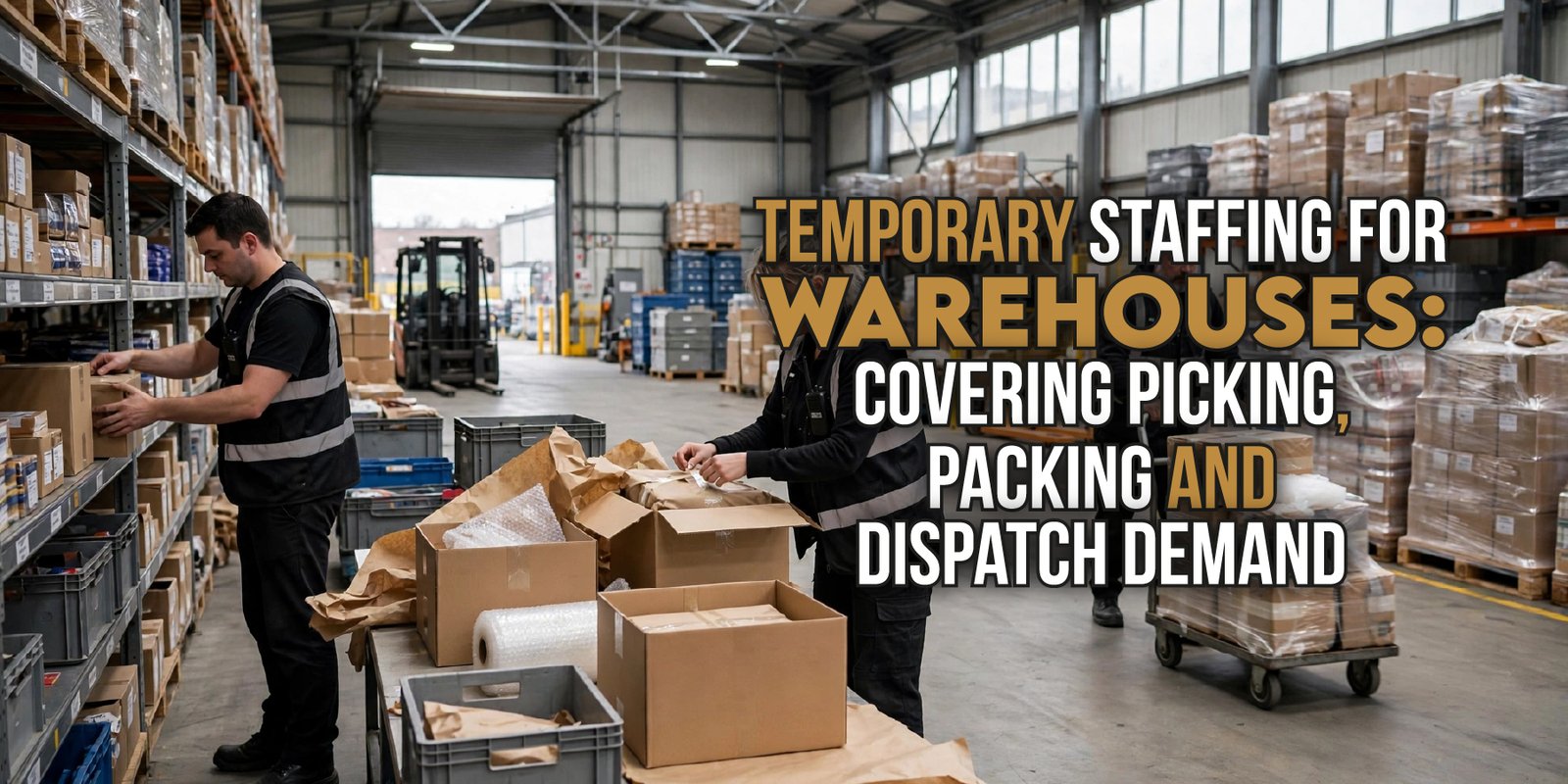
Warehouses and logistics operations often face busy periods during Black Friday, Christmas fulfilment, stocktakes, large order volumes, returns processing, dispatch deadlines, new contracts, night shifts and weekend operations.
Agency staff for busy periods may include warehouse operatives, pickers and packers, loaders, returns assistants, dispatch personnel, forklift drivers, reach truck drivers and supervisors. H&D Recruitment’s website describes warehouse roles such as pickers, packers, forklift drivers, loaders and stock staff for candidates, and it also describes warehouse and logistics staffing support for logistics, distribution, fulfilment and supply chain operations.
For Heathrow corridor operations, workforce support may matter during cut-off times, overnight sortation, returns peaks or e-commerce promotions. However, forklift and reach truck roles should match valid licence and site requirements.
Hospitality and Hotel Busy Periods
Hospitality businesses may experience demand spikes from high hotel occupancy, conferences, weddings, banqueting, large bookings, staff absence, room turnaround pressure, weekend demand and Heathrow travel peaks.
Relevant roles may include housekeepers, room attendants, porters, cleaners, waiters and waitresses, kitchen porters, bar staff, reception personnel and front-of-house support. H&D Recruitment’s job pages mention hospitality roles such as waiter, chef, receptionist, porter and cleaner, and the homepage references housekeepers, room attendants, waiting staff, porters and front-of-house teams.
In a hotel, staffing shortages can affect room readiness, breakfast service, guest experience and event turnaround. Therefore, agency staff for busy periods should be planned around occupancy forecasts, arrival times and service standards.
Event and Security Busy Periods
Events and security operations can experience peaks during concerts, exhibitions, sporting events, festivals, corporate events, retail promotions, venue bookings, seasonal nightlife demand and site-access needs.
Relevant roles may include SIA door supervisors, event stewards, CCTV operators, security personnel, queue-management staff and event support teams. H&D Recruitment’s website lists security roles including SIA door supervisors, event stewards, retail security personnel and CCTV operators, while its security recruitment page references SIA-licensed personnel across door supervisors, event stewards, CCTV operators and security supervisors.
However, licensable security duties must not be given to unlicensed people. Employers should confirm licence requirements before requesting staffing support.
Manufacturing and Production Busy Periods
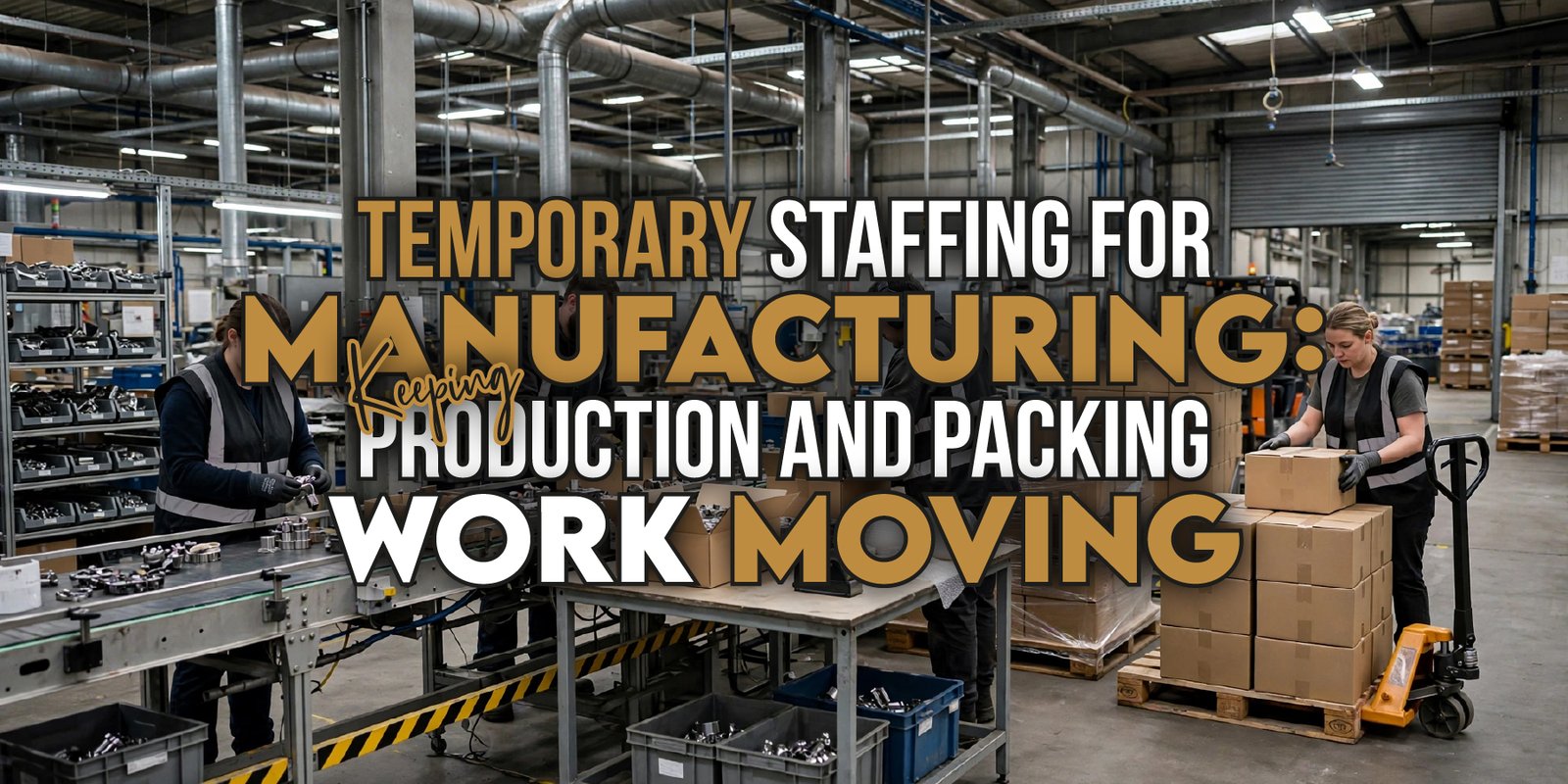
Manufacturing and production businesses may need workforce support for seasonal products, production increases, contract deadlines, packaging requirements, absence cover, shift expansion, product launches and short-term projects.
H&D Recruitment’s website presents manufacturing among the sectors it serves. Therefore, employers should provide a clear staffing brief covering task type, production environment, shift pattern, physical requirements, supervision and any site-specific training needs.
Core Team vs Temporary Workers
A blended workforce can help some businesses manage changing demand. However, temporary workers should supplement the permanent team, not remove the need for proper planning.
| Factor | Permanent core team | Temporary workers |
| Employment purpose | Ongoing business operation | Short-term or variable demand |
| Workforce flexibility | Lower unless overtime is used | Higher where candidates are available |
| Training investment | Deeper long-term training | Focused assignment induction |
| Availability | Known rota patterns | Depends on candidate availability |
| Cost predictability | Regular wage cost | Depends on role, shifts and model |
| Business knowledge | Strong site familiarity | Needs clear briefing |
| Seasonal scaling | Limited by headcount | Can support peaks |
| Long-term development | Stronger progression route | May support temp-to-permanent needs |
| Supervision | Existing structure | Needs clear site contact |
| Operational continuity | Stable base | Supports pressure points |
Temporary staff do not always cost less. Instead, they can give employers more flexibility when demand rises for a defined period.
What Information Should Employers Give a Recruitment Agency?
A clear brief helps a recruitment agency understand the role and assess suitable options.
☐ Business name and site address
☐ Main contact person
☐ Job title
☐ Number of people required
☐ Assignment start date
☐ Expected end date
☐ Shift start and finish times
☐ Break arrangements
☐ Main duties
☐ Required experience
☐ Required licences or certificates
☐ Physical requirements
☐ Uniform standards
☐ Personal protective equipment
☐ Site induction arrangements
☐ Reporting manager
☐ Parking and public transport information
☐ Pay and charge information where relevant
☐ Overtime expectations
☐ Cancellation procedures
☐ Timesheet process
☐ Health and safety information
☐ Possibility of assignment extension
Employers preparing their first agency brief can review how to hire temporary staff before sending requirements.
How to Write an Effective Temporary Staffing Brief
A temporary staffing brief should explain the purpose of the assignment, essential duties, required experience, shift pattern, workplace conditions, physical demands, productivity expectations, reporting lines, uniform requirements, licence requirements, assignment duration and performance expectations.
Example brief:
“Hounslow warehouse requires 6 pickers and 2 loaders for a two-week seasonal promotion. Shifts run Monday to Friday, 2pm to 10pm. Duties include picking orders, loading cages and supporting dispatch. Site induction starts 30 minutes before the first shift. Safety footwear is required, and the warehouse supervisor will manage task allocation.”
This type of brief gives a seasonal staff agency the context needed to assess peak demand staffing more accurately.
Why Onboarding Still Matters for Short-Term Staff
Temporary personnel still need site induction, emergency procedures, task instructions, health and safety information, equipment guidance, access permissions, reporting lines, break information, quality standards, escalation procedures, timesheet instructions and end-of-shift procedures.
Acas explains that agency staff should receive certain assignment details, including the hiring organisation, start date, likely duration, position, location, hours, relevant health and safety information, required experience and pay information.
Additionally, employers must check that a job applicant is allowed to work in the UK before employment starts. HSE guidance also states that businesses have health and safety responsibilities for people working under their control. Therefore, an agency does not remove the employer’s responsibility to provide suitable site-specific information and supervision.
How to Integrate Agency Staff With Permanent Teams
Agency staff for busy periods perform better when the permanent team understands how they will be used. First, introduce team leaders. Next, explain responsibilities and reporting lines. Then, assign a point of contact for questions.
Employers should avoid unclear instructions and “us and them” attitudes. Instead, provide the same operational information needed to complete the shift properly. Additionally, supervisors should monitor early performance and address issues promptly.
Respectful integration matters because temporary employees often step into pressured situations. Clear communication helps protect service continuity.
Managing Quality During Peak Demand Staffing
Peak demand staffing needs measurement, not assumption. During busy periods, managers can monitor attendance, punctuality, productivity, accuracy, customer service, safety, supervisor feedback, shift completion, error rates, service levels, candidate suitability and rebooking decisions.
A simple scorecard may include:
| Measure | What to record | Why it matters |
| Attendance | Arrived as agreed | Shows reliability |
| Punctuality | Start time met | Supports shift handover |
| Task accuracy | Errors or corrections | Affects productivity |
| Supervisor feedback | Fit for role | Helps future matching |
| Safety behaviour | Followed instructions | Reduces incident risk |
| Customer or guest service | Service standard | Matters in hospitality and events |
| Shift completion | Finished as agreed | Supports rota planning |
No single target suits every business. Therefore, the scorecard should match the site, sector and role.
When Emergency Staff Cover Becomes Necessary
Emergency staff cover becomes necessary when the rota breaks faster than planned recruitment can respond. This may happen because of same-day sickness, multiple absences, transport disruption, unexpected orders, sudden booking increases, event attendance exceeding forecasts, a permanent employee leaving unexpectedly, last-minute rota gaps, delayed recruitment or a contract beginning earlier than planned.
Businesses can prepare for these moments by keeping role descriptions, shift details, site instructions, contact information, onboarding material and approval procedures ready. For urgent gaps, employers may need emergency staff cover while accepting that available options depend on notice, role requirements, location and candidate availability.
Planned Staffing vs Emergency Staffing
Emergency staffing can help with urgent gaps, while planned staffing gives more time to prepare.
| Factor | Planned peak staffing | Emergency staff cover |
| Notice period | Longer | Short |
| Candidate pool | Wider where planned early | More limited |
| Induction planning | Easier to prepare | Often compressed |
| Rota preparation | More controlled | Reactive |
| Role matching | More detailed | Based on immediate availability |
| Operational pressure | Lower | Higher |
| Contingency options | Easier to build | Fewer options |
| Cost visibility | Easier to compare | May be harder to plan |
| Employer preparation | Stronger | Often rushed |
| Risk of unfilled shifts | Lower when planned well | Higher on short notice |
For this reason, arrange urgent workforce cover only as one part of the plan. Employers should also prepare planned cover for predictable demand.
Common Busy-Period Staffing Mistakes
| Mistake | Why it creates problems | Better approach |
| Forecasting too late | Candidate options may narrow | Start planning early |
| Underestimating headcount | Permanent staff face pressure | Use past demand data |
| Providing vague role descriptions | Matching becomes weaker | Write clear duties |
| Forgetting annual leave | Rota gaps appear | Map absence dates |
| Ignoring night or weekend transport | Attendance issues may rise | Check shift practicality |
| Failing to prepare inductions | New people lose time | Create a short site briefing |
| Requesting specialist licences too late | Suitable candidates may be limited | Identify licences early |
| Giving different instructions to the agency and supervisor | Confusion affects performance | Align the staffing brief |
| Failing to assign a site contact | Questions go unanswered | Name a reporting manager |
| Treating temporary staff differently | Team integration suffers | Use respectful onboarding |
| Changing shifts without clear communication | Attendance may be affected | Confirm changes in writing |
| Ignoring contingency planning | Absences hit harder | Build backup options |
| Measuring only attendance | Quality gaps remain hidden | Track performance and feedback |
| Failing to review previous peaks | Same problems repeat | Hold a post-peak review |
| Assuming emergency cover will always be available | Unfilled shifts may remain | Plan earlier where possible |
As a result, agency staff for busy periods should sit inside a wider workforce planning process.
How Much Does Peak Demand Staffing Cost?
Peak demand staffing costs depend on the role, experience, shift length, day or night work, weekend or bank holiday work, location, number of people, assignment duration, licence requirements, notice period, overtime, uniform or equipment, supervision, transport and recruitment model.
H&D Recruitment does not need to publish a universal price for every situation because staffing needs vary. Instead, employers should provide a complete brief and request a tailored staffing quotation based on roles, shifts, site details and assignment length.
This approach helps the agency understand the requirement before discussing suitable workforce support.
Hounslow Workforce Planning for Hotels, Warehouses and Venues
Hounslow businesses often operate close to Heathrow, West London road networks, hotels, logistics sites, hospitality venues and service operations. Therefore, staffing near Heathrow can involve early starts, late finishes, day and night shifts, weekend demand and public-holiday cover.
A Hounslow recruitment agency may support:
- Hotels serving Heathrow travellers
- Hospitality businesses in Hounslow
- Warehouses around West London
- Logistics and fulfilment operations
- Local events and venues
- Retail businesses
- Construction sites
- Businesses operating day and night shifts
H&D Recruitment lists its address as 4 Bell Parade, Bell Road, Hounslow TW3 3NU. This local base can be relevant for Hounslow staffing support, although employers should still provide full location and shift information.
How H&D Recruitment Supports Businesses During Busy Periods
H&D Recruitment is based in Hounslow and supports employers that require temporary, part-time and full-time personnel. Its website presents sectors including hospitality, security, warehouse staffing, manufacturing, construction and healthcare.
Depending on current availability, role requirements and shift patterns, H&D Recruitment can discuss planned seasonal recruitment, short-term workforce increases, shift cover, contract staffing, urgent gaps, permanent recruitment and workforce support.
Relevant roles may include hospitality staff, housekeepers, room attendants, waiting staff, porters, front-of-house teams, warehouse operatives, pickers and packers, forklift drivers, reach truck drivers, loaders, dispatch personnel, SIA door supervisors, event stewards and CCTV operators.
Employers can prepare by sharing required headcount, role details, shift dates, site location, assignment duration, experience requirements, licence requirements and onboarding information. They can also review how to hire temporary staff, discuss emergency staff cover or plan staffing support with H&D Recruitment.
Opportunities for Candidates During Busy Periods
Seasonal and temporary demand may create opportunities in hospitality, warehousing, security, events, manufacturing and other sectors listed on the H&D Recruitment website. However, vacancies, shifts and placements depend on employer requirements, documents, location, experience and candidate suitability.
Candidates should keep these details current:
- CV
- Phone number
- Email address
- Availability
- Work history
- Right-to-work information
- Relevant licences
- Preferred roles
- Travel area
- Shift preferences
H&D Recruitment’s jobs page lists security, warehouse and hospitality routes, including warehouse jobs such as pickers, packers, forklift drivers, loaders and stock staff. Candidates can explore current job opportunities or find temporary and permanent roles through H&D Recruitment, subject to current vacancies and suitability.
Frequently Asked Questions
What are agency staff for busy periods?
Agency staff for busy periods are temporary agency personnel used to add workforce capacity during seasonal demand, large orders, events, absences or short-term projects. They support the permanent team for a defined period, shift or campaign. However, availability depends on the role, location, shift pattern and candidate pool.
When should a business contact a seasonal staff agency?
A business should contact a seasonal staff agency as soon as demand becomes predictable. For major peaks, eight to twelve weeks can give more planning time. However, exact timing depends on headcount, role complexity, shift pattern, licences, location and assignment length.
How far in advance should peak demand staffing be arranged?
Peak demand staffing should be arranged early enough to define roles, confirm shifts, prepare induction and assess candidate availability. Some simple requirements may need less time, while licensed, night-shift or multi-site roles may need longer planning. No single deadline fits every business.
What information does a staffing agency need?
A staffing agency needs the business name, site address, main contact, job title, number of people required, shift times, dates, duties, experience requirements, licences, uniform standards, site induction arrangements, reporting manager and assignment length. Clear briefs improve workforce support.
Can agency staff cover night and weekend shifts?
Agency staff may cover night and weekend shifts where suitable candidates are available and the assignment details are clear. Employers should provide exact start and finish times, transport considerations, supervision details, break arrangements and any role-specific requirements before expecting shift coverage.
Can temporary workers support warehouse peak periods?
Yes, temporary workers can support warehouse peak periods where the role matches their experience and availability. Possible roles may include pickers, packers, loaders, returns assistants, dispatch personnel, forklift drivers and reach truck drivers. Licence and site requirements should be confirmed before assignment.
Can an agency provide hospitality staff during busy seasons?
An agency may provide hospitality staff during busy seasons where suitable candidates are available. Roles can include housekeepers, room attendants, cleaners, porters, waiters, waitresses, kitchen porters, bar staff and front-of-house support. Employers should share occupancy forecasts, shift times and service expectations.
What is the difference between planned and emergency staffing?
Planned staffing happens before demand peaks, so employers have more time for forecasting, role matching, rota preparation and induction. Emergency staffing responds to urgent gaps, such as same-day sickness or sudden workload increases. Emergency cover may help, but options can be more limited.
Does registering with an agency guarantee staff availability?
No, registering with an agency does not guarantee staff availability, fixed response times or shift fulfilment. Staffing depends on the role, location, notice period, pay conditions, shift pattern, required licences, candidate availability and employer requirements. Early planning improves the chance of suitable options.
How should temporary personnel be onboarded?
Temporary personnel should receive site-specific induction, task instructions, health and safety information, reporting lines, break rules, equipment guidance, escalation procedures and timesheet instructions. The employer should provide suitable supervision and make sure temporary staff understand the shift requirements.
Can temporary staffing lead to permanent recruitment?
Temporary staffing can sometimes lead to permanent recruitment when the employer has a long-term need and the candidate fits the role. However, this is not guaranteed. Assignment terms, employer requirements, candidate performance and availability all affect whether a longer-term opportunity exists.
How can H&D Recruitment support Hounslow businesses?
H&D Recruitment can discuss staffing needs with Hounslow businesses across sectors such as hospitality, warehousing, security, manufacturing, construction and healthcare, according to its website. Support depends on role requirements, shift patterns, location and candidate availability. Employers should provide a clear staffing brief.
Where can candidates find temporary job opportunities?
Candidates can search for hospitality, security or warehouse jobs through H&D Recruitment. Opportunities may include temporary, part-time or full-time roles depending on current employer demand. Applicants should keep contact details, availability, right-to-work information and relevant licences up to date.
How can employers request a staffing quotation?
Employers can submit your workforce requirements by sharing role titles, headcount, shift dates, location, assignment duration, required experience, licences, uniform needs and reporting details. A complete brief helps H&D Recruitment assess the staffing requirement more effectively.
Prepare Your Workforce Before Demand Reaches Its Peak
Agency staff for busy periods can support employers when seasonal demand, major orders, hotel occupancy, events, employee absence or production deadlines stretch the permanent team. However, the best staffing outcomes usually start before demand reaches its highest point.
First, forecast demand. Next, define the roles, shifts and site requirements. Then, prepare induction, supervision and contingency plans. Finally, review performance after the peak period so future workforce support improves.
Businesses preparing for seasonal demand, higher order volumes, hotel occupancy, events or planned employee absence can share their staffing requirements with H&D Recruitment. Provide the roles, headcount, shift times, location and assignment duration to request agency staff through a tailored staffing quotation.
Candidates interested in temporary, part-time or full-time opportunities can view available opportunities in hospitality, security and warehouse roles through H&D Recruitment, subject to current demand and suitability.