Agency staff onboarding helps UK employers turn temporary workers into productive shift support faster. When agency workers arrive without clear instructions, a site briefing, PPE guidance, reporting lines or task expectations, the first shift can quickly become disorganised. Therefore, employers need a simple process that improves productivity, safety awareness, attendance, quality and shift performance from the start.
This matters in warehouses, logistics sites, manufacturing floors, industrial sites, hospitality venues, cleaning teams, construction support roles and security environments where temporary workers often start at short notice. A weak staff induction process can increase repeated questions, slow handovers and place extra pressure on supervisors.
Because of this, agency staff onboarding should not feel like an afterthought. With the right preparation, employers can improve temporary worker onboarding, agency worker training and workforce readiness before the shift begins.
Quick Answer: What Is Agency Staff Onboarding?
Agency staff onboarding helps employers prepare temporary workers quickly through clear role briefings, site rules, health and safety guidance, shift expectations, reporting lines, training and workforce readiness checks. It helps agency workers understand duties faster, follow site standards and become productive with less supervisor pressure.
General Guidance Note
This article gives general business guidance only. It does not replace legal, HR or employment compliance advice. Where worker rights, site inductions, health and safety, training, pay, contracts or workforce compliance are mentioned, employers should check current UK guidance or seek professional advice.
Key Takeaways
- Agency staff onboarding helps temporary workers understand roles, sites and expectations faster.
- A clear staff induction process can reduce repeated questions, confusion and first-shift mistakes.
- Agency worker training should match the role, site risk, equipment and shift pattern.
- Workforce readiness checks help employers confirm that workers can start safely and productively.
- Better onboarding supports warehouses, manufacturing teams, night shifts and short-notice labour needs.
What Is Agency Staff Onboarding?
Agency staff onboarding is the process employers use to prepare agency workers before and during their first shift. It gives temporary staff the information they need to understand the role, site rules, safety expectations, reporting lines and task standards.
Agency staff onboarding may include:
- Role briefings
- Site rules
- Health and safety guidance
- PPE or uniform instructions
- Shift expectations
- Task instructions
- Supervisor introductions
- Attendance rules
- Timesheet process
- Quality expectations
- Emergency procedures
- End-of-shift handover
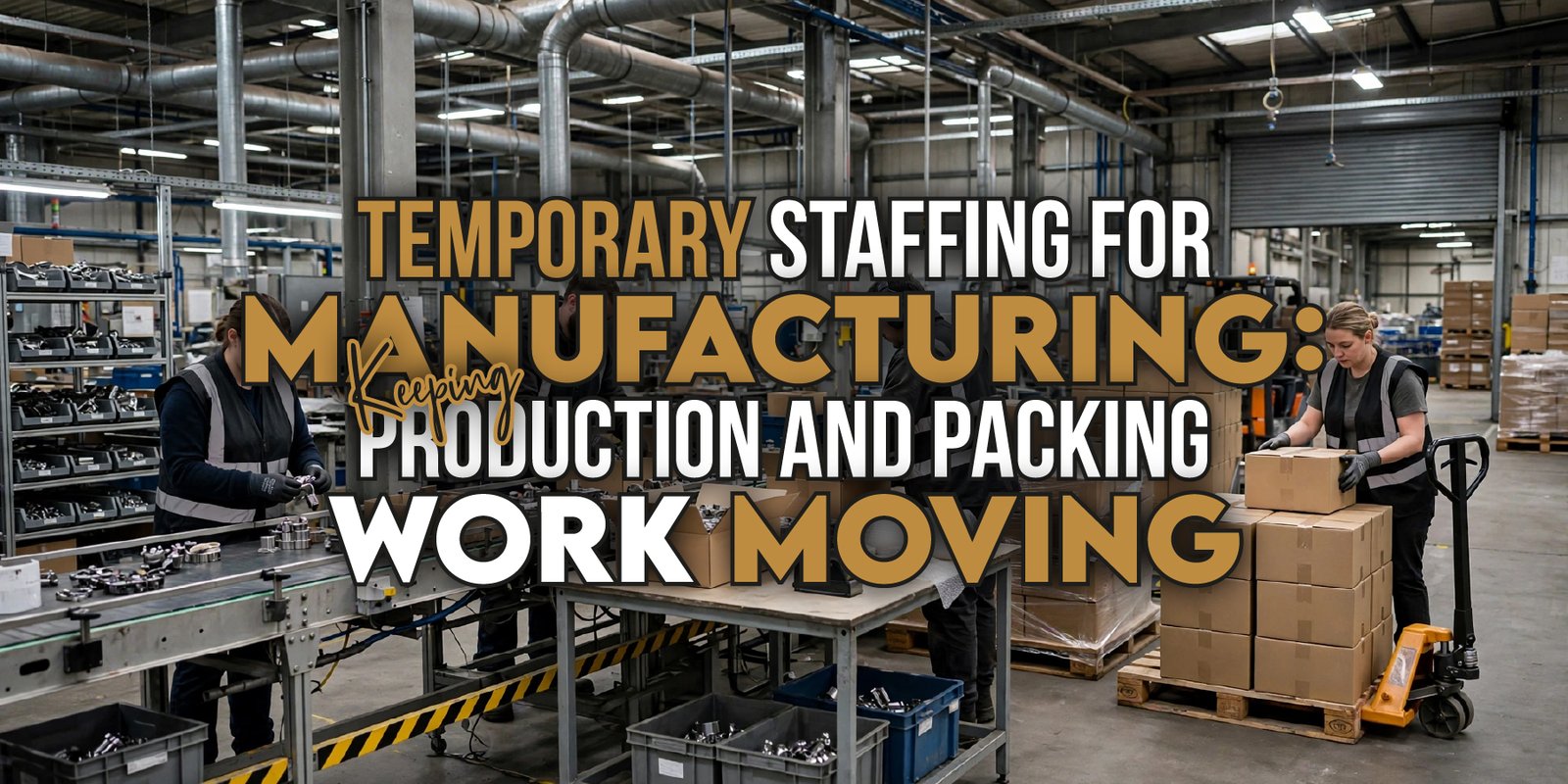
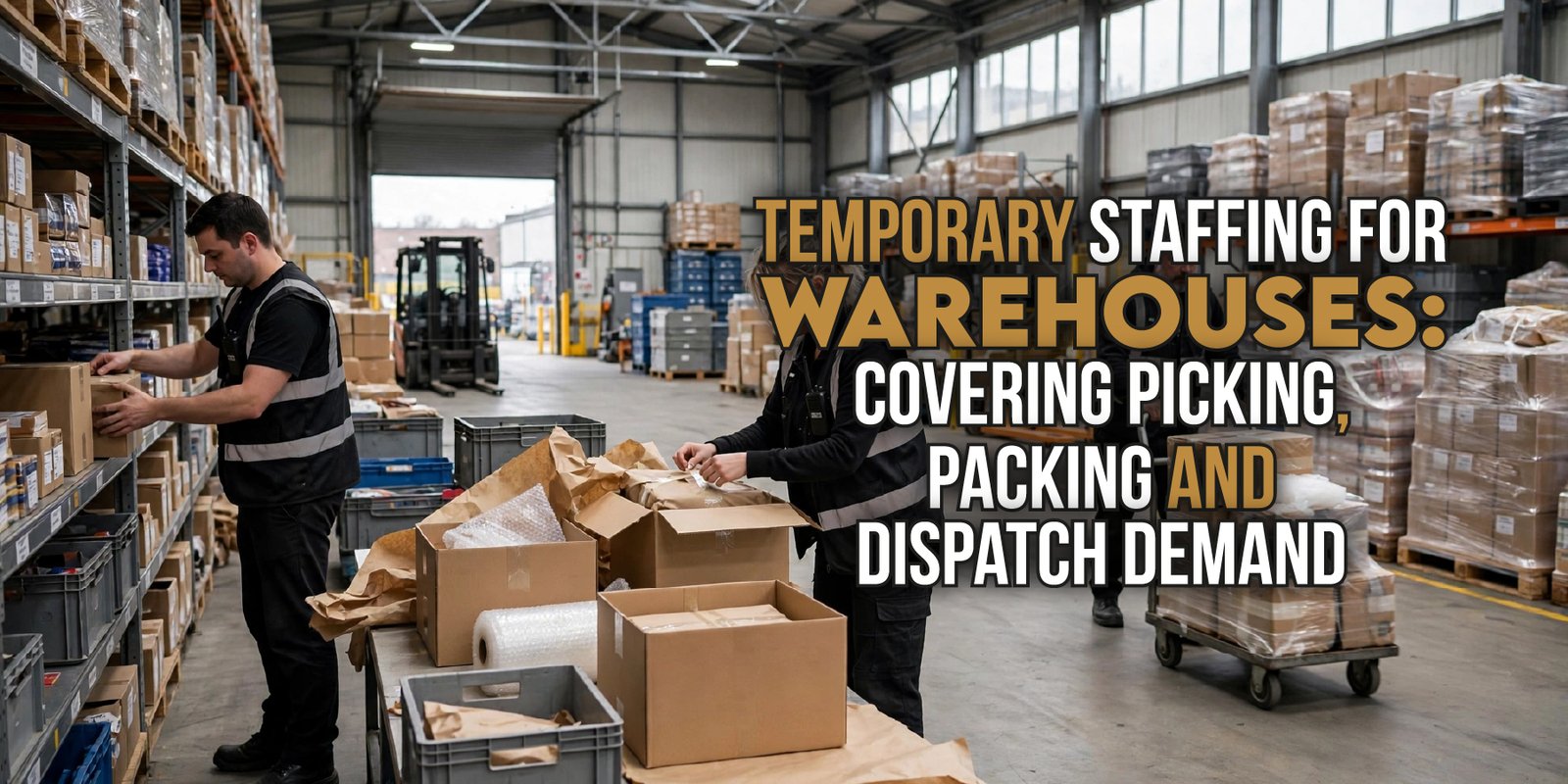
For example, a warehouse may need agency workers to understand picking routes, packing standards, loading areas and break rules. Meanwhile, a manufacturing floor may need agency staff to understand line duties, safety procedures and quality checks.
Therefore, agency staff onboarding gives employers a structured way to improve workforce readiness from the first shift.
Why Agency Staff Onboarding Matters for UK Employers
Agency staff onboarding matters because temporary workers often join fast-moving environments. They may arrive for a night shift, production line, warehouse peak, cleaning contract or hospitality shift with limited time to learn the site.
Good onboarding helps employers improve:
- First-shift productivity
- Role clarity
- Attendance
- Site expectations
- Health and safety awareness
- Training consistency
- Communication
- Supervision
- Shift handover
- PPE use
- Reporting lines
- Timekeeping
- Quality standards
- Repeat worker performance
For example, if an agency picker does not understand the warehouse system, they may slow down the team. Likewise, if a manufacturing worker does not understand quality expectations, the line may face rework.
As a result, agency staff onboarding can reduce mistakes and help businesses get better value from temporary workers.
How Agency Staff Onboarding Helps Workers Become Productive Faster
A strong agency staff onboarding process gives workers the right information before confusion appears. Instead of relying on supervisors to explain everything during a busy shift, employers can prepare a short, practical process.
Agency Staff Onboarding Improves Role Expectations
Workers need to know what they will do, where they will work and who they report to. Clear role expectations reduce wasted time at the start of the shift.
Agency Staff Onboarding Supports Better Timekeeping
Clear arrival times, sign-in rules and break arrangements help agency workers start on time and follow site routines.
Agency Staff Onboarding Reduces Supervisor Pressure
Supervisors should not spend the whole shift answering basic questions. Therefore, a clear induction gives workers more confidence.
A productive onboarding process supports:
- Clear role expectations
- Faster first-shift understanding
- Better timekeeping
- Fewer repeated questions
- Better site awareness
- Stronger health and safety understanding
- Clear reporting lines
- Better handovers
- Reduced supervisor pressure
- Improved workforce readiness
When employers invest a few minutes in structured onboarding, temporary workers often settle faster.
Temporary Worker Onboarding: What Should Employers Prepare?
Temporary worker onboarding starts before the worker arrives. Employers should share practical information with the staffing agency and prepare a simple site briefing.
Employers should prepare:
- Role description
- Shift times
- Site address
- Reporting contact
- Uniform or PPE requirements
- Break times
- Site rules
- Health and safety briefing
- Task instructions
- Timesheet process
- Emergency procedures
- Communication expectations
For example, a logistics site should confirm loading duties, supervisor contact, parking instructions and PPE requirements. Meanwhile, a hospitality venue should confirm dress code, service expectations and reporting lines.
Because temporary workers may start quickly, agency staff onboarding should stay simple, clear and repeatable.
Staff Induction Process: What Should Be Included?
A staff induction process should help workers understand the site, role and expectations before they begin work. It does not need to be complicated, but it does need to be clear.
A useful staff induction process should include:
- Site tour
- Sign-in procedure
- Role briefing
- Supervisor introduction
- Health and safety guidance
- Equipment instructions
- Quality expectations
- Attendance rules
- Break arrangements
- Incident reporting
- Escalation process
- End-of-shift handover
For example, a warehouse induction may cover loading bays, toilets, fire exits, picking areas and reporting points. Meanwhile, a manufacturing induction may cover production zones, safety barriers, line speed, quality checks and supervisor escalation.
Therefore, agency staff onboarding should include a staff induction process that matches the site and role.
Agency Worker Training: How Much Is Needed?
Agency worker training should match the role, site risk, equipment used, industry requirements, shift pattern and task complexity. Some workers only need a short briefing, while others need task-specific training before they begin.
Training may include:
- Basic site rules
- Task-specific instructions
- Equipment guidance
- Shadowing
- Supervisor checks
- Quality briefings
- Health and safety reminders
- Refresher briefings for repeat workers
For example, a picker and packer may need scanner instructions and packing standards. Meanwhile, a production line worker may need task-specific training, product handling rules and quality checks.
Employers should not assume that every agency worker already understands the site. Instead, agency staff onboarding should confirm what the worker knows and what they still need before starting.
Workforce Readiness: How Employers Can Check Workers Are Ready
Workforce readiness means checking whether agency workers can start their shift with the right information, equipment and understanding. It helps employers reduce confusion before work begins.
Employers can check:
- Attendance confirmation
- Role suitability
- PPE readiness
- Site access
- Briefing completion
- Task understanding
- Supervisor contact
- Communication route
- Shift readiness
- Timesheet process
For example, a night shift worker should know where to enter, who to report to and how the handover works. Likewise, a cleaning worker should know the task list, restricted areas and site access rules.
Because of this, agency staff onboarding should include a short workforce readiness check before the shift starts.
Agency Staff Onboarding for Warehouse Night Shifts
Night shifts need stronger preparation because fewer managers may be on site, handovers can feel rushed and workers may arrive outside normal office hours. Therefore, agency staff onboarding becomes especially important for warehouse night shift staffing.
H&D Recruitment explains warehouse night shift staffing for businesses that need night shift warehouse staffing, warehouse agency staff support and late shift productivity.
Onboarding night shift workers should cover:
- Arrival process
- Site entry
- Supervisor contact
- Night shift handover
- Picking and packing tasks
- Loading areas
- Logistics operations
- Break arrangements
- PPE requirements
- Emergency procedures
- End-of-shift reporting
For example, agency staff working in a warehouse at night should not arrive without knowing parking, access, shift lead details and task expectations. Better warehouse shift readiness reduces supervisor pressure during unsociable hours.
Agency Staff Onboarding for Manufacturing Shift Cover
Manufacturing shift cover often needs clear task guidance because production teams rely on pace, consistency and quality. If temporary workers miss key instructions, the line may slow down or produce errors.
H&D Recruitment supports employers with manufacturing shift cover when they need production line staff cover, factory shift onboarding and agency workers for production teams.
Manufacturing onboarding should explain:
- Line duties
- Quality checks
- Safety procedures
- Equipment use
- Supervisor contacts
- Shift handovers
- Production pace
- Cleaning or reset duties
- PPE rules
- Escalation process
For example, a production worker may need to understand product handling, reject procedures and quality checks before joining the line. Therefore, agency staff onboarding helps manufacturing agency staff contribute faster and reduce avoidable mistakes.
Agency Staff Onboarding vs Standard Employee Onboarding
Agency staff onboarding usually needs to be faster and more task-focused than standard employee onboarding. However, it still needs structure.
| Onboarding Type | Best For | Main Focus | Time Needed | Main Risk If Missed | Planning Tip |
|---|---|---|---|---|---|
| Agency staff onboarding | Temporary workers and urgent shifts | Role, site rules and task readiness | Short and focused | Confusion on first shift | Prepare a repeatable brief |
| Standard employee onboarding | Permanent staff | Culture, systems and long-term role | Longer | Slow integration | Plan phased training |
| Warehouse onboarding | Pickers, packers and logistics staff | Tasks, movement and safety | Short to medium | Picking errors and delays | Use supervisor checks |
| Manufacturing onboarding | Production and factory workers | Line duties and quality | Short to medium | Quality issues and downtime | Give task-specific training |
| Night shift onboarding | Late and overnight teams | Access, handover and safety | Short and clear | Poor shift start | Confirm entry details early |
This comparison shows why agency staff onboarding should match the work environment.
How to Build a Simple Agency Staff Onboarding Process
A simple agency staff onboarding process should help employers repeat the same core steps for each temporary worker or group.
Build the process by following these steps:
- Send role details before the shift
- Confirm worker arrival time
- Share site address and parking instructions
- Prepare PPE or uniform guidance
- Assign a supervisor
- Provide a short induction
- Explain duties clearly
- Confirm breaks and timesheets
- Check understanding
- Review performance after the shift
- Keep notes for repeat bookings
For example, a warehouse manager could keep a one-page induction sheet for agency workers. Meanwhile, a manufacturing supervisor could keep a short line-specific checklist for temporary worker onboarding.
As a result, employers can make agency staff onboarding faster without removing important steps.
Agency Staff Onboarding Costs UK: What Affects the Time and Effort?
Agency staff onboarding costs in the UK often relate to time, supervision and preparation. The more complex the role, the more onboarding effort the employer may need.
Factors include:
Role Complexity
Simple tasks may need a shorter briefing, while technical tasks may need more guidance.
Shift Type
Night shifts and weekend shifts may need clearer access and handover planning.
Site Size
Larger sites often need more detailed tours and safety guidance.
Health and Safety Needs
Higher-risk environments need stronger safety briefings and supervision.
PPE Requirements
Workers need clear PPE instructions before arriving.
Equipment Use
Equipment-related tasks may require task-specific training.
Number of Workers
Larger groups need a more organised induction.
Experience Level
Less experienced workers may need more guidance.
Other factors include supervisor availability, training depth, sector requirements and repeat booking potential.
To discuss staffing needs, employers can get a staffing quote based on role type, shift pattern and workforce support requirements.
Need Workers Who Can Start Productively?
If your business needs agency workers who can settle quickly, preparation matters. Clear role briefs, induction notes, shift expectations and supervisor contacts can help temporary staff contribute sooner.
H&D Recruitment can support businesses that need agency workers for warehouses, manufacturing sites, logistics teams, cleaning roles, hospitality work and short-term workforce gaps.
You can request agency staff support or speak to H&D Recruitment about staffing support built around your site, shift patterns and workforce readiness needs.
Agency Staff Onboarding Checklist for Employers
Use this checklist before agency workers arrive.
- Define the role clearly
- Confirm shift times
- Share site location
- Confirm reporting contact
- Prepare PPE or uniform guidance
- Prepare induction notes
- Explain health and safety rules
- Confirm task instructions
- Explain quality expectations
- Confirm timesheet process
- Assign a supervisor
- Review worker performance after the shift
This checklist helps employers make agency staff onboarding more consistent and practical.
Common Agency Staff Onboarding Mistakes to Avoid
Assuming Agency Workers Already Know the Site
Even experienced workers need site-specific information.
Giving Unclear Role Instructions
Vague duties can slow workers down and create repeated questions.
Skipping Induction
A short induction can prevent confusion and reduce avoidable mistakes.
Not Explaining PPE Requirements
Workers need PPE or uniform information before they arrive.
Poor Communication With the Agency
The agency needs accurate details to prepare workers properly.
No Named Supervisor
Agency workers need to know who to report to.
Ignoring Shift Handover
Weak handovers can affect night shifts and production lines.
Not Explaining Quality Expectations
Quality standards help workers understand the required output.
Forgetting Timesheet Rules
Clear timesheet instructions reduce admin problems.
Not Tracking First-Shift Performance
Feedback helps improve future bookings.
Not Preparing for Night Shifts
Night shifts need clear access, contact and handover information.
Not Planning Onboarding for Manufacturing or Warehouse Roles
Fast-paced environments need task-specific instructions.
Avoiding these mistakes makes agency staff onboarding more useful for both employers and workers.
How Better Onboarding Improves Temporary Workforce Performance
Better agency staff onboarding can improve productivity, reduce mistakes, support workforce readiness, improve site communication, reduce pressure on supervisors and help businesses get better results from temporary workers.
It can support:
- Faster first-shift output
- Better attendance routines
- Fewer repeated questions
- Clearer site standards
- Better safety awareness
- Stronger handovers
- Improved quality control
- Better supervisor confidence
- More useful feedback
- Better repeat worker performance
Therefore, onboarding should not be treated as admin only. It directly affects workforce readiness and shift performance.
People Also Ask
What is agency staff onboarding?
Agency staff onboarding is the process employers use to brief temporary workers on role duties, site rules, health and safety guidance, reporting lines, shift expectations and task instructions before work starts.
Why is temporary worker onboarding important?
Temporary worker onboarding is important because it helps agency staff understand the role faster, reduce mistakes, follow site rules and become productive with less supervisor pressure.
What should a staff induction process include?
A staff induction process should include site rules, sign-in procedure, role briefing, supervisor introduction, health and safety guidance, task instructions, quality expectations and timesheet process.
Do agency workers need training?
Agency workers may need training depending on the role, site risk, equipment, industry requirements and task complexity. Employers should provide suitable briefings and role-specific instructions.
How can employers improve workforce readiness?
Employers can improve workforce readiness by confirming attendance, sharing role details, checking PPE needs, assigning supervisors, completing briefings and checking worker understanding before the shift starts.
How do I request agency workers who are ready for shifts?
You can request agency workers by sharing role details, shift times, location, required experience, PPE needs, induction expectations and reporting contacts with your staffing provider.
Conclusion
Agency staff onboarding helps UK employers get temporary workers productive faster. When workers understand site rules, role expectations, reporting lines, PPE requirements, task instructions and quality standards, they can contribute with more confidence from the first shift.
For warehouses, logistics sites, manufacturing floors, cleaning teams, hospitality venues and night shifts, temporary worker onboarding supports workforce readiness and reduces supervisor pressure. Meanwhile, a clear staff induction process and suitable agency worker training can reduce repeat mistakes and improve shift performance.
Businesses that use agency staff regularly should create a simple, repeatable onboarding process. As a result, they can improve consistency, support temporary workers more effectively and get better outcomes from flexible staffing.
Prepare Your Workforce Before the Next Shift Starts
Need agency staff onboarding support for warehouse shifts, manufacturing cover, logistics teams, cleaning roles, hospitality work, or short-term workforce gaps? Request a quote from H&D Recruitment today and get staffing support built around your site, shift patterns, role requirements, and workforce readiness needs.
Whether you need warehouse agency staff support, manufacturing agency staff, trained temporary workers or wider workforce support, H&D Recruitment can help your business prepare before the next shift starts.