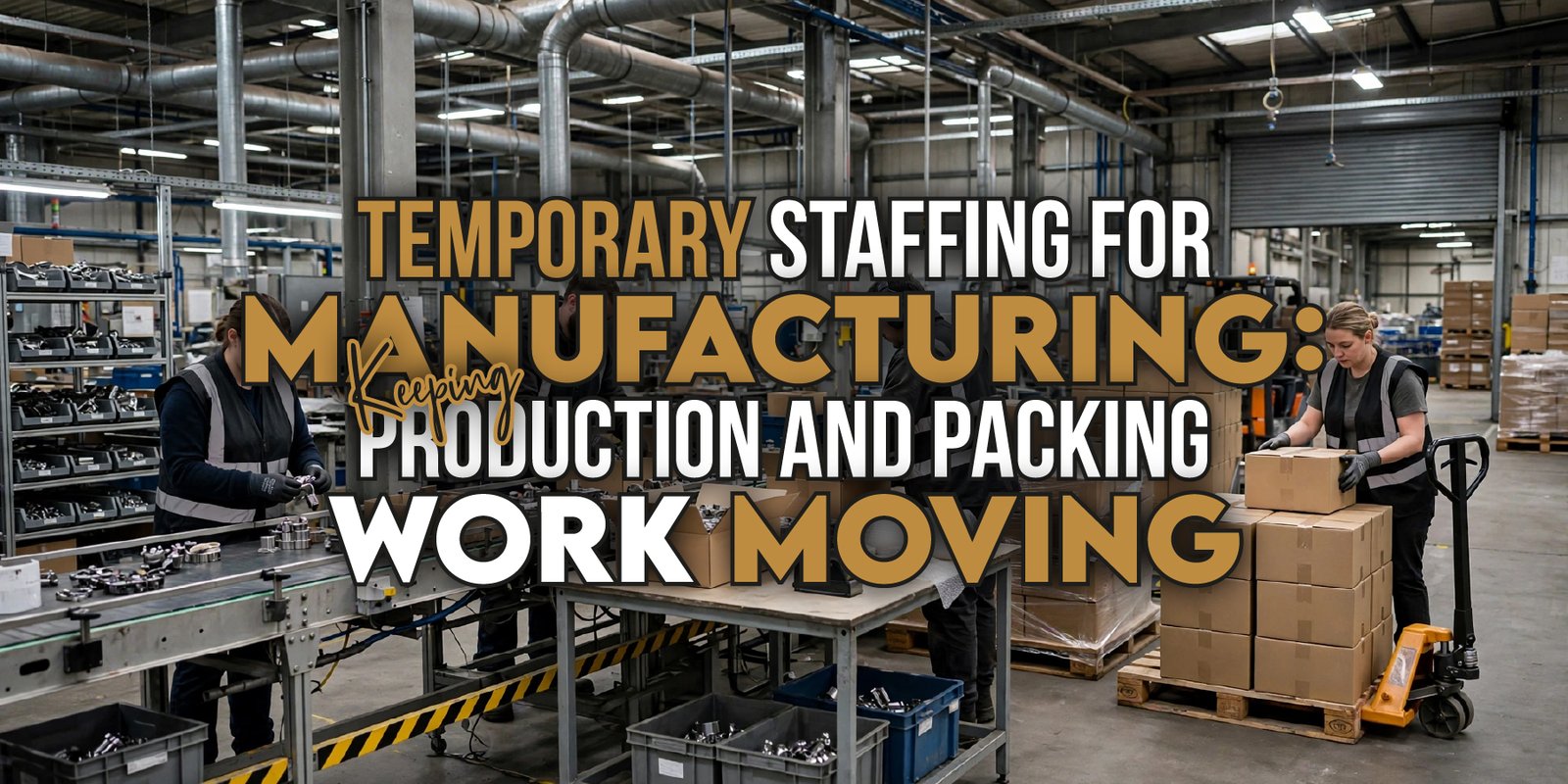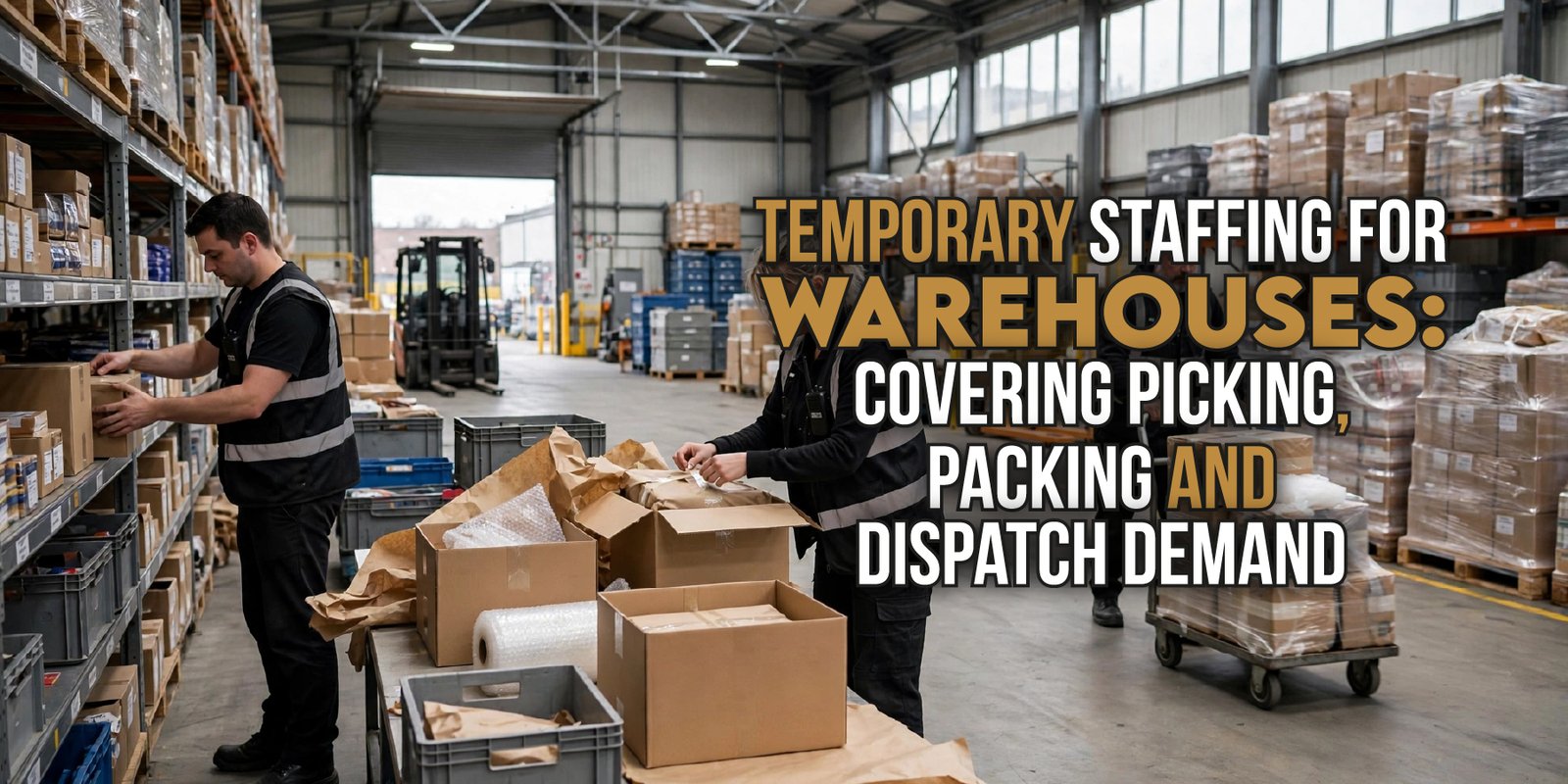
A manufacturing recruitment agency can help factories cover production gaps, employee absences, seasonal peaks, new contracts and permanent vacancies before labour shortages affect output. When a line lacks production operatives, machine operators, assemblers, packers, material handlers, quality control staff or production supervisors, the delay can affect the whole shift.
H&D Recruitment operates from Hounslow and supports manufacturing employers across London and the UK. The team helps businesses discuss part-time, temporary and full-time recruitment solutions across manufacturing, production, warehousing and other operational sectors.
What Does a Manufacturing Recruitment Agency Do?
A manufacturing recruitment agency helps factories and industrial employers source, screen and coordinate workers for temporary, contract and permanent roles. It supports candidate sourcing, initial screening, availability checks, skills matching, shift coordination, onboarding, replacement planning and ongoing staffing communication.
In practice, the agency helps employers turn a staffing problem into a clearer hiring plan. First, the employer explains the role, headcount, shift pattern, site location and start date. Then, the agency reviews the requirement and considers suitable candidates.
A manufacturing recruitment agency can support temporary placements for urgent cover, contract staffing for defined projects, temporary-to-permanent hiring and permanent recruitment. However, employers still need to provide accurate duties, site rules, induction details and supervisor contacts.
For example, “six packers for a two-week production run, 7am to 3pm, Hounslow site, PPE required” gives the agency stronger information than “we need factory staff quickly”.
H&D’s manufacturing recruitment service supports employers that need production workers, factory staff, engineers, temporary production personnel and specialist trades. Employers can review H&D’s manufacturing recruitment service when planning manufacturing staffing needs.
Why Vacant Factory Roles Can Slow Production
Vacant factory roles can slow production because one missing person can affect several connected tasks. If a production line lacks operators, packers, material handlers or quality control personnel, other workers may need to stretch across duties.
This can affect production-line speed, packing output, assembly stages, machine utilisation, quality checks, dispatch schedules, overtime levels, supervisor workload, order deadlines and permanent staff fatigue.
For example, a Hounslow factory may receive a larger-than-expected order but lack enough production operatives and packers. As a result, supervisors may move staff between stations, warehouse teams may wait for finished goods and dispatch deadlines may tighten.
A manufacturing recruitment agency helps employers plan support around the pressure point. Therefore, managers should identify which production stage needs staff before requesting candidates.
When Manufacturers Need Recruitment Support
Manufacturers need recruitment support when workload rises faster than internal hiring can respond. This may happen during seasonal demand, new contracts, increased order volumes, sickness absence, holiday cover, employee turnover and new shift launches.
Night-shift requirements, weekend production, factory expansion, product launches, production backlogs, temporary projects, permanent skills shortages and unexpected resignations can also create staffing pressure.
Early workforce planning usually gives a manufacturing recruitment agency more time to assess role requirements and candidate availability. However, short-notice needs still happen, especially when absence affects a live production line.
Because staffing availability depends on role, experience, shift, location, notice period, assignment duration, pay, site requirements and candidate availability, employers should share clear information from the start.
Manufacturing Roles H&D Recruitment Can Support
A manufacturing recruitment agency can support several factory and production roles, but each role needs a different brief. Employers should avoid treating every factory vacancy as general labour because some assignments require specific experience or site-level approval.
Production Operatives and Assembly-Line Workers
Production operatives and assembly-line workers support repeatable tasks, work instructions, output targets and basic production flow. They may help assemble products, follow line processes, report issues and keep work moving at the required pace.
A manufacturing recruitment agency can help employers source workers for production-line staffing when demand rises. However, the employer should explain the work pace, line layout, manual tasks, reporting process and site induction.
For example, an assembly operation opening an additional shift may need extra workers who can follow instructions and work consistently across repeated tasks.
Machine Operators
Machine operators need relevant machinery experience, process awareness and the ability to follow operating procedures. They may monitor equipment, record production information, report faults and work under site-specific instructions.
A manufacturing recruitment agency can help employers discuss machine-operator cover, but the role brief must identify the equipment type, experience level and training requirements.
Not every machine operator can operate every type of equipment. Therefore, employers should confirm role-specific expectations before hiring.
Packers and Factory Support Workers
Packers and factory support workers help with finished products, labelling, sorting, order preparation and movement between production stages. This type of factory staff recruitment often supports peak output, short-term packing runs and dispatch preparation.
A food production site preparing for seasonal demand may need extra packing workers for a short period. Meanwhile, a manufacturer with higher order volume may need packers to prevent bottlenecks near dispatch.
Where warehouse and production duties overlap, employers may also need material movement or warehouse support. The requested Hounslow temporary warehouse page needs replacement before publishing because it did not load during validation.
Quality Control Personnel
Quality control personnel help with visual checks, product specifications, defect records, quality procedures and issue escalation. They support consistent output, but they do not replace the employer’s own quality system.
A manufacturing recruitment agency can help employers discuss quality control officer requirements. However, the employer should confirm the inspection process, reporting line, documentation requirements and product standards.
For example, a factory experiencing quality-control vacancies may need temporary support while permanent recruitment continues.
Material Handlers and Warehouse Support
Material handlers help move raw materials, supply production lines, handle finished goods, support goods-in and goods-out, move stock and assist loading where relevant.
This role matters because production teams cannot work efficiently if materials do not reach the right place at the right time. In addition, material handlers may coordinate with warehouse teams and dispatch staff.
A manufacturing recruitment agency should understand whether the role involves manual movement, pallet handling, forklift requirements or stock control support.
Production Supervisors
Production supervisors help allocate tasks, monitor workflows, support shift communication, report performance, escalate operational issues and coordinate production teams.
Supervisory roles need more than basic factory experience. Therefore, employers should explain team size, shift structure, reporting requirements, production targets and expected authority.
A manufacturing recruitment agency can support supervisor hiring when employers need short-term cover or longer-term recruitment support.
Health and Safety Officers
Health and safety officers require suitable competence, experience and role-specific requirements. Employers should not treat this position as general factory labour.
The brief should explain site duties, reporting responsibilities, required knowledge and any specific qualifications or experience needed for the assignment.
A manufacturing recruitment agency can help discuss the requirement, but the employer should confirm all site expectations before accepting candidates.
Temporary, Contract or Permanent Manufacturing Staff
Temporary, contract and permanent hiring solve different problems. A manufacturing recruitment agency should help employers decide which route fits the role, shift pressure and expected duration.
Temporary staffing suits peaks, absence and short projects. Fixed-term contract recruitment suits defined production projects. Temporary-to-permanent recruitment allows both sides to assess longer-term fit. Meanwhile, permanent hiring supports stable workforce planning.
Employers should not choose a route only by speed. Instead, they should consider assignment length, required experience, supervision needs, onboarding time and future workforce plans.
Temporary Factory Staffing During Production Peaks
Temporary factory staffing helps manufacturers cover Christmas demand, seasonal food production, promotional campaigns, new client contracts, increased order volumes, product launches, short-term packing requirements, permanent recruitment delays, staff absence and overtime pressure.
This type of manufacturing staff supply can help employers match headcount to workload without committing to a permanent hire immediately. However, temporary workers still need proper induction, supervision, task instructions and workplace information.
For employers managing seasonal peaks or short-term production projects, H&D Recruitment’s temporary staffing agency support can help them discuss flexible temporary staffing across operational roles.
Production Workers Agency Support for Shift Gaps
A production workers agency may help employers cover day shifts, night shifts, weekend work, rotating shifts, overtime periods, short-notice absence, multi-week assignments and new production lines.
Availability can depend on location, transport, shift times, required experience, assignment length, pay rate, site conditions and notice period. Therefore, employers should share these details early.
For example, a manufacturer needing machine-operator absence cover should explain the machine type, shift time and supervision process. Similarly, an assembly operation adding a night shift should provide accurate start times and transport considerations.
A manufacturing recruitment agency can then assess candidates against the assignment rather than treating the vacancy as a generic factory role.
Industrial Staffing UK: What Employers Should Check
Industrial staffing UK requires careful planning around right-to-work checks, agency worker requirements, working-time considerations, site induction, role-specific training, PPE, health and safety information, manual-handling requirements, machinery authorisation, food hygiene requirements where relevant, shift breaks, reporting procedures and attendance management.
This section does not provide legal advice. Employers should check current government guidance, employment requirements and professional advice where necessary.
In practice, industrial employers should make the workplace expectations clear before hiring. For example, food production staff may need hygiene instructions, while machine operators may need machinery-specific authorisation.
A manufacturing recruitment agency can support candidate screening and role matching, but the employer still controls site instructions, workplace procedures and supervision.
Manufacturing Recruitment Agency Support in Hounslow
H&D Recruitment is based at 4 Bell Parade, Bell Road, Hounslow, TW3 3NU. As a Hounslow-based manufacturing recruitment agency, it supports employers requiring temporary and permanent staffing across manufacturing, production, warehousing and related operational roles.
Hounslow and the wider West London area include businesses linked to production teams, packaging operations, warehousing, distribution, food production, assembly work and Heathrow-area supply chains.
Local staffing knowledge can help employers think through early shift starts, late finishes, public transport limitations, worker travel times, short-notice availability, site accessibility and shift handovers.
For example, a Hounslow industrial employer planning a 6am start should consider whether the shift time, travel route and reporting instructions work for the required candidates.
How H&D Recruitment Supports Manufacturing Employers
H&D Recruitment supports manufacturing employers through a practical staffing process. A manufacturing recruitment agency works best when the employer shares a complete staffing brief rather than a vague request.
Stage 1: Understanding the Requirement
The employer shares the role, headcount, site location, shift pattern, start date, expected duration, required experience, duties and site requirements.
This helps the agency understand whether the vacancy needs a production operative, machine operator, assembler, material handler, quality control officer, production supervisor or another role.
Stage 2: Candidate Sourcing and Screening
Next, H&D Recruitment reviews candidates against the role and assignment requirements. Screening can focus on availability, role fit, experience and the details provided by the employer.
However, candidate availability can change, especially for urgent or specialist roles. Therefore, employers should avoid assuming every role can start immediately.
Stage 3: Employer Review and Confirmation
The employer may review suitable candidates or confirm the staffing proposal, depending on the recruitment arrangement.
This stage helps both sides agree the role, dates, reporting line, site information and shift expectations before the assignment starts.
Stage 4: Onboarding and Briefing
Onboarding and briefing may include start information, site reporting, induction, shift instructions, relevant documents and supervisor details.
A clear briefing helps the worker understand where to go, who to report to and what tasks to complete.
Stage 5: Ongoing Staffing Support
H&D Recruitment’s website-backed support includes rotas, replacements, timesheets, ongoing communication and support for changing staffing needs.
A manufacturing recruitment agency can help keep communication organised when shifts change, roles extend or staffing requirements increase.
Plan Staffing Before Production Pressure Builds
Factories often feel recruitment pressure once production already starts slipping. However, employers can avoid rushed decisions by preparing the role, headcount, shift pattern, location and start date before workload peaks.
H&D Recruitment can discuss temporary, contract and permanent options for production workers, factory staff, machine operators, assemblers, packers, material handlers, quality control roles and supervisors.
If your site needs support, you can share your factory staffing requirements with H&D Recruitment and explain your production staffing needs clearly.
What Employers Should Prepare Before Requesting Factory Staff
Employers should prepare a detailed staffing brief before requesting factory staff. Vague requests such as “we need ten factory workers tomorrow” provide too little information for accurate role matching.
Prepare the following:
- Exact role title
- Number of workers
- Production department
- Site address
- Shift dates
- Start and finish times
- Assignment duration
- Pay rate or approved budget
- Required experience
- Machinery experience
- Production duties
- Physical requirements
- Personal protective equipment
- Uniform requirements
- Site induction
- Reporting manager
- Break arrangements
- Transport or parking details
- Food hygiene requirements where relevant
- Health and safety information
- Performance expectations
- Timesheet process
- Cancellation terms
- Amendment procedure
The clearer the brief, the easier it becomes for a manufacturing recruitment agency to assess candidate fit.
Factory Staff Recruitment Without Disrupting Output
Factory staff recruitment should happen alongside production planning, not after output falls behind. Employers can organise hiring more effectively by separating urgent labour needs from long-term staffing requirements.
A practical approach includes:
- Forecast staffing requirements before order volume peaks.
- Identify the production stage under pressure.
- Separate general operative roles from skilled positions.
- Confirm the exact shift pattern.
- Prepare induction materials in advance.
- Assign an on-site reporting manager.
- Track attendance and performance.
- Communicate changes quickly.
- Review temporary-to-permanent needs.
- Maintain a realistic contingency plan.
A manufacturing recruitment agency can support this process by helping employers think clearly about role type, shift cover and assignment duration.
Common Manufacturing Recruitment Mistakes
Manufacturing recruitment becomes harder when employers wait until production has already fallen behind. However, poor briefs can also slow the process.
Common mistakes include:
- Giving an unclear role description
- Requesting general labour for a skilled machinery role
- Omitting shift times
- Ignoring transport limitations
- Failing to prepare induction
- Not identifying physical requirements
- Forgetting personal protective equipment
- Treating production and warehouse roles as identical
- Selecting an agency based only on price
- Failing to define the assignment length
- Not assigning a reporting supervisor
- Expecting temporary workers to understand the site without guidance
- Failing to communicate a schedule change
- Assuming every candidate suits every production environment
Because of this, employers should prepare a clear brief before speaking with a manufacturing recruitment agency.
How to Choose a Manufacturing Recruitment Agency
Employers should choose a manufacturing recruitment agency based on role understanding, temporary and permanent options, candidate screening, communication, local worker availability, shift support, role matching, onboarding support, replacement procedures, rates, contractual terms, timesheet processes and knowledge of production and warehouse operations.
Specialist positions need particular attention. For example, machine operators, health and safety officers and quality control officers require a more detailed brief than general production support.
Instead of focusing only on price, employers should assess whether the agency understands the factory environment, production pressure and assignment requirements.
Looking for Work Through H&D Recruitment?
This article mainly supports employers, but candidates can also use H&D Recruitment’s general job-search page to review available roles and register interest.
If you want to explore current opportunities with H&D Recruitment, you can use the general candidate page here: view H&D Recruitment’s job opportunities.
The current link uses a hospitality anchor, so H&D should consider replacing it with a dedicated manufacturing jobs anchor or manufacturing vacancy page when available.
Build Factory Capacity Before Vacancies Affect Output
Vacant factory roles can affect output, overtime, supervision, quality checks and dispatch planning. Therefore, employers should discuss staffing requirements before production pressure becomes harder to manage.
As a Hounslow-based manufacturing recruitment agency, H&D Recruitment can discuss temporary production workers, permanent manufacturing recruitment, factory operatives, packers, machine operators, assemblers, material handlers, quality control roles, production supervisors and changing shift requirements.
If your factory, production site or industrial operation needs support, request a manufacturing staffing quote from H&D Recruitment and share your role, headcount, shift pattern, location and start date.
Recruitment Options Comparison Table
| Recruitment Option | Best Suited For | Typical Requirement | Main Advantage | What the Employer Must Confirm |
|---|---|---|---|---|
| Temporary staffing | Peaks, absence and short projects | Days, weeks or seasonal periods | Flexible headcount | Exact shifts, duties and duration |
| Fixed-term contract | Defined production projects | A known start and end period | Planned project support | Required skills and project timeline |
| Temporary-to-permanent | Employers testing a longer-term need | Initial temporary assignment | Allows both sides to assess suitability | Conversion terms and expectations |
| Permanent recruitment | Long-term vacancies and specialist roles | Ongoing employment | Supports stable workforce planning | Salary, duties, experience and hiring stages |
Employer Staffing Checklist
Before requesting manufacturing staff, prepare:
✓ Exact role title
✓ Number of workers
✓ Production department
✓ Site address
✓ Shift dates
✓ Start and finish times
✓ Assignment duration
✓ Pay rate or approved budget
✓ Required experience
✓ Machinery experience
✓ Production duties
✓ Physical requirements
✓ Personal protective equipment
✓ Uniform requirements
✓ Site induction
✓ Reporting manager
✓ Break arrangements
✓ Transport or parking details
✓ Food hygiene requirements where relevant
✓ Health and safety information
✓ Performance expectations
✓ Timesheet process
✓ Cancellation terms
✓ Amendment procedure
11. FAQ Section
What does a manufacturing recruitment agency provide?
A manufacturing recruitment agency provides staffing support for factories and industrial employers. It can help source, screen and coordinate workers for temporary, contract, temporary-to-permanent and permanent roles across production, assembly, packing, quality control and related factory operations.
Can H&D Recruitment supply temporary factory workers?
H&D Recruitment can discuss temporary factory staffing requirements for employers needing short-term cover, absence cover, peak production support or project-based workers. Employers should provide the role, headcount, shift pattern, location, duties and expected duration.
Which manufacturing roles can H&D Recruitment support?
H&D Recruitment can support roles such as production supervisors, machine operators, quality control officers, material handlers, assemblers and health and safety officers. It also discusses factory workers, production operatives, packers, pickers, warehouse operatives, food production staff and assembly-line workers.
Does H&D Recruitment recruit machine operators?
Yes, H&D Recruitment can discuss machine operator recruitment. Employers should confirm the machinery type, operating procedure, required experience, shift pattern, supervision level and any site-specific training or authorisation needs.
Can manufacturers request workers for night or weekend shifts?
Yes, manufacturers can request workers for night shifts, weekend shifts, rotating shifts and overtime periods. Availability depends on location, shift times, assignment length, pay, transport, required experience and candidate availability.
What information should an employer provide before requesting production staff?
Employers should provide the role title, number of workers, site address, shift dates, start and finish times, assignment duration, duties, experience requirements, PPE, induction process, reporting manager and timesheet procedure.
Does H&D Recruitment support permanent manufacturing recruitment?
Yes, H&D Recruitment supports part-time, temporary and full-time recruitment solutions. Employers can discuss permanent manufacturing recruitment when they need long-term staff rather than short-term production cover.
Can H&D Recruitment help factories in Hounslow?
Yes, H&D Recruitment is based in Hounslow and can discuss staffing requirements with manufacturing employers in Hounslow, West London and wider UK locations. The company supports manufacturing, production, warehousing and other operational sectors.
What is the difference between factory staff recruitment and warehouse recruitment?
Factory staff recruitment focuses on production roles such as operatives, assemblers, machine operators, packers and quality control staff. Warehouse recruitment focuses more on goods handling, picking, stock movement, dispatch, loading and warehouse operations.
How early should manufacturers plan staffing for seasonal demand?
Manufacturers should plan staffing as soon as seasonal demand, order increases or production peaks become clear. Early planning gives the agency more time to review requirements, check candidate availability and prepare shift information.
Can a production workers agency support a short-term contract?
Yes, a production workers agency can support short-term contracts where manufacturers need staff for a defined period. Employers should confirm the start date, end date, duties, shift pattern, required experience and site expectations.
How can candidates register for work with H&D Recruitment?
Candidates can use H&D Recruitment’s general job-search page to explore current opportunities and register interest. When a dedicated manufacturing jobs page becomes available, it would help candidates find factory and production roles more directly.