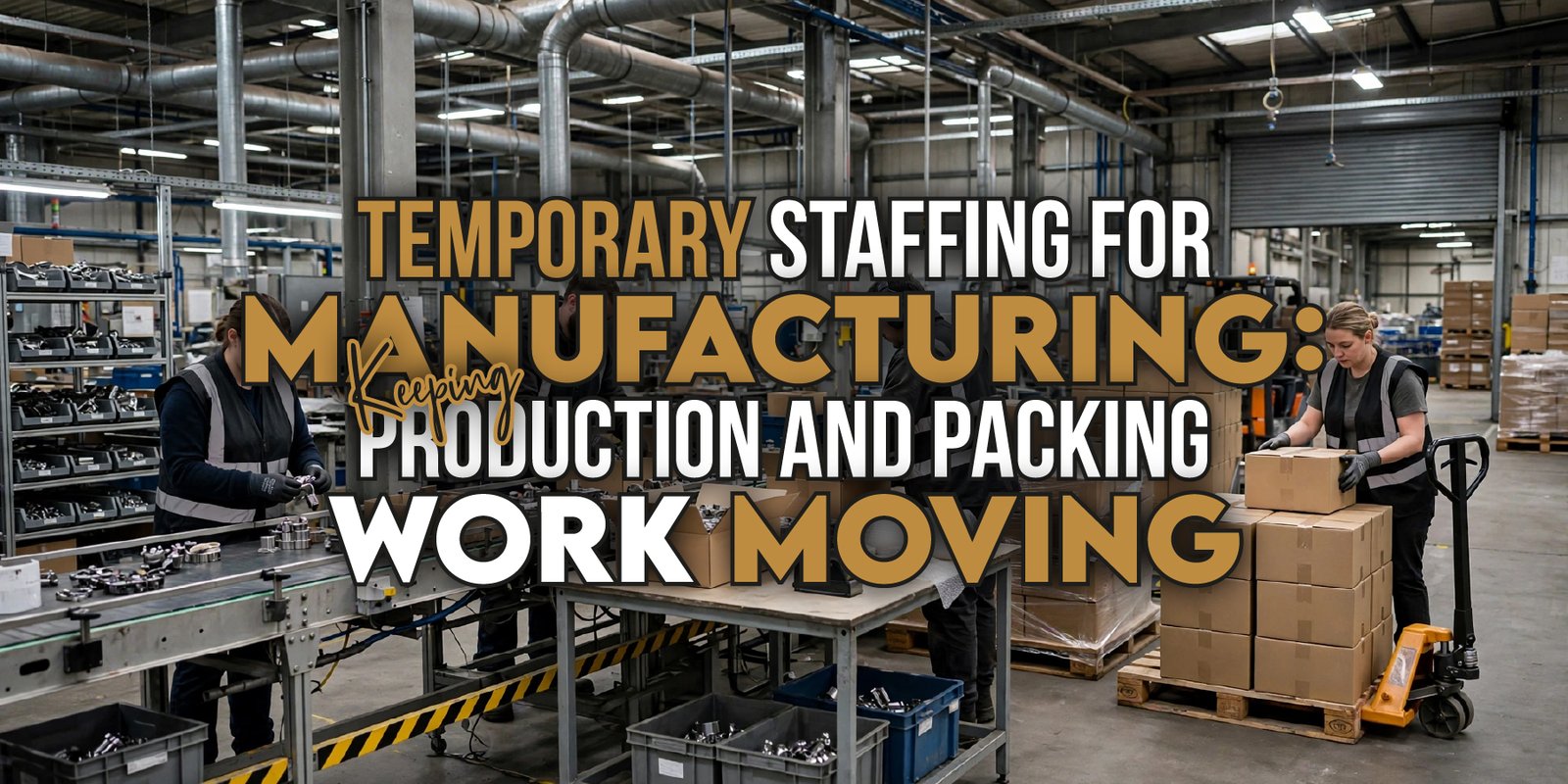
A factory recruitment agency can help manufacturers respond when production deadlines, order increases, staff absence, shift gaps, warehouse bottlenecks, packing pressure and quality checks start affecting workforce planning. In factories, one missing worker can slow more than one area because production lines, packing teams, warehouse teams and quality control often depend on each other.
When internal hiring takes too long, managers may rely on overtime or move workers between departments. However, that can place extra pressure on permanent teams. Therefore, a factory recruitment agency can support production staff hiring by helping businesses access temporary workers, permanent candidates and industrial recruitment support when workload increases.
This guide explains when manufacturers need faster hiring support, what a factory workers agency can help fill, what manufacturing recruitment services should include and how H&D Recruitment can support factory staffing needs.
Quick Answer: When Should Manufacturers Use a Factory Recruitment Agency?
Manufacturers should use a factory recruitment agency when production demand rises, shifts have gaps, hiring takes too long, absence affects output, or managers need temporary and permanent workers for production, packing, warehouse, quality control, machine operation and industrial support roles.
Compliance Note
Employment rules, agency worker responsibilities, right-to-work checks, health and safety duties, pay rules, PPE requirements and sector requirements can vary. Employers should check current UK employment guidance, Agency Workers Regulations, internal HR policies and professional advice before hiring factory workers or agency staff.
This article gives general recruitment guidance only. It does not replace legal, HR, payroll, immigration, health and safety or compliance advice.
Key Takeaways
- A factory recruitment agency helps manufacturers hire faster when production pressure increases.
- A factory workers agency can support production operatives, packers, warehouse staff, machine operators and quality control roles.
- Manufacturing recruitment services can support temporary staffing, permanent hiring, screening, onboarding and replacement planning.
- Production staff hiring works best when employers plan headcount, shift patterns, PPE, induction and supervision early.
- Industrial recruitment support helps factories manage peaks, shift gaps, absence and short-notice labour needs.
What Is a Factory Recruitment Agency?
A factory recruitment agency helps manufacturing and industrial employers find suitable workers for factory, production, packing, warehouse and support roles. It can support temporary cover, permanent recruitment, urgent shift gaps and longer workforce planning.
A factory recruitment agency may help with:
- Production operatives
- Packers
- Pickers
- Warehouse operatives
- Machine operators
- Quality control staff
- Food production staff
- Assembly line workers
- Cleaning operatives
- Forklift drivers where relevant
- Shift supervisors where relevant
In simple terms, a factory recruitment agency gives manufacturers extra hiring support when production demands move faster than internal recruitment.
When Do Manufacturers Need a Factory Recruitment Agency?
Manufacturers need a factory recruitment agency when workload pressure affects output, shift cover or team stability. This can happen suddenly, but it can also build over several weeks.
Common situations include:
- Production peaks
- Order increases
- Staff absence
- Shift gaps
- Seasonal demand
- New contracts
- Warehouse pressure
- Packing line delays
- Quality control support
- Temporary cover
- Permanent hiring
- Short-notice labour needs
Factory Recruitment Agency Support for Production Peaks
Production peaks can stretch permanent teams. Therefore, a factory recruitment agency can help employers bring in additional workers for packing, assembly, quality checks or warehouse support.
Factory Recruitment Agency Support for Shift Gaps
Shift gaps can affect the full production schedule. If one line lacks workers, supervisors may need to move people from another area. As a result, production staff hiring should happen before gaps affect output.
Factory Recruitment Agency Support for New Contracts
New contracts can increase workload before permanent recruitment finishes. In these cases, temporary workers can help bridge capacity while the business reviews longer-term demand.
Factory Workers Agency: What Roles Can It Help Fill?
A factory workers agency can support a wide range of industrial roles. However, the right roles depend on the site, production process, shift pattern and skill requirements.
Common roles include:
- Production operatives
- Factory workers
- Packers
- Pickers
- Warehouse operatives
- Machine operators
- Quality control staff
- Food production staff
- Assembly line workers
- Cleaning operatives
- Forklift drivers where relevant
- Shift supervisors where relevant
For example, a food production company may need packers and hygiene-aware production staff. Meanwhile, a packaging business may need assembly workers, warehouse operatives and quality control support.
A factory recruitment agency should understand how these roles connect inside the factory. Otherwise, employers may receive workers who are available but not suitable for the pace or duties.
Manufacturing Recruitment Services: What Should Employers Expect?
Manufacturing recruitment services should give employers more than a list of names. A useful recruitment partner should understand role requirements, shift timing, site expectations and communication needs.
Employers should expect support with:
- Role brief creation
- Candidate sourcing
- Screening
- Availability checks
- Right-to-work checks
- Shift matching
- Temporary staffing
- Permanent recruitment
- Onboarding support
- Attendance reporting
- Replacement planning
- Ongoing communication
For example, if a factory needs workers for a late shift, the agency should understand start times, PPE needs, transport considerations and supervisor contact details.
A factory recruitment agency works best when both sides share clear information before workers arrive.
Production Staff Hiring: What Should You Plan First?
Production staff hiring starts with the workload. Employers should define what the factory needs before deciding how many workers to request.
Plan:
- Headcount
- Shift patterns
- Start dates
- Role requirements
- Site induction
- PPE
- Health and safety briefing
- Supervisor responsibilities
- Productivity targets
- Attendance tracking
- Training time
- Handover process
For example, a production manager may need six packers for two weeks, then four longer-term workers if order levels remain high. Meanwhile, a factory with specialist machinery may need machine operator experience rather than general labour.
Therefore, a factory recruitment agency needs a detailed brief to support production staff hiring properly.
Factory Recruitment Agency vs Direct Hiring
| Hiring Method | Best For | Main Benefit | What to Check | Planning Tip |
|---|---|---|---|---|
| Factory recruitment agency | Temporary and permanent factory hiring support | Faster access to candidate pipelines | Role clarity and compliance process | Share shift details early |
| Direct hiring | Stable long-term roles | Full internal control | Hiring timeline and HR capacity | Start before demand rises |
| Temporary agency staff | Absence, peaks and short-term cover | Flexible workforce support | Duties, supervision and assignment length | Prepare induction notes |
| Permanent recruitment | Ongoing skilled roles | Long-term workforce stability | Candidate fit and training needs | Confirm long-term demand |
| Temp-to-perm hiring | Testing suitability before permanent decision | Practical trial period | Performance and attendance | Review regularly |
This table shows why a factory recruitment agency can help when direct hiring takes too long or workload changes quickly.
Production Line Staffing and Factory Output
Production line staffing plays a major role in factory output because each part of the line depends on labour being available at the right time. When workers are missing from packing, assembly, machine support or quality checks, the whole process can slow.
H&D Recruitment’s guide to production line staffing explains how staffing support for production lines can help manufacturers cover output pressure, shift gaps and busy schedules.
Production line recruitment support can help with:
- Assembly lines
- Packing lines
- Machine-side support
- Shift cover
- Quality checks
- Production targets
- Factory floor support
- Temporary production staff
- Manufacturing operatives
- Output continuity
For example, production staff hiring may help a manufacturer bring in extra production operatives before a large order creates delays.
Picker and Packer Recruitment for Factory and Warehouse Pressure
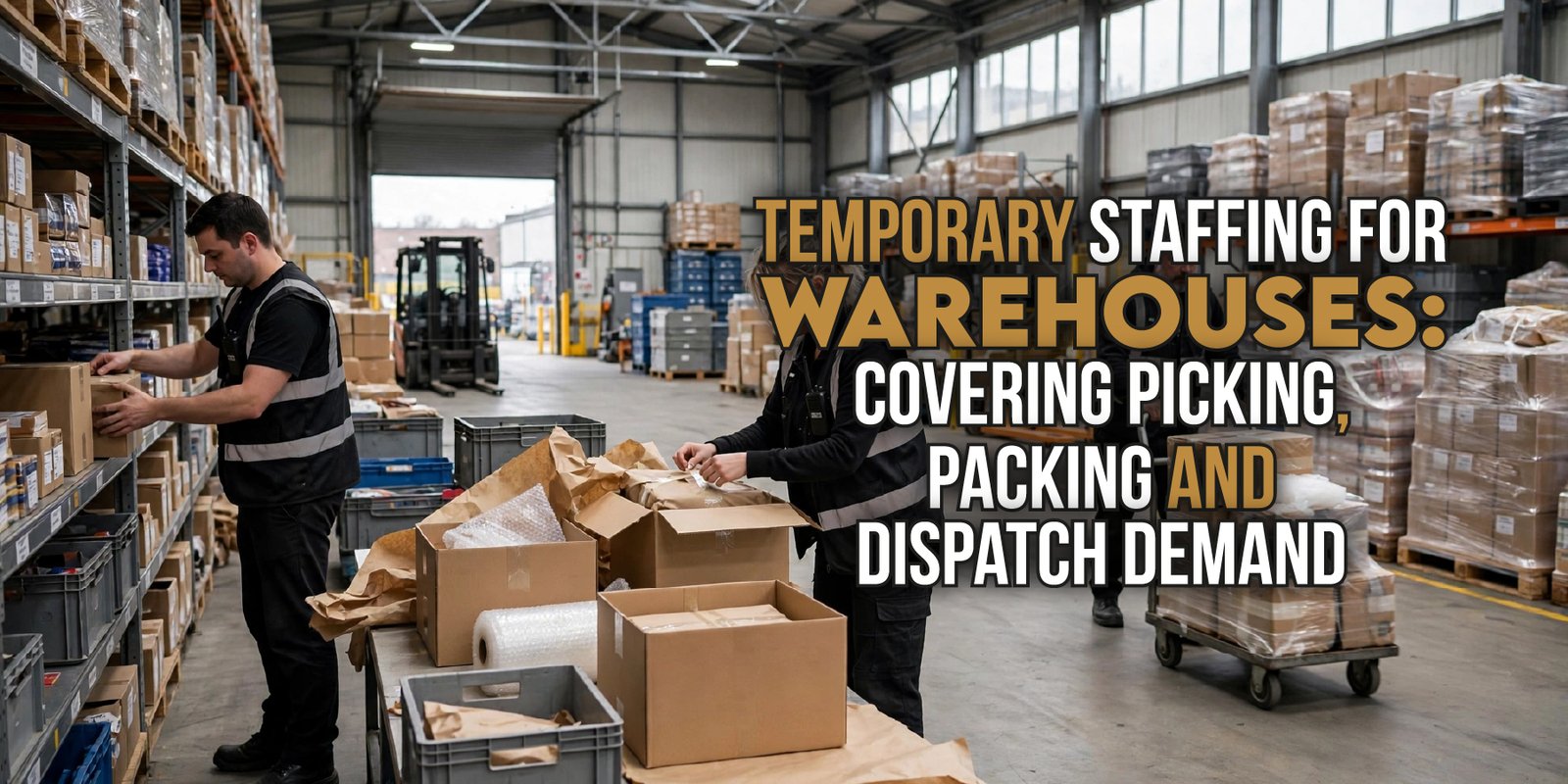
Factories often rely on warehouse and packing teams to move goods from production to dispatch. Therefore, picker and packer recruitment can support both factory output and warehouse flow.
H&D Recruitment’s picker and packer recruitment guide explains how packing staff recruitment can help with picking, packing, stock movement, fulfilment and dispatch pressure.
Picker and packer support can help with:
- Packing lines
- Order fulfilment
- Warehouse support
- Stock movement
- Dispatch pressure
- Pick and pack roles
- Factory-to-warehouse handover
- Busy operations
- Temporary labour gaps
- Seasonal demand
For example, pickers and packers for busy operations can help when finished goods move faster than warehouse teams can handle. As a result, a factory recruitment agency should understand both production and warehouse pressure.
Industrial Recruitment Support for Peak Production Periods
Industrial recruitment support helps manufacturers manage seasonal peaks, urgent orders, production backlogs, shift shortages, warehouse demand and short-term projects.
It can support:
- Increased output
- Packing pressure
- Warehouse bottlenecks
- Quality control gaps
- Shift shortages
- Absence cover
- Overtime pressure
- Temporary projects
- New production lines
- Stock movement
For example, a factory may receive a large order that increases packing demand for three weeks. Instead of stretching permanent staff, the employer may use a factory recruitment agency to support short-term capacity.
This approach helps businesses respond with better workforce planning.
Factory Staffing Needs by Situation
| Business Situation | Staffing Challenge | Roles Needed | What to Plan | Recruitment Tip |
| Seasonal production peak | More output than usual | Production operatives and packers | Shift volume and training time | Book staff early |
| Urgent order | Sudden labour requirement | Packers, warehouse staff and quality support | Start date and end date | Prepare short brief |
| Staff absence | Missing workers on shift | Temporary workers or agency staff | Cover hours and duties | Confirm supervisor |
| New contract | Increased ongoing demand | Temporary and permanent workers | Headcount and duration | Consider temp-to-perm |
| Warehouse backlog | Dispatch slows down | Warehouse operatives and pickers | Goods movement and deadlines | Match staff to workflow |
| Quality control gap | Checks fall behind | QC support and production staff | Standards and reporting | Brief carefully |
| Machine operation need | Skilled role shortage | Machine operators | Skills and safety needs | Screen experience |
| Packing line delay | Bottleneck in packing | Packers and line support | Productivity target | Track performance |
This table helps employers match a factory recruitment agency request to the real situation.
Temporary vs Permanent Factory Recruitment
Temporary staffing, temp-to-perm hiring and permanent recruitment all serve different needs.
Temporary staffing suits short-term demand, absence cover and urgent production gaps. Temp-to-perm hiring can help employers assess suitability before making longer commitments. Permanent recruitment works best when the business has consistent long-term demand.
A factory recruitment agency can help employers decide which route fits the workload.
Temporary vs Permanent Factory Staff
| Staffing Option | Best For | Main Advantage | What to Check | Planning Tip |
| Temporary staff | Peaks, absence and urgent cover | Flexible support | Assignment length and duties | Use for changing demand |
| Permanent staff | Stable long-term roles | Team continuity | Ongoing workload | Start hiring early |
| Temp-to-perm | Testing suitability | Reduced hiring uncertainty | Attendance and performance | Review at set points |
| Short-term project staff | Defined projects | Covers a clear workload window | Project scope | Plan handover |
| Flexible workforce mix | Factories with changing demand | Balances stability and flexibility | Supervision and reporting | Forecast demand regularly |
This comparison helps manufacturers use a factory recruitment agency more strategically.
How to Choose a Factory Recruitment Agency
Choosing a factory recruitment agency should involve more than comparing hourly rates. Employers should look at sector understanding, communication and support quality.
Check:
- Sector experience
- Candidate screening
- Shift coverage
- Compliance process
- Right-to-work checks
- Health and safety awareness
- Communication speed
- Replacement process
- Attendance reporting
- Local labour access
- Temporary and permanent options
- Quote clarity
For example, a factory workers agency that understands production environments should ask about PPE, shift times, supervisor contacts, site rules and productivity expectations.
Good manufacturing recruitment services start with good questions.
How to Plan Factory Recruitment Step by Step
Use this process before requesting support.
- Forecast production demand
- Identify staffing gaps
- List required roles
- Confirm shift patterns
- Prepare job briefs
- Check compliance needs
- Plan induction
- Assign supervisors
- Confirm PPE
- Track attendance
- Review performance
- Request a recruitment quote
For example, a packaging site may calculate workers based on production targets. Meanwhile, a food production company may prioritise hygiene rules, PPE and line speed.
A factory recruitment agency can support faster hiring when employers prepare these details early.
Plan Factory Staff Before Production Pressure Builds
If production demand, absence, packing pressure, warehouse bottlenecks or shift gaps are starting to affect output, now is the right time to review factory recruitment support.
H&D Recruitment can help businesses discuss factory recruitment support based on workload, shift patterns, headcount, role requirements and site needs.
You can get a recruitment quote or request a staffing quote for production operatives, packers, warehouse staff, machine operators, quality control support and industrial recruitment support.
Factory Recruitment Agency Checklist
Use this checklist before contacting a staffing partner.
- Confirm peak period
- List required roles
- Calculate headcount
- Confirm shift times
- Prepare role briefs
- Check PPE needs
- Plan site induction
- Assign supervisors
- Review compliance duties
- Confirm reporting process
- Plan replacement cover
- Request a staffing quote
This checklist helps employers use a factory recruitment agency with clearer expectations.
Common Factory Hiring Mistakes Manufacturers Should Avoid
Waiting Until Production Delays Happen
Late hiring can increase pressure and reduce time for planning.
Choosing Only by Hourly Rate
Cost matters, but reliability, suitability and supervision matter too.
Not Writing Clear Role Briefs
Workers need to understand duties before the shift starts.
Underestimating Induction Time
Even experienced factory workers need site-specific instructions.
Forgetting PPE Requirements
PPE should be confirmed before workers arrive.
Ignoring Shift Supervision
Agency staff need clear reporting lines and task guidance.
Not Planning Replacements
Replacement planning helps when absence or suitability issues appear.
Not Checking Right-to-Work Process
Employers should understand how checks fit their internal policies and agency process.
Poor Communication With Agency Staff
Unclear instructions can reduce productivity and create confusion.
Not Tracking Attendance
Attendance records help employers review workforce reliability.
Not Briefing Permanent Teams
Permanent staff should understand how temporary workers fit into the shift.
Ignoring Agency Worker Responsibilities
Manufacturers should check current guidance and understand duties around agency workers.
Avoiding these mistakes helps employers use a factory recruitment agency more effectively.
People Also Ask
What is a factory recruitment agency?
A factory recruitment agency helps manufacturers and industrial employers find temporary or permanent workers for production, packing, warehouse, machine operation and support roles.
When should manufacturers use a factory workers agency?
Manufacturers should use a factory workers agency when production demand rises, staff absence creates gaps, shifts need cover or hiring takes too long.
What do manufacturing recruitment services include?
Manufacturing recruitment services may include role briefs, candidate sourcing, screening, right-to-work checks, shift matching, onboarding support, attendance reporting and replacement planning.
How can agency staff support production staff hiring?
Agency staff can support production staff hiring by helping factories cover short-term peaks, shift gaps, packing pressure, warehouse demand and temporary project work.
What is industrial recruitment support?
Industrial recruitment support helps employers fill factory, warehouse, production, packing, quality control, logistics and operational roles during planned or urgent labour needs.
How do I get a quote for factory recruitment support?
You can request a staffing quote from H&D Recruitment by sharing your roles, shift times, headcount, location and workload needs.
Conclusion
A factory recruitment agency can help UK manufacturers respond when production demand rises, shifts have gaps, absence affects output or direct hiring takes too long. It can support production operatives, packers, warehouse staff, machine operators, quality control workers and wider industrial roles.
However, faster hiring still needs planning. Employers should define role requirements, shift patterns, PPE, induction, supervision, reporting and compliance needs before workers arrive.
With better factory recruitment planning, manufacturers can reduce hiring delays, support production output, cover shift gaps, manage peak workloads and choose suitable agency staff before operational pressure grows.
Build Reliable Factory Staffing Before Hiring Slows Output
Need a factory recruitment agency for production operatives, packers, warehouse staff, machine operators, quality control support, or industrial recruitment support? H&D Recruitment can help you discuss factory workers agency support, production staff hiring, temporary cover, permanent recruitment, and manufacturing recruitment services based on your workload and shift needs.
You can speak to H&D Recruitment or get a quote for factory workers today. You can also review production line staffing and picker and packer recruitment before planning factory cover.