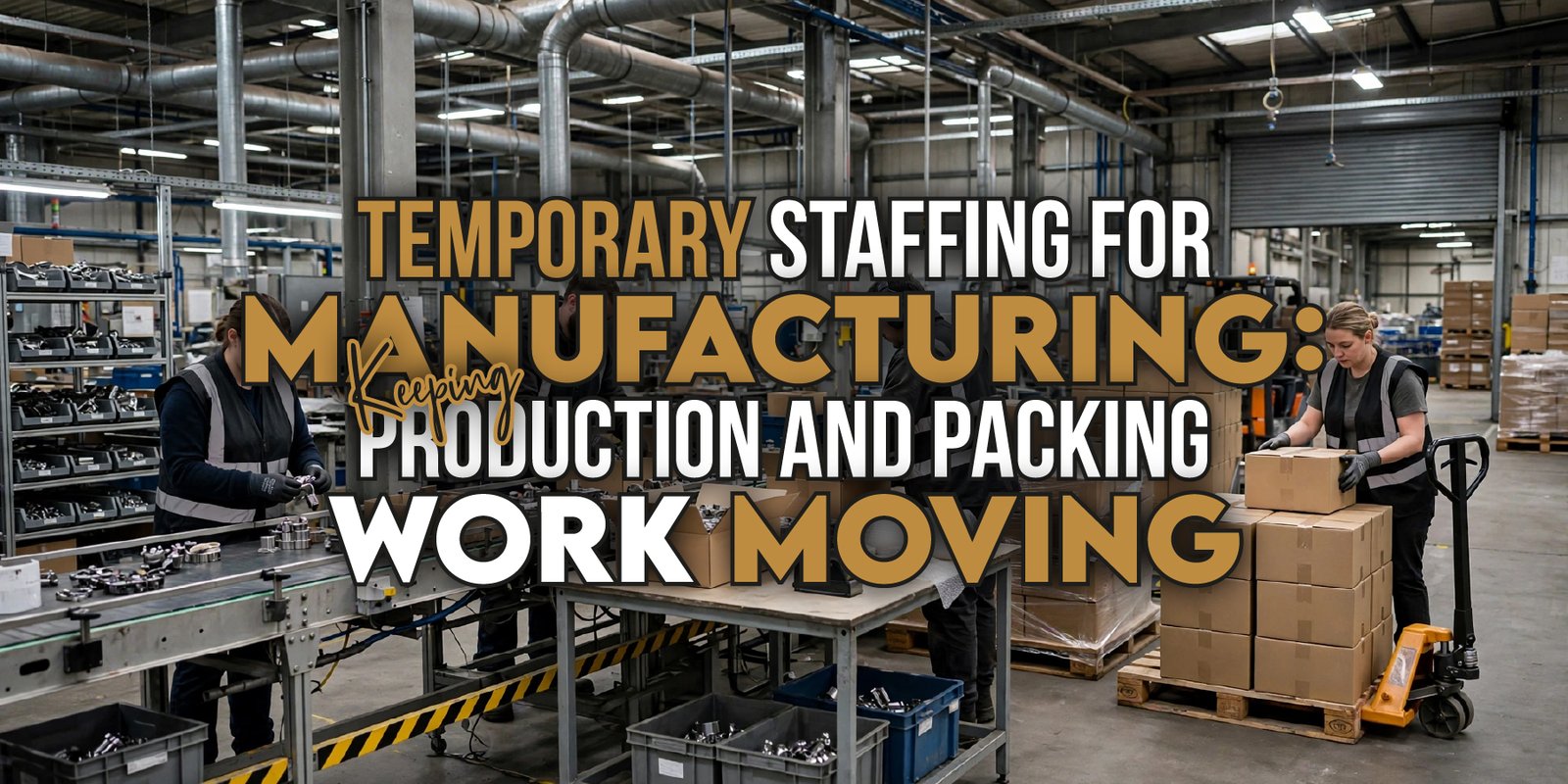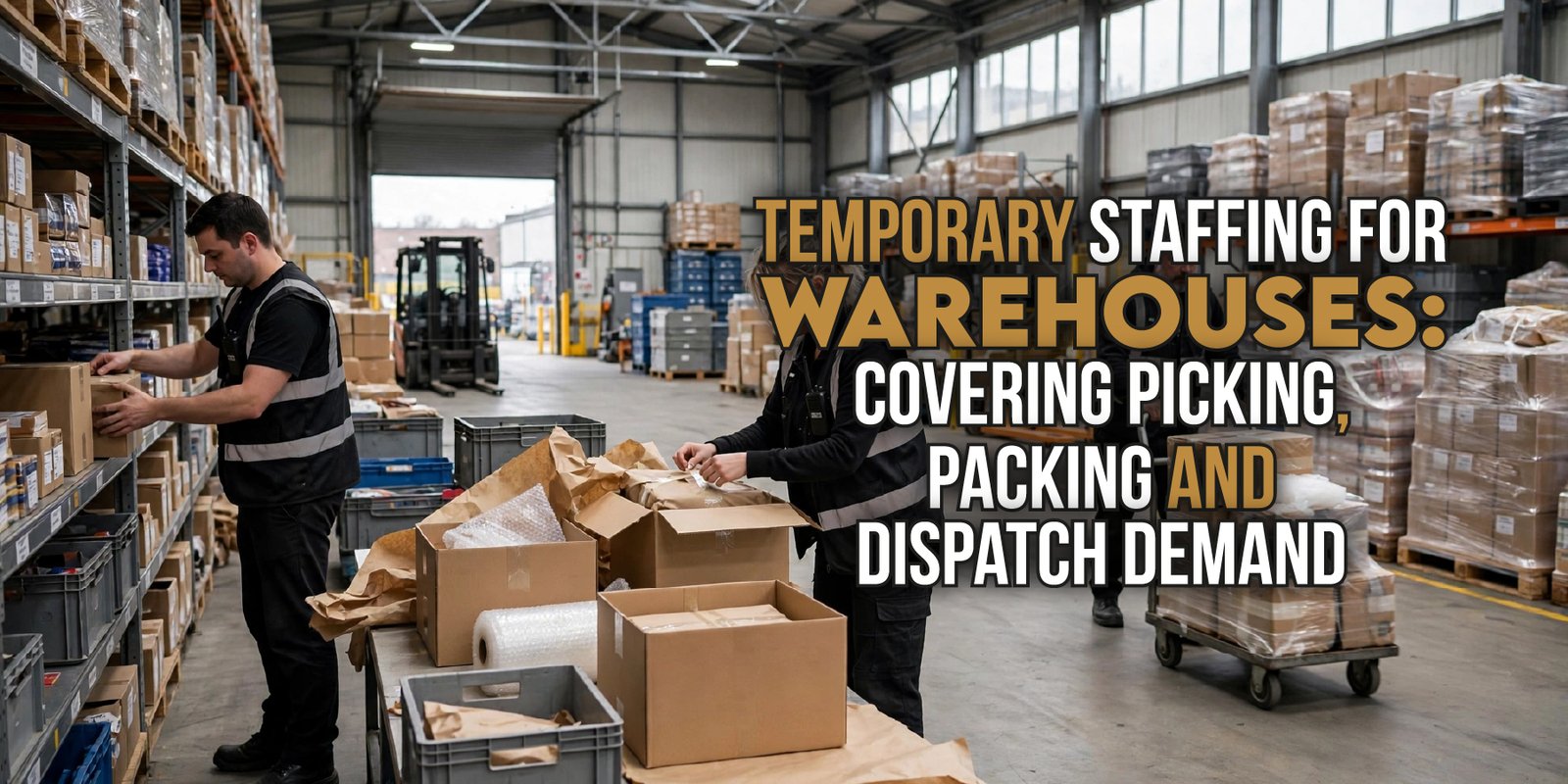
Factories cannot afford weak staffing during busy production periods. When absence increases, orders rise suddenly, overtime pressure builds or onboarding gaps appear, output can slow quickly. Therefore, production line staffing helps UK manufacturers keep lines moving when internal teams need extra support.
A missing worker on a packing line can create a bottleneck. A short-staffed assembly area can delay dispatch. Meanwhile, poor shift planning can place more pressure on supervisors and permanent teams. Because of this, production line staffing should form part of the wider manufacturing workforce planning process.
For H&D Recruitment, the goal is practical: help businesses access suitable production operatives, factory labour support, temporary production staff and shift-ready workers when demand increases.
Quick Answer: What Is Production Line Staffing?
Production line staffing helps manufacturers fill factory roles, cover absence, manage seasonal demand, support busy production schedules, reduce bottlenecks and keep output moving with temporary production staff or agency workers. It gives production teams flexible labour when workload rises or shift gaps affect daily output.
General Guidance Note
This article gives general business guidance only. It does not replace legal, HR, employment compliance, health and safety or right-to-work advice. Where worker onboarding, health and safety, right to work, agency staffing, pay, working hours or workforce compliance are mentioned, employers should check current UK guidance or seek professional advice.
Key Takeaways
- Production line staffing helps factories maintain output during busy periods, absence and seasonal demand.
- A production operatives agency can support urgent shifts, packing lines, assembly work and temporary labour gaps.
- Factory labour support can reduce bottlenecks across production, packing, quality checks and warehouse handover.
- Manufacturing workforce planning helps employers prepare labour before demand affects deadlines.
- Temporary production staff work best when employers brief, onboard and supervise them properly.
What Is Production Line Staffing?
Production line staffing is the process of placing suitable workers into factory, production, packing, assembly and warehouse-linked roles so the production process keeps moving.
It can support:
- Production lines
- Packing lines
- Food production
- Factory operations
- Assembly work
- Warehouse-linked production
- Manufacturing shift cover
- Quality control support
- Machine-side support roles
- Picking and packing support
- Night shifts
- Weekend shifts
- Seasonal manufacturing demand
In practical terms, production line staffing gives manufacturers access to workers when internal teams cannot cover the full workload. This may happen because of sickness, holidays, large orders, seasonal peaks or urgent production deadlines.
A strong staffing plan should also consider role fit. Production operatives need reliability, attendance, pace, accuracy, instruction-following and the ability to work within site processes.
Why Production Line Staffing Matters During Busy Periods
Production line staffing matters because production delays can spread across the whole operation. If one part of the line slows, packing, dispatch, warehouse handover and customer delivery can all suffer.
Busy periods may create pressure through:
- Seasonal demand
- Large orders
- Staff absence
- Overtime pressure
- Production bottlenecks
- Missed deadlines
- Quality checks
- Packing demand
- Warehouse handover
- Machine-side support gaps
- Shift gaps
- Weak workforce planning
For example, a food production site may need extra packers before a seasonal order deadline. Likewise, a factory may need temporary production staff to support assembly when permanent workers take holiday leave.
Without proper production line staffing, supervisors often spend more time filling gaps than managing output.
How Production Line Staffing Helps Maintain Output
Good production line staffing helps maintain output because it places labour where pressure appears first.
Production Line Staffing Supports Shift Continuity
Shift continuity matters because production lines depend on consistent coverage. When staff absence creates gaps, temporary production staff can help keep the line moving.
Production Line Staffing Reduces Bottlenecks
Bottlenecks often appear at packing, assembly, machine-side support or quality check points. Extra workers can help clear pressure before it affects dispatch.
Production Line Staffing Improves Workload Balance
When permanent staff carry too much workload, errors and fatigue can increase. Better labour support spreads tasks more evenly across the shift.
Production Line Staffing Helps Large Orders
Large orders can stretch production capacity. Factory labour support helps teams respond without relying only on overtime.
Production Line Staffing Improves Workforce Readiness
When employers prepare induction notes, supervisors and role instructions, agency workers can start faster and make fewer first-shift mistakes.
As a result, production line staffing supports output, schedule control and team morale during high-pressure periods.
Production Operatives Agency: When Should Businesses Use One?
A production operatives agency can help when internal recruitment cannot respond fast enough. Manufacturers often need people quickly, especially when demand rises unexpectedly.
Use a production operatives agency for:
- Sudden demand spikes
- Seasonal production
- Urgent shift gaps
- Packing line pressure
- Assembly support
- Warehouse-linked production
- Weekend shifts
- Night shifts
- Covering sickness or holidays
- Testing labour demand before permanent hiring
For example, a factory may need temporary production staff for a two-week order surge. A production operatives agency can help the business respond without committing to permanent headcount too early.
However, employers should still define the role clearly. The agency needs shift times, location, duties, PPE needs, experience requirements and supervisor contacts to place workers properly.
Factory Labour Support: Which Roles Can Agency Staff Cover?
Factory labour support can cover many roles across production, packing, assembly and warehouse-linked operations. The right roles depend on the site, product type, shift pattern and skill level required.
Agency staff may support:
- Production operatives
- Packers
- Assembly workers
- Quality control support
- Warehouse operatives
- Loaders
- Food production workers
- Machine-side assistants
- Cleaning support
- General factory labour
- Shift supervisors where relevant
- Short-term production support
For example, a production line may need machine-side assistants to feed materials, while a packing area may need extra workers to prepare finished goods for warehouse handover.
Effective production line staffing matches each worker to the correct task. This reduces confusion and helps supervisors keep control of output.
Manufacturing Workforce Planning: How to Prepare for Busy Periods
Manufacturing workforce planning means preparing labour before demand causes problems. It helps managers forecast workload, plan shifts and arrange factory labour support earlier.
A practical plan should include:
- Demand forecasting
- Rota planning
- Production schedules
- Holiday cover
- Absence risk
- Repeat agency workers
- Onboarding plans
- Shift handovers
- Supervisor availability
- Communication with the staffing agency
For example, if a factory expects higher demand every summer, it should not wait until output slows. Instead, managers can plan production line staffing earlier, brief the agency and prepare induction notes.
Better planning also improves consistency. When repeat agency workers return to the same site, they may understand the process faster than completely new workers.
Temporary Production Staff: When Do They Make Sense?
Temporary production staff make sense when demand changes quickly or when the business needs labour for a defined period.
Use temporary production staff for:
- Large orders
- Seasonal peaks
- Short-term contracts
- Staff absence
- Production backlogs
- New product runs
- Weekend demand
- Night shift cover
- Urgent packing needs
- Trial workforce demand
For example, a manufacturer may receive a short-term contract that needs more labour for four weeks. Temporary production staff can support output while the business reviews whether the demand will continue.
This makes production line staffing useful for both planned and urgent workload changes.
Production Line Staffing and Manufacturing Shift Cover
Production line staffing works closely with manufacturing shift cover because many output problems start with uncovered shifts. If one shift runs short, the next shift may inherit backlog pressure.
H&D Recruitment has a dedicated guide on manufacturing shift cover for employers dealing with factory absence, shift gaps and temporary manufacturing workers.
Manufacturing shift cover can support:
- Shift continuity
- Output planning
- Factory absence cover
- Busy production runs
- Temporary manufacturing workers
- Night shift pressure
- Weekend demand
- Production line staff cover
When employers combine production line staffing with factory shift cover, they can respond faster to sickness, holidays and demand spikes.
Agency Staff Onboarding for Production Line Roles
Agency staff onboarding helps temporary production staff understand the site before they begin work. Without proper onboarding, even willing workers can make avoidable mistakes.
A strong onboarding process should explain:
- Site rules
- Role expectations
- PPE requirements
- Health and safety guidance
- Quality standards
- Reporting lines
- First-shift duties
- Break procedures
- Escalation process
- Timekeeping expectations
This guide on agency staff onboarding explains temporary worker onboarding, staff induction process, agency worker training and workforce readiness.
For production environments, onboarding matters because workers need to understand pace, accuracy, quality checks and supervisor instructions. Therefore, production line staffing should always include preparation, not just worker placement.
Good workforce readiness can help temporary staff become productive faster.
Production Line Staffing vs Permanent Hiring
Both temporary staffing and permanent hiring have value. The right choice depends on workload, urgency and long-term demand.
| Staffing Option | Best For | Speed Level | Flexibility Level | Main Limitation | Planning Tip |
|---|---|---|---|---|---|
| Temporary production staff | Urgent gaps and demand spikes | Fast | High | Needs clear induction | Prepare role notes |
| Agency workers | Shift cover and flexible labour | Fast | High | Needs agency communication | Share forecasts early |
| Permanent hiring | Stable long-term roles | Slower | Lower | Longer commitment | Use for core demand |
| Fixed-term staff | Planned projects | Medium | Medium | Less flexible than agency cover | Define project length |
| Hybrid workforce | Mixed steady and seasonal demand | Balanced | High | Needs planning | Combine core team with flexible cover |
This comparison shows why production line staffing often works best when businesses need fast, flexible labour during busy periods.
How to Request Production Line Staffing Support
To request production line staffing support, employers should give the agency clear information from the start.
Share:
- Define the role
- Confirm shift dates
- Share start and finish times
- Confirm factory location
- Explain production tasks
- Share PPE or uniform needs
- Confirm experience requirements
- Assign a supervisor
- Prepare induction notes
- Agree timesheet process
- Track attendance and output
- Review future staffing needs
For example, “We need six packers for a night shift” gives only part of the picture. A stronger request explains the production line, shift speed, lifting requirements, PPE, supervisor name and reporting time.
Clear communication helps H&D Recruitment provide better factory labour support.
Production Line Staffing Costs UK: What Affects the Price?
Production line staffing costs can vary because factory roles, shift demands and urgency levels differ.
Cost factors may include:
- Role type
- Skill level
- Number of workers
- Shift length
- Day or night work
- Weekend or bank holiday demand
- Location
- Notice period
- Urgency
- Industry requirements
- PPE or onboarding needs
- Contract length
- Repeat booking potential
For example, urgent weekend night shift cover may cost differently from planned weekday packing support. Likewise, specialist production operatives may involve different rates from general factory labour.
Therefore, employers should request a clear staffing quote based on the real production requirement.
Need Production Staff Before Output Slows?
If your factory has rising orders, short shifts, packing pressure, warehouse handover delays or production bottlenecks, now is the right time to review your production line staffing plan.
H&D Recruitment can support UK manufacturing and factory businesses with temporary production staff, production operatives, packing support, factory labour support and shift cover.
You can get a staffing quote or request production line staffing for upcoming shifts, busy periods or urgent production needs.
Production Line Staffing Checklist for Employers
Use this checklist before requesting support.
- Define each production role clearly
- Confirm how many workers you need
- Confirm shift times
- Share factory location
- List required experience
- Confirm PPE or uniform needs
- Prepare induction notes
- Assign a production supervisor
- Explain quality expectations
- Confirm timesheet process
- Review workforce readiness
- Request staffing support before output slows
This checklist helps employers use production line staffing more effectively.
Common Production Line Staffing Mistakes to Avoid
Asking for Staff Too Late
Late requests reduce planning time and can increase pressure on supervisors.
Not Defining Production Roles Properly
Workers need clear duties before they arrive on site.
Underestimating Worker Numbers
Too few workers can leave bottlenecks unresolved.
Skipping Induction
Temporary production staff still need site instructions and role guidance.
Ignoring Skill Requirements
Some roles need experience, pace, accuracy or machine-side awareness.
Poor Communication With the Agency
Agencies need accurate shift details to supply suitable workers.
Choosing Only by Price
Low-cost labour can become expensive if attendance or productivity suffers.
Forgetting Shift Handovers
Handovers help workers understand production status and priorities.
Not Preparing PPE Information
Workers need to know what to bring and what the site provides.
Not Tracking First-Shift Performance
Feedback helps improve future staffing quality.
Ignoring Future Manufacturing Workforce Planning
Factories should prepare for repeated busy periods early.
Waiting Until Output Problems Affect Deadlines
The best time to plan is before the production line slows.
Avoiding these mistakes makes production line staffing more practical and commercially useful.
People Also Ask
What is production line staffing?
Production line staffing helps factories place suitable workers into production, packing, assembly and warehouse-linked roles so output continues during busy periods, absence or demand spikes.
How can a production operatives agency help manufacturers?
A production operatives agency can help manufacturers cover urgent shifts, seasonal demand, packing pressure, assembly support, sickness, holidays and temporary labour gaps.
What roles can factory labour support cover?
Factory labour support can cover production operatives, packers, assembly workers, quality control support, warehouse operatives, loaders, food production workers and general factory labour.
Why is manufacturing workforce planning important?
Manufacturing workforce planning helps factories forecast demand, prepare shift cover, reduce overtime pressure, organise onboarding and prevent labour gaps before output slows.
When should businesses use temporary production staff?
Businesses should use temporary production staff during large orders, seasonal peaks, short-term contracts, absence, production backlogs, new product runs, weekend demand and night shift cover.
How do I request production line staffing support?
To request production line staffing support, define the role, confirm shift dates, share location, explain duties, list PPE needs, assign a supervisor and request a staffing quote.
Conclusion
Production line staffing helps UK manufacturers maintain output during busy periods, seasonal demand, absence and urgent production pressure. It gives factories access to temporary production staff, production operatives agency support and factory labour support when workload changes quickly.
However, staffing works best when employers plan properly. Clear role definitions, induction notes, shift handovers, supervisor availability and communication with the agency all improve workforce readiness.
With the right production line staffing plan, manufacturers can reduce pressure on core teams, cover urgent demand, support quality standards and manage busy periods more confidently.
Keep Production Moving During Busy Periods
Need production line staffing for factory shifts, packing lines, assembly work, warehouse-linked production, quality support, or temporary production staff cover? Request a quote from H&D Recruitment today and get staffing support built around your production schedule, shift patterns, and workforce needs.
You can also speak to H&D Recruitment about factory labour support, production operatives, manufacturing shift cover and temporary production staff for upcoming busy periods.