Employers trying to find reliable agency staff need more than a quick headcount request. Lateness, absence, unsuitable placements and compliance risks can affect customer service, warehouse output, hotel standards, security cover and permanent team morale. Therefore, businesses should examine both candidate vetting and service quality before choosing a recruitment partner.
This matters across Hounslow, Heathrow and West London, where hotels, warehouses, logistics operations, security sites and hospitality venues often work around changing shift patterns. However, fast staffing should still involve clear paperwork, suitable checks and practical role matching.
H&D Recruitment is based in Hounslow and describes itself as a recruitment agency supporting employers and job seekers across hospitality, security, warehouse staffing and other sectors, with temporary, part-time and full-time workforce solutions. Its website also references warehouse, hospitality and security roles such as pickers, packers, forklift drivers, housekeepers, room attendants, front-of-house teams, SIA Door Supervisors and CCTV operators.
This article provides general recruitment information and does not constitute legal advice. Staffing responsibilities depend on the employment arrangement, assignment and circumstances. Employers should review current official guidance or obtain professional advice when necessary.
Key Takeaways
- Define the role before contacting an agency, because unclear briefs often create poor matching.
- Verify the recruitment business, sector focus and communication process before agreeing supply.
- Confirm role-specific candidate checks, including right-to-work checks and licence verification where relevant.
- Separate legal eligibility from practical suitability, because compliant paperwork does not guarantee performance.
- Prepare site induction, supervision and reporting lines before temporary personnel arrive.
- Businesses that need to find reliable agency staff should monitor attendance, punctuality and agency service quality after supply begins.
What Does Reliable Agency Staffing Mean?
Reliable agency staffing means supplying temporary personnel who meet legal eligibility, role expectations, attendance needs, punctuality standards and communication requirements. It also includes accurate documentation, suitable agency support and clear escalation procedures. No agency staff vetting process can guarantee perfect performance.
Reliability involves more than sending someone to a shift. A candidate may have the correct documents but still lack the right experience for a fast hotel turnaround. Similarly, a warehouse operative may have previous experience but struggle with an early shift if transport is unrealistic.
Therefore, employers should judge reliability through preparation, evidence, communication and shift performance.
How to Find Reliable Agency Staff
Employers can find reliable agency staff by using a structured process rather than comparing agencies only by hourly charge.
- Define the role accurately.
- Confirm the shift pattern.
- Shortlist sector-relevant agencies.
- Check the agency’s legal business details.
- Ask about recruitment compliance.
- Review candidate screening procedures.
- Confirm right-to-work arrangements.
- Verify role-specific licences.
- Review experience and references.
- Confirm cancellation and replacement procedures.
- Prepare the site induction.
- Monitor early assignments.
- Record attendance and performance.
- Review the agency relationship regularly.
This approach helps employers compare a trusted staffing agency through evidence rather than marketing claims. It also helps the recruitment agency understand the duties, workplace conditions and shift expectations before assessing suitable personnel.
Employers that have defined their required roles, headcount, shifts, location and compliance requirements can discuss your staffing requirements with H&D Recruitment. A complete brief provides clearer information for assessing suitable workforce options.
Begin With a Clear Staffing Brief
Reliable recruitment begins with the employer providing accurate information. Even strong agency staff vetting can fail if the role brief is vague or incomplete.
Use this checklist before requesting support:
☐ Correct job title
☐ Number of people required
☐ Site address
☐ Assignment start date
☐ Expected end date
☐ Shift start and finish times
☐ Break arrangements
☐ Main duties
☐ Required experience
☐ Required licences
☐ Physical duties
☐ Workplace conditions
☐ Uniform standards
☐ Personal protective equipment
☐ Site risks
☐ Induction requirements
☐ Reporting manager
☐ Performance expectations
☐ Parking and transport information
☐ Timesheet procedure
☐ Possibility of assignment extension
Incomplete information can cause unsuitable matching even when an agency completes appropriate checks. For example, a “warehouse operative” role could mean picking, loading, dispatch, returns or heavy goods movement. Each version needs different experience and site instructions.
Employers preparing their first brief can also review how to hire temporary staff before contacting a recruitment agency.
What Should Agency Staff Vetting Include?
Agency staff vetting should match the role, sector and assignment. However, not every check is mandatory for every position.
| Vetting area | What may be reviewed | Why it matters | What varies by role |
|---|---|---|---|
| Identity | Name and identity evidence | Confirms who the candidate is | Evidence route |
| Contact details | Phone, email and address | Supports communication | Candidate circumstances |
| Right to work | Evidence under current guidance | Supports legal work eligibility | Status and evidence type |
| Employment history | Previous roles and dates | Helps assess background | Role relevance |
| References | Professional references where relevant | Supports suitability checks | Employer policy and role |
| Relevant experience | Sector or task experience | Improves role matching | Warehouse, hospitality or security needs |
| Qualifications | Certificates or training evidence | Supports specialist tasks | Sector and assignment |
| Role-specific licences | SIA licence or equipment evidence | Supports legal or operational requirements | Duties and site rules |
| Availability | Days, times and shift preference | Reduces attendance risk | Candidate commitments |
| Travel capability | Route and timing | Helps punctuality | Location and shift time |
| Shift preferences | Days, nights or weekends | Improves matching | Employer demand |
| Communication | Responsiveness and clarity | Supports coordination | Role intensity |
| Candidate consent | Permission for checks and data handling | Supports data protection | Check type and lawful basis |
| Eligibility for criminal-record checks | DBS eligibility where lawful | Avoids inappropriate checks | Duties and setting |
| Previous assignment feedback | Lawfully retained feedback | Helps future matching | Data handling and fairness |
A hotel cleaner, forklift driver and CCTV operator should not go through one identical process. Instead, role-specific vetting should reflect the actual work.
Right-to-Work Checks and Recruitment Compliance
Recruitment compliance starts with lawful work eligibility. GOV.UK guidance says employers must carry out prescribed right-to-work checks before employment to make sure a person is allowed to do the work in question. It also explains that Home Office online checks, original document checks or approved digital identity routes may apply depending on the individual’s circumstances.
Time-limited permission may require follow-up checks, and records require appropriate handling. Therefore, nationality should never replace a lawful right-to-work check.
Recruitment compliance also involves clear assignment information. GOV.UK’s Conduct Regulations guidance for employment agencies and employment businesses states that employment businesses must obtain and provide a minimum amount of information about job assignments being offered.
For employers trying to find reliable agency staff, this means asking how the agency manages right-to-work processes, assignment details, candidate information and role-specific requirements.
Are DBS Checks Required for All Temporary Staff?
No, DBS checks are not required for every temporary worker. DBS eligibility depends on the role, duties and setting. Therefore, not every warehouse position requires a DBS check, and not every hospitality role requires one.
GOV.UK’s DBS eligibility guidance explains that employers should use the guidance to determine which level of check a role is eligible for. Employers cannot simply request higher-level checks for every role without eligibility.
Additionally, a DBS certificate does not prove overall reliability, attendance, competence or customer service. It is one form of information for eligible roles, not a complete judgement of candidate suitability.
Checking SIA Licences for Security Staff
People performing licensable security activities need the correct active SIA licence. GOV.UK says employers must check whether someone has the correct security licence before hiring them for private security work, using the official SIA register.
When reviewing security personnel, employers should check:
- Licence type
- Candidate name
- Licence validity
- Expiry date
- Official SIA register result
- Proposed duties
- Site requirements
- Evidence recorded appropriately
Candidates working in licensable security roles should not rely on general security experience alone. In addition, an SIA licence does not replace site induction, supervision, role-specific experience, communication skills or performance monitoring.
H&D Recruitment’s website references SIA-licensed personnel including door supervisors, event stewards, CCTV operators and security supervisors. Employers reviewing security requirements can use SIA security staff recruitment when planning licensed security staffing.
Vetting Warehouse Operatives and Forklift Drivers
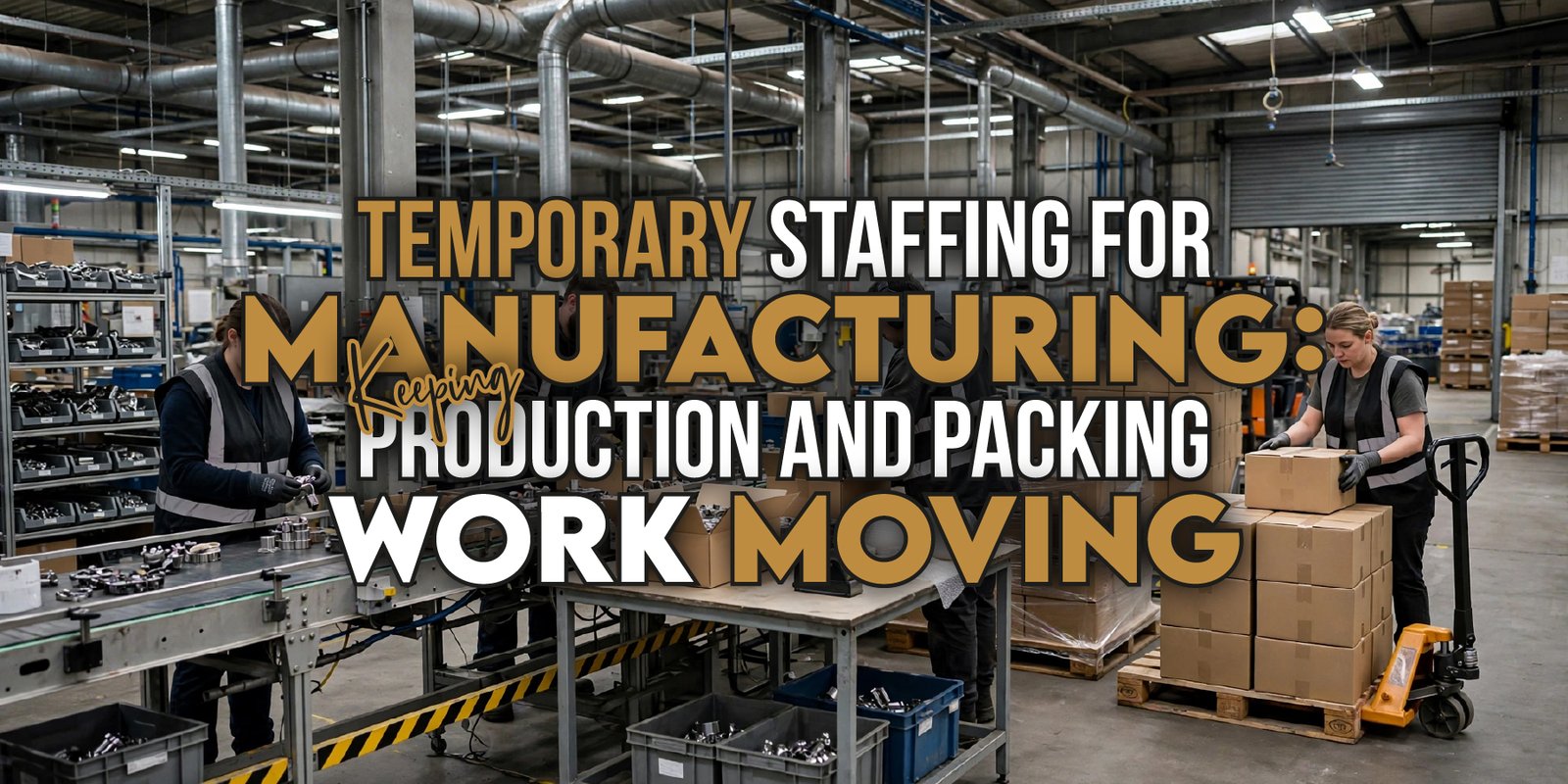
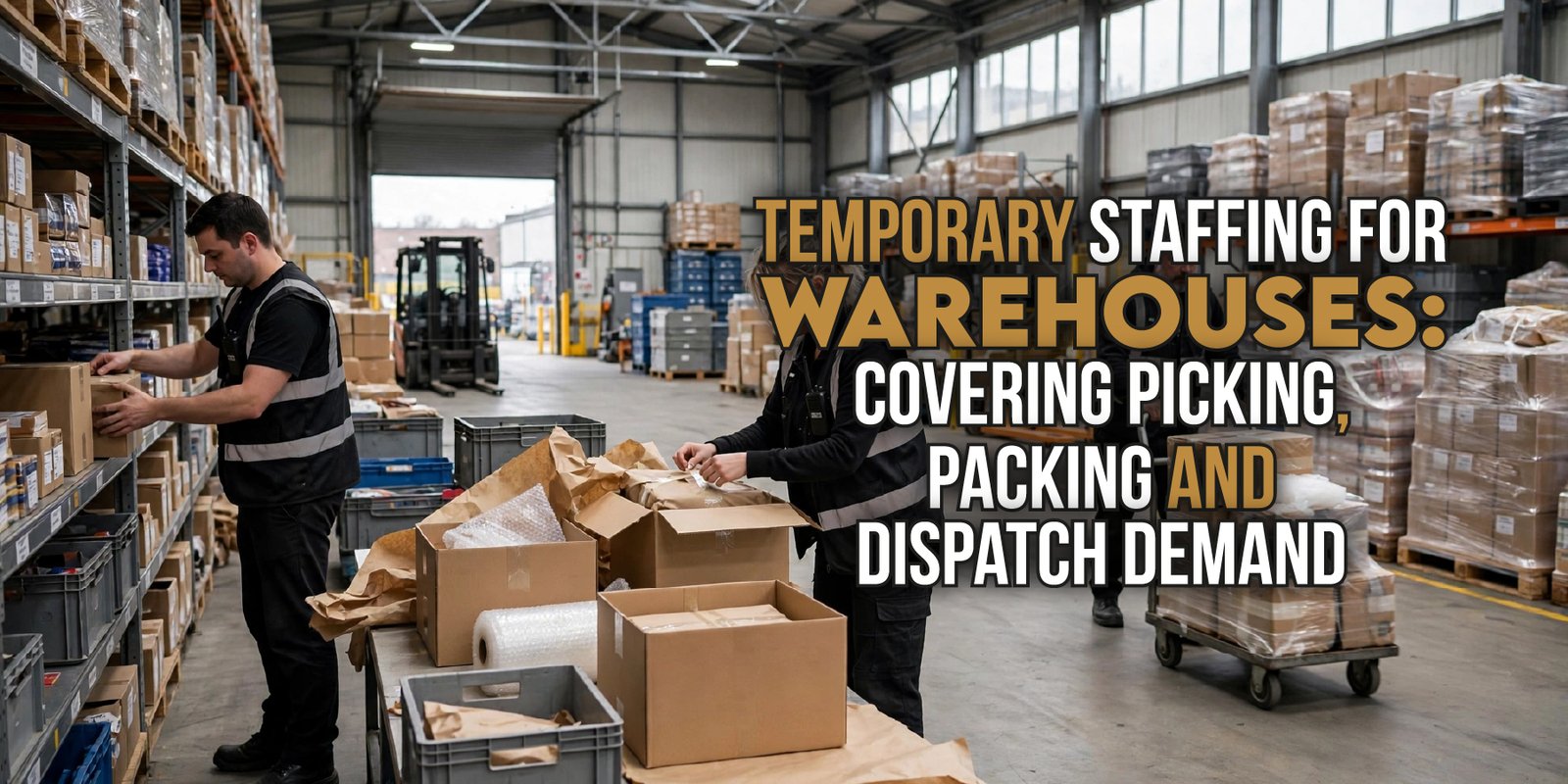
Warehouse staffing requires practical checks because every site has different equipment, layouts, pace and safety rules. H&D Recruitment’s website references warehouse and logistics roles including pickers, packers, forklift drivers, reach and flexi operators, van drivers, loaders and stock staff.
For warehouse operatives, pickers and packers, forklift drivers, reach truck drivers, loaders, dispatch personnel and warehouse supervisors, agencies and employers may review:
- Relevant experience
- Recent employment history
- Equipment experience
- Training evidence
- Site-specific competence
- Safety awareness
- Shift availability
- Travel reliability
- Physical role requirements
- Site authorisation
However, one forklift certificate does not automatically prove competence on every site or type of equipment. Therefore, employers should explain the exact equipment, environment and shift expectations.
Assessing Hospitality and Housekeeping Personnel
Hospitality staffing often depends on service standards, pace and communication. H&D Recruitment’s website references hospitality roles such as waiters, receptionists, porters, cleaners, housekeepers, room attendants, waiting staff and front-of-house teams.
For housekeepers, room attendants, public-area cleaners, linen porters, waiters, waitresses, kitchen porters, receptionists and front-of-house personnel, employers may review:
- Hotel or venue experience
- Guest communication
- Role expectations
- Presentation
- Work pace
- Cleaning or service standards
- Shift availability
- References where relevant
- Ability to follow procedures
- Confidentiality and guest privacy
Experience requirements vary between employers and assignments. A serviced apartment, Heathrow hotel, restaurant and event venue may each need different standards and shift patterns.
Hotels that need room turnaround support can consider housekeeping staff agency information when planning hospitality and housekeeping staffing.
Compliance Does Not Automatically Mean Reliability
Recruitment compliance is essential, but it does not automatically equal reliable performance. Legal eligibility, completed documentation and technical qualification are different from attendance, punctuality, communication, attitude, travel reliability and workplace suitability.
For example:
- A candidate may hold the required licence but lack experience in that environment.
- An experienced person may be unable to reach an early shift consistently.
- A candidate may receive incomplete instructions from the site.
- An agency may supply a suitable person, but weak induction may affect performance.
- A temporary employee may perform well in one workplace but not suit another.
Therefore, businesses that need to find reliable agency staff should review both screening and the working environment they provide.
How to Evaluate a Trusted Staffing Agency
A trusted staffing agency should provide evidence, process clarity and realistic communication. A polished website, badge or review score alone does not prove service quality.
| Evaluation area | Evidence to request | Positive indicators | Warning signs |
| Legal business details | Business name, address and contact details | Clear identity | Unclear trading information |
| Sector experience | Relevant sector examples | Understands your roles | Generic responses |
| Recruitment compliance | Process explanation | Clear and current checks | Unsupported claims |
| Right-to-work procedures | Summary of check routes | Refers to current guidance | Cannot explain process |
| Licence checks | Verification process | Uses official register | Accepts claims only |
| Candidate matching | Role brief questions | Asks about duties and shifts | No role detail requested |
| References | When and how used | Relevant to assignment | Universal promises |
| Communication | Named contact route | Clear updates | Slow or vague contact |
| Out-of-hours escalation | Issue process | Practical route for problems | No escalation procedure |
| Replacement procedures | Written process | Clear next steps | Guaranteed availability claims |
| Timesheets | Approval method | Clear sign-off | Confusing records |
| Payroll | Process explanation | Clear responsibility | Vague answers |
| Data protection | Privacy process | Careful handling | Unnecessary data collection |
| Insurance | Evidence where relevant | Current documents | No proof |
| Complaints handling | Escalation route | Records concerns | No complaint path |
| Contract terms | Written terms | Clear responsibilities | Hidden conditions |
| Pricing clarity | Rate explanation | Transparent charges | Vague rates |
| Service reviews | Review process | Tracks performance | No measurement |
A trusted staffing agency should ask detailed questions about the workplace before discussing candidate supply. Otherwise, role suitability becomes guesswork.
Questions to Ask a Recruitment Agency
Before choosing a staffing supplier, ask:
- Which staffing sectors do you specialise in?
- How do you assess candidate suitability?
- How do you complete right-to-work checks?
- How do you verify SIA licences?
- How do you review forklift experience?
- When do you request references?
- How do you assess candidate availability?
- How do you check travel feasibility?
- What happens when someone cancels?
- What happens when someone does not arrive?
- Who handles out-of-hours problems?
- How do replacement requests work?
- How are timesheets approved?
- How are rates and charges explained?
- Which responsibilities remain with the hiring business?
- How do you protect candidate information?
- How do you manage complaints?
- Can you support day, night and weekend shifts?
- How do you review assignment performance?
- What information do you require from our site?
- How do you manage assignment changes?
- How do you record role-specific checks?
These questions help employers compare service quality before committing.
Agency Responsibilities and Employer Responsibilities
Responsibilities can depend on the contract, employment arrangement and circumstances. However, employers and agencies should clarify responsibilities before supply begins.
| Area | Recruitment agency | Hiring business | Shared responsibility |
| Recruitment | Source and assess candidates | Define role requirements | Agree staffing brief |
| Candidate information | Collect relevant information | Share accurate role details | Keep data necessary |
| Right-to-work arrangements | Follow agreed process | Understand contractual duties | Maintain clear records |
| Assignment details | Communicate details to candidate | Provide accurate site information | Confirm changes |
| Site risks | Ask for relevant details | Explain workplace risks | Keep information current |
| Health and safety | Understand role context | Provide safe site information | Escalate concerns |
| Induction | Prepare candidate expectations | Deliver site-specific induction | Confirm completion |
| Supervision | Explain reporting route | Manage day-to-day work | Share feedback |
| Equipment | Check role needs | Provide site equipment where agreed | Clarify responsibility |
| Personal protective equipment | Discuss requirements | Provide or confirm PPE where required | Monitor use |
| Working hours | Share agreed hours | Provide accurate rota | Record changes |
| Timesheets | Provide approval process | Approve accurately | Resolve disputes |
| Performance feedback | Receive and act on feedback | Provide fair evidence | Review suitability |
| Incident reporting | Escalate agency issues | Record site incidents | Communicate quickly |
| Licence requirements | Check where agreed | Define licensable duties | Verify before work |
| Assignment changes | Update candidate | Notify agency early | Confirm in writing |
| Data protection | Handle candidate data lawfully | Handle supplied information carefully | Avoid unnecessary sharing |
HSE guidance says employers have responsibility for worker health and safety, including agency and temporary workers under their control. ICO guidance also explains that recruitment information must be handled under data protection rules, including transparency and appropriate handling of candidate data.
Why Site Induction Still Matters
Agency staff vetting does not replace site-specific induction. Even reliable temporary workers need to understand the workplace before starting.
Employers should cover:
- Emergency procedures
- Fire exits
- First aid
- Restricted areas
- Site hazards
- Equipment rules
- Personal protective equipment
- Reporting lines
- Breaks
- Welfare facilities
- Incident reporting
- Quality standards
- Guest or customer expectations
- End-of-shift procedures
For example, a warehouse picker needs site layout, scanning process and safety instructions. Meanwhile, a housekeeper needs room-status procedures, linen storage points and guest privacy rules. Therefore, induction should match the assignment.
How to Measure Reliable Temporary Workers
Employers should measure reliable temporary workers using consistent, role-relevant and non-discriminatory criteria.
| Measure | What to review | Why it matters |
| Attendance | Did the person attend the agreed shift? | Supports rota reliability |
| Punctuality | Did they arrive on time? | Protects service continuity |
| Role understanding | Did they understand duties? | Shows briefing quality |
| Accuracy | Were errors low and manageable? | Matters in warehouse and admin tasks |
| Productivity | Did output match realistic expectations? | Supports operational flow |
| Safety | Did they follow site instructions? | Protects people and operations |
| Communication | Did they raise issues early? | Helps supervisors act |
| Teamwork | Did they work well with the team? | Supports morale |
| Customer service | Did they follow service standards? | Matters in hospitality and events |
| Supervisor feedback | Would the manager rebook them? | Helps future matching |
| Shift completion | Did they finish as agreed? | Supports workforce planning |
| Suitability for repeat assignments | Did the role fit both sides? | Improves future planning |
Feedback should go back to the agency quickly. As a result, future matching can improve.
How to Measure Recruitment Agency Service Quality
Employers should also measure the agency, not only the worker. Useful indicators include request fulfilment, arrival rate, cancellation frequency, replacement response, candidate suitability, timesheet accuracy, invoice accuracy, communication, complaint handling, repeat booking suitability, assignment completion and supervisor satisfaction.
However, definitions matter. “Fill rate” could mean candidates confirmed, candidates arrived or candidates completed the shift. Therefore, agree definitions before comparing agencies.
A trusted staffing agency should welcome service reviews because they help improve future workforce planning.
Planned Staffing and Urgent Staff Shortages
Planned workforce support gives a recruitment agency more time to assess suitable options. Short-notice requirements may arise from staff sickness, last-minute cancellations, sudden workload increases, seasonal demand or emergency shift gaps.
Additional notice can help with:
- Candidate availability
- Licence checks
- Role matching
- Site instructions
- Induction planning
- Rota confirmation
- Uniform and PPE preparation
However, no agency should be expected to guarantee every urgent requirement. H&D Recruitment’s website refers to emergency call-outs and staffing support, but employers should still provide clear role details and accept that availability depends on role, location and shift pattern.
For urgent shortages, employers can use arrange staffing support in Hounslow to provide the role, headcount, dates and shift requirements.
Warning Signs When Comparing Recruitment Agencies
One issue may need clarification. However, repeated warning signs may justify reconsidering the supplier.
Watch for:
- Unclear business identity
- Vague rates
- No written terms
- Unsupported compliance claims
- No explanation of right-to-work procedures
- No method for checking licences
- Guaranteed availability for every request
- No escalation process
- Poor communication
- Inaccurate candidate information
- Repeated non-arrivals
- No replacement procedure
- Confusing invoices
- No complaints process
- Pressure to accept unsuitable candidates
- No interest in site risks
- No questions about the role
- Claims that the agency removes every employer responsibility
Reliable agency staff supply depends on partnership. Therefore, an agency should understand the role before suggesting people.
Common Employer Mistakes
| Mistake | Consequence | Better approach |
| Providing a vague role description | Candidate matching weakens | Share duties and expectations |
| Requesting personnel too late | Options may narrow | Plan earlier where possible |
| Failing to disclose workplace conditions | Suitability issues may follow | Explain physical and site conditions |
| Ignoring transport limitations | Lateness risk increases | Discuss travel feasibility |
| Failing to verify licences | Legal or operational issues may arise | Confirm role-specific requirements |
| Treating DBS checks as universal | Checks may be inappropriate | Confirm DBS eligibility |
| Skipping induction | Performance or safety issues may follow | Provide site briefing |
| Providing insufficient supervision | Temporary staff lack guidance | Assign a reporting manager |
| Changing duties without notifying the agency | Role mismatch can occur | Confirm changes in writing |
| Failing to record attendance | Evidence weakens | Keep accurate timesheets |
| Waiting too long to report problems | Issues repeat | Escalate early |
| Comparing agencies only by hourly charge | Service quality may be missed | Compare process and evidence |
| Expecting screening to guarantee performance | Expectations become unrealistic | Monitor actual performance |
| Failing to review service data | Patterns stay hidden | Hold regular reviews |
| Using one compliance checklist for every role | Checks may not fit duties | Use role-specific vetting |
Employers that plan ahead can also prepare to hire agency personnel with clearer role and shift information.
How to Find Reliable Agency Staff in Hounslow
Employers looking to find reliable agency staff in Hounslow, Heathrow and West London should think about local shift realities as well as documents. Heathrow hotels, Hounslow hospitality businesses, warehouses around Heathrow, distribution centres, fulfilment operations, events, retail locations, security sites and construction projects may all have different staffing needs.
Local employers should consider:
- Travel time
- Early and late public transport
- Parking
- Site access
- Required licences
- Local labour demand
- Induction
- Shift patterns
- Candidate availability
- Seasonal demand
A staffing agency in Hounslow can only assess suitable options when the employer explains the site and role clearly. Therefore, Hounslow hospitality staffing, Hounslow warehouse staffing and Hounslow security recruitment should begin with accurate assignment information.
How H&D Recruitment Supports Hounslow Employers
H&D Recruitment is based in Hounslow and supports temporary, part-time and full-time recruitment. Its website presents recruitment support across hospitality, security and warehouse staffing, with wider sectors also referenced on official pages.
For hospitality and housekeeping, relevant roles referenced on the website include housekeepers, room attendants, waiting staff, porters, front-of-house teams, waiters, receptionists and cleaners. Employers planning hotel staffing can use recruit hotel housekeeping personnel when reviewing room-attendant and cleaning needs.
For security, the website references SIA Door Supervisors, Event Stewards, CCTV operators, retail security personnel and security supervisors. Employers can source SIA-licensed personnel when planning licensed security support.
Depending on role requirements, shift pattern, location, candidate availability and current requirements, H&D Recruitment can discuss planned staffing and urgent workforce needs. Employers can request a tailored staffing quotation by sharing a complete staffing brief.
Information to Give H&D Recruitment
Before requesting staffing support, prepare:
☐ Business name
☐ Site address
☐ Main contact
☐ Roles required
☐ Number of people needed
☐ Assignment dates
☐ Shift times
☐ Main duties
☐ Essential experience
☐ Licence requirements
☐ Workplace conditions
☐ Uniform requirements
☐ Personal protective equipment
☐ Site risks
☐ Induction arrangements
☐ Reporting manager
☐ Parking and access details
☐ Performance expectations
☐ Possibility of extension
This information helps the recruitment team understand the role before assessing available options. Employers can provide your workforce requirements when they are ready to discuss staffing needs.
Guidance for Candidates Seeking Work
Candidates can improve application accuracy by keeping key information current, including CV, phone number, email address, postcode and travel area, availability, employment history, right-to-work evidence, qualifications, SIA licence where relevant, warehouse equipment experience, hospitality experience, preferred roles and shift preferences.
H&D Recruitment’s jobs page allows candidates to explore security, warehouse and hospitality routes. Candidates can explore current job opportunities or find hospitality, warehouse or security roles through H&D Recruitment.
However, vacancies, interviews, shifts and placements depend on employer demand and candidate suitability.
Frequently Asked Questions
How do I find reliable agency staff?
You can find reliable agency staff by choosing a recruitment agency with clear business details, role-specific vetting, right-to-work processes, licence checks, communication standards, replacement procedures and service monitoring. However, you also need a clear staffing brief, site induction and fair supervision.
What should agency staff vetting include?
Agency staff vetting may include identity, contact details, right-to-work evidence, employment history, references where relevant, experience, qualifications, role-specific licences, availability, travel feasibility and communication. However, checks should match the role rather than follow one universal checklist for every position.
How do agencies complete right-to-work checks?
Agencies and employers should follow current Home Office right-to-work guidance. Depending on the person’s circumstances, checks may involve an online Home Office check, original documents or an approved digital identity route. Nationality assumptions should not replace a lawful check.
Does every temporary employee need a DBS check?
No, every temporary employee does not need a DBS check. DBS eligibility depends on the role, duties and setting. Employers should not request higher-level DBS checks without eligibility. A DBS certificate also does not prove punctuality, competence or reliability.
How can employers verify an SIA licence?
Employers can verify an SIA licence by using the official SIA register on GOV.UK. They should check the person’s name, licence type, active status, expiry date and whether the proposed duties require that licence. Site induction and supervision still matter.
Does compliance guarantee reliable performance?
No, compliance does not guarantee reliable performance. Recruitment compliance supports legal eligibility and role-specific requirements, but reliable temporary workers also need relevant experience, punctuality, communication, travel reliability and good site instructions. Employers should monitor attendance and supervisor feedback.
What should employers ask a recruitment agency?
Employers should ask how the agency completes right-to-work checks, verifies licences, assesses experience, handles cancellations, manages replacement requests, protects candidate data, approves timesheets, resolves complaints and reviews assignment performance. These questions help identify a trusted staffing agency through evidence.
How can businesses assess reliable temporary workers?
Businesses can assess reliable temporary workers by reviewing attendance, punctuality, role understanding, accuracy, productivity, safety, communication, teamwork, customer service, supervisor feedback and shift completion. Measures should be fair, role-relevant and consistent across comparable assignments.
What makes a trusted staffing agency?
A trusted staffing agency should provide clear business details, written terms, recruitment compliance processes, role-specific vetting, right-to-work procedures, licence verification, communication routes, escalation procedures, timesheet processes, complaint handling and realistic availability guidance. It should avoid unsupported guarantees.
Who provides the site induction?
The hiring business usually provides site-specific induction because it controls the workplace, tasks, hazards, reporting lines and local procedures. The agency may brief candidates before arrival, but agency staff vetting does not replace site-specific instruction, supervision or risk information.
What happens when an agency employee does not arrive?
The employer should contact the agency through the agreed escalation procedure and record the non-arrival. The agency may assess whether a replacement can be arranged, depending on timing, location, role requirements, licence needs and candidate availability. Immediate replacement should not be assumed.
Can agencies provide short-notice staffing?
Agencies may help with short-notice staffing where suitable candidates are available and the role requirements are clear. However, urgent requests depend on the shift, location, notice period, licence requirements and candidate availability. Early planning usually gives more options.
How should warehouse personnel be assessed?
Warehouse personnel should be assessed against the actual site duties, equipment, shift pattern and physical requirements. Employers may review warehouse experience, picking or packing accuracy, equipment evidence, recent work history, safety awareness, travel feasibility and site-specific competence.
How should hospitality personnel be assessed?
Hospitality personnel should be assessed against service standards, pace, presentation, communication, guest privacy, cleaning quality and shift availability. A housekeeper, room attendant, porter, waiter or receptionist may each need different experience depending on the hotel or venue.
How can H&D Recruitment support Hounslow employers?
H&D Recruitment can discuss staffing requirements with Hounslow employers across hospitality, warehouse and security roles shown on its website. Support depends on role requirements, shift pattern, location, candidate availability and required licences or experience. Employers should provide a complete staffing brief.
Which staffing sectors does H&D Recruitment cover?
H&D Recruitment’s website presents support across hospitality, security, warehouse staffing and other sectors. Role examples include housekeepers, room attendants, front-of-house teams, pickers, packers, forklift drivers, reach operators, SIA Door Supervisors, Event Stewards and CCTV operators.
How can employers request a staffing quotation?
Employers can request a staffing quotation by providing business details, site address, role titles, headcount, dates, shift times, duties, required experience, licence requirements, site risks and induction information. A detailed brief helps H&D Recruitment assess suitable workforce options.
Where can candidates explore job opportunities?
Candidates can explore job opportunities through H&D Recruitment’s jobs page. The page presents security, warehouse and hospitality routes, although applications, interviews, shifts and placements depend on current employer demand, role requirements and candidate suitability.
Build a Reliable Staffing Process Before the Next Shift Gap
To find reliable agency staff, employers need more than a supplier name. A clear staffing brief, legal and role-specific checks, practical suitability assessment, site induction and service monitoring all matter. Recruitment compliance creates a foundation, but it does not replace performance management.
Therefore, review the agency relationship regularly. Track attendance, punctuality, replacement requests, timesheet accuracy, supervisor feedback and issue resolution. Over time, this evidence helps employers refine workforce planning and select agency partners more confidently.
Employers looking to find reliable agency staff in Hounslow, Heathrow or other supported areas can provide H&D Recruitment with their required roles, headcount, dates, shifts, experience requirements and site information. Submit a clear recruitment brief to request warehouse, hospitality or security personnel.
Candidates interested in hospitality, warehouse or security opportunities can search for temporary and permanent work through H&D Recruitment and provide accurate details about their experience, licences, location and availability.