A beautifully designed event can still fail in the room. Service delays, poor communication, empty bars, slow table turns, and underprepared staff are noticed immediately by guests, clients, and venue teams. In hospitality and events, staffing problems do not stay hidden in the background. Instead, they show up in service quality, guest experience, online reviews, and the overall reputation of the venue.
That is why understanding how to hire event staff for hotels weddings and corporate events matters so much. Hiring event staff is not only about finding people to fill shifts. It is about building the right team for the pace, tone, and service standard of the occasion. In the UK, where hotels, wedding venues, and corporate event spaces often work under tight timelines and changing labour availability, the pressure is even greater.
Some events need polished front-of-house professionals who can handle premium guest expectations. Others need flexible banquet staff who can support fast-paced service windows without losing consistency. Meanwhile, corporate functions may require a more structured, presentation-conscious team that can work calmly around schedules, speakers, and business guests. As a result, the best hiring decisions focus on reliability, presentation, role fit, briefing quality, and operational smoothness, not just availability.
For UK hotels, wedding venues, and event organisers, a smart staffing strategy protects more than one event day. It supports repeat business, better guest feedback, smoother delivery, and stronger confidence in your operation.
Why Event Staffing Matters for Hotels, Weddings, and Corporate Events in the UK
Event staffing matters because guests judge the event through the people they interact with. Food quality, décor, and planning are all important. However, service staff shape the live experience moment by moment. A warm greeting, a smooth drinks service, a well-managed room turnaround, or a fast response to a guest request can lift the event immediately. On the other hand, poor timing, weak communication, or inconsistent presentation can damage the atmosphere very quickly.
In UK hotels and venues, this challenge has become more complex. Many businesses face labour shortages, rising guest expectations, weekend demand pressure, and last-minute staffing gaps at the same time. Because of that, hiring the right event team often requires more than a quick callout or a rushed rota adjustment.
The event type matters too. Weddings usually carry more emotional pressure and more guest sensitivity than standard service shifts. Corporate events often involve clients, senior stakeholders, and tighter programme control. Hotel events may blend multiple needs in one day, such as breakfast service, conference support, and evening functions. Therefore, event staffing for UK venues needs to be flexible, well-briefed, and commercially sensible.
Why Hiring the Right Event Staff Is About More Than Filling Shifts
Filling shifts is the obvious need. Yet it is rarely the real objective. The real goal is to deliver a guest-ready service that fits the venue, the event, and the expected standard.
A last-minute worker may technically solve a gap on the rota. However, if that person lacks the right attitude, presentation, pace, or understanding of service etiquette, the event may still suffer. Because event staff work in front of guests, quality issues become visible immediately. That is why speed of supply matters, but worker fit matters just as much.
The best event teams are not always the largest ones. Instead, they are the teams where roles are clear, staff know their responsibilities, supervisors can rely on attendance, and everyone understands the flow of service. In addition, guest-facing confidence makes a major difference. A staff member who communicates well, follows direction, and stays composed under pressure can protect the guest experience even when the event becomes busy.
This is also why many venues look for broader staffing support for hotels, hospitality and events when pressure rises across multiple functions, not just one isolated event shift. The wider hospitality picture often affects service delivery more than expected.
Core Event Staffing Roles Venues and Organisers Usually Need
Different venues and event formats need different labour mixes. Even so, several roles appear repeatedly across hotels, weddings, and corporate events in the UK.
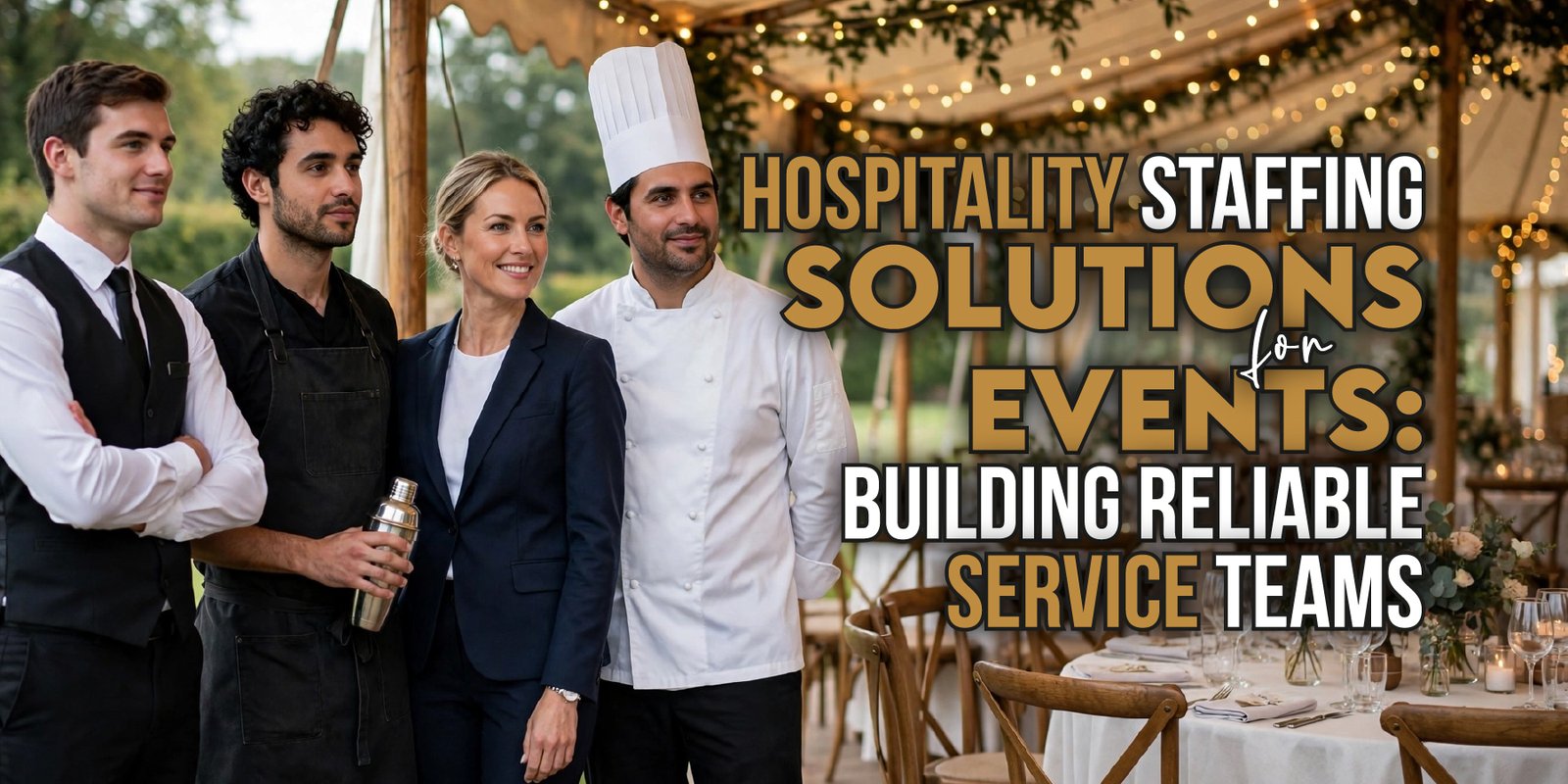
Waiters and Waitresses
Waiters and waitresses are central to most guest-facing service environments. They often handle table service, tray service, clearing, guest requests, and coordination with supervisors. Because they are visible throughout the event, presentation, pace, politeness, and awareness matter greatly.
Banquet Staff
Banquet staff usually support larger-format dining, plated service, room resets, coordinated service timing, and high-volume guest movement. In weddings and hotel functions especially, banquet teams need to work efficiently while maintaining a polished standard.
Bar Staff
Where alcohol service is part of the event, trained and dependable bar staff can make a major difference. They need speed, composure, product awareness, and good judgement under pressure. Moreover, bar performance often influences queue times and guest satisfaction very directly.
Front-of-House Support
Front-of-house support may include greeting guests, managing arrivals, supporting cloakroom or reception points, assisting with guest flow, and helping create a well-run first impression. In premium venues, this role can shape the tone of the event from the start.
Hosts and Hostesses
Hosts and hostesses are particularly useful where guest guidance, table direction, registration, or brand presentation matters. Corporate events, weddings, and launches often rely on these roles to support organisation and guest confidence.
Event Supervisors
Event supervisors help coordinate staff allocation, timing, guest issues, service changes, and venue communication. Their presence often improves consistency because they keep the operation structured while frontline staff stay focused on delivery.
Setup and Breakdown Support
Before and after the event, setup and breakdown staff can reduce pressure on venue teams. They may help with room arrangement, furniture setup, table preparation, event materials, and post-event clearance. This support is especially helpful when turnaround windows are tight.
Guest-Service Staff
Some venues need broader guest-service support that crosses between event operations and hospitality service. That may include assisting VIP guests, responding to ad hoc guest requests, supporting special areas, or helping maintain service continuity during busy periods.
How Staffing Needs Change Between Hotels, Weddings, and Corporate Events
Hotels, weddings, and corporate events all need good people. However, they do not need the same staffing model.
Hotels often need event staffing that fits into a wider live operation. A function may sit alongside bedrooms, restaurant service, conferences, and general guest support. Therefore, hotel event staffing usually benefits from workers who can adapt to multi-department pressure and uphold brand standards consistently.
Wedding staffing is more emotionally sensitive. Timing matters, but tone matters too. Guests expect warmth, calmness, attentiveness, and smooth coordination throughout the day. In addition, couples and families often notice service details more closely because the event has personal significance. That means wedding staffing solutions UK businesses use should prioritise guest care, presentation, and composure.
Corporate event staffing is often more structured. Registration, schedule control, branded presentation, client hosting, and business etiquette may all matter. Some events need discreet but responsive service, while others require high-volume hospitality around networking, conferences, launches, or awards. Because of that, corporate functions often depend on staff who are organised, brief-friendly, and comfortable in professional environments.
Location and venue type shape the decision too. Wedding venues in the UK may face weekend-heavy pressure and rural labour constraints. UK hotels in city centres may have stronger access to staff but more competition for talent. Meanwhile, event staffing for UK venues in multi-site groups may need wider workforce planning because one site’s shortage can affect another’s availability.
How to Hire Event Staff Quickly Without Compromising Service Quality
Fast hiring matters in hospitality because events cannot usually be moved to suit recruitment delays. Even so, moving quickly should not mean lowering standards blindly.
The first step is clarity. If the role brief is vague, the shortlist will usually be weak. Define the event type, service style, dress code, guest profile, timing, shift length, role responsibilities, and whether prior event experience is essential. Because of that clarity, agencies and internal teams can screen more accurately from the start.
Next, separate urgent needs from critical quality requirements. For example, a premium wedding venue may treat presentation and guest manner as non-negotiable. A large conference event may prioritise calm front-of-house support and smooth registration handling. Once those essentials are clear, hiring can move faster without becoming careless.
Briefing speed matters as well. A candidate who receives proper pre-event information will usually perform better than one sent into a venue with minimal context. In addition, clear arrival instructions, reporting lines, uniform expectations, and task allocation reduce confusion on the day.
Many venues also benefit from using a trusted staffing partner rather than rebuilding sourcing from scratch each time. When a recruitment partner already understands the service standard and venue environment, event delivery often becomes smoother and quicker.
How Screening, Briefing, and Onboarding Affect Event Performance
Strong event staffing does not begin when the guest arrives. It begins with screening, briefing, and onboarding.
Screening should assess more than experience length. It should look at presentation, communication, punctuality, attitude, guest awareness, and suitability for the event style. For example, someone who performs well in high-volume banqueting may not be the best fit for a premium brand-hosted corporate event. On the other hand, a polished hospitality worker may still need clearer pace expectations before a busy wedding service.
Briefing then turns suitable staff into a more effective team. A useful brief covers service style, timing, floor layout, escalation points, guest profile, dress code, service priorities, and what success looks like for that event. Without that context, even good staff can look inconsistent.
Onboarding matters too, especially where workers are temporary or new to the venue. A short but focused induction helps staff understand the space, the supervisors, the service flow, and any guest-sensitive details. As a result, confidence improves and avoidable mistakes often decrease.
Common Mistakes Businesses Make When Hiring Event Staff
One common mistake is hiring purely for availability. Someone may be free for the shift, yet that does not mean they are right for the event. Presentation, attitude, and reliability usually matter just as much.
Another error is underestimating guest-facing impact. In hospitality, one poor interaction can shape how the whole event feels. Therefore, businesses should not treat event roles as interchangeable general labour if service quality is important.
Some venues also brief too late or too lightly. Staff who arrive with little context may still work hard, but they often spend too much time reacting instead of delivering smoothly.
Under-supervising is another issue. Temporary staffing works best when role allocation is clear and someone is visibly managing service flow. Without that structure, good staff can still become underused or misdirected.
Finally, some organisers wait until pressure is already high before securing support. A more planned approach usually improves quality, especially during busy event periods such as wedding season, holiday functions, and major corporate calendars.
How Temporary Staffing and Planned Workforce Support Improve Event Delivery
Temporary staffing often gets associated with last-minute cover. It can do that job well. However, it works best when it is part of a wider event workforce plan rather than only an emergency option.
Planned temporary staffing gives venues flexibility during busy periods, weekend surges, overlapping functions, and seasonal peaks. It also allows businesses to scale service capacity without committing immediately to permanent headcount increases. That is particularly useful for UK hotels and venues where event demand can fluctuate sharply.
At the same time, temporary cover should not be treated as a substitute for planning. The best results usually come when staffing numbers, shift structures, briefing processes, and supervisory lines are already thought through. Because of that, temporary workers join a clearer operation rather than stepping into confusion.
This broader planning approach often links naturally with hire talent for your venue or event decisions, especially when the requirement goes beyond one shift and becomes part of a recurring staffing need.
How to Choose the Right Event Staffing Partner
The right event staffing partner should do more than provide names quickly. They should understand service environments, venue pressures, and what guest-facing quality actually looks like.
Start by assessing whether the partner understands hotels, weddings, and corporate events as different operating models. A good supplier should recognise that each requires a slightly different staffing mix, briefing style, and service expectation.
Next, look at communication and role understanding. If the recruitment partner cannot grasp your event brief, your timing, or your standards, the staffing outcome will usually be inconsistent. On the other hand, a partner that asks the right questions often improves both speed and quality.
Reliability matters as well. You need confidence that the people supplied will turn up prepared, presentable, and ready to work within your event structure. Although no supplier can guarantee a flawless event every time, a strong partner can reduce risk through better selection and clearer coordination.
Finally, consider whether the provider can support wider hospitality pressures too. For venues running frequent functions, broader recruitment support for hospitality and event operations can be more valuable than isolated one-off cover.
Conclusion
The best event staffing strategy is not simply about filling a rota. It is about protecting guest experience, service consistency, and operational smoothness in live hospitality environments where mistakes are noticed straight away. That is why learning how to hire event staff for hotels weddings and corporate events is so important for UK venues, organisers, and hotel teams.
Whether you are managing a wedding venue, a city hotel, or a corporate function space, the right solution depends on venue size, labour availability, event type, timing, guest expectations, and how well the team is briefed and supervised. Speed matters. However, presentation, reliability, attitude, and service fit matter just as much.
If you need dependable event staffing support or broader hospitality recruitment help, H&D Recruitment can help you build a stronger staffing plan for hotels, weddings, corporate events, and guest-facing service operations across the UK.
People Also Ask Questions
1. How do I hire reliable event staff in the UK?
Start by defining the event type, service standard, shift details, and guest expectations clearly. Then screen for presentation, communication, punctuality, and relevant event experience, not just availability. In addition, give staff a proper brief before the event. Reliability improves when role fit and preparation are treated seriously from the beginning.
2. Can I hire temporary event staff for weddings and hotel functions?
Yes, temporary event staff are commonly used for weddings, hotel functions, and busy hospitality periods across the UK. They can help cover demand spikes, weekend pressure, and last-minute gaps. However, temporary staffing usually works best when staff are well briefed, properly allocated, and supported by clear supervision on the day.
3. What event staff roles are usually needed for weddings and corporate events?
Most venues and organisers commonly need waiters and waitresses, banquet staff, bar staff, front-of-house support, hosts or hostesses, event supervisors, and setup support. The exact mix depends on service style, guest numbers, and event format. For example, a corporate reception may need stronger registration support, while a wedding may need more banquet coordination.
4. How quickly can a venue hire event staff?
That depends on the role type, local labour availability, event date, and service requirements. Some staffing needs can be covered quickly, especially through an established partner. However, speed alone should not drive the decision. Worker quality, presentation, and suitability for the event still need careful attention if service standards matter.
5. Why is briefing important for temporary event staff?
Briefing helps temporary staff understand service style, venue layout, timings, guest expectations, reporting lines, and role priorities. Without that information, even experienced workers may perform inconsistently. A strong brief therefore improves confidence, coordination, and event flow while reducing avoidable confusion during busy service periods.
6. Is wedding staffing different from hotel event staffing?
Usually, yes. Wedding staffing often requires more guest sensitivity, warmer interpersonal service, and closer attention to timing because the event is highly personal. Hotel event staffing can be broader and more operationally varied, especially where the team supports multiple service areas. Both need professionalism, but the tone and pressure points often differ.
7. What happens when event staffing is too weak?
Weak staffing can affect guest experience immediately through slower service, poor communication, missed details, and visible disorganisation. As a result, reviews, client confidence, and venue reputation may suffer. It can also place more pressure on supervisors and permanent teams, which may reduce consistency across the rest of the event.
8. How do I choose the right event staffing agency in the UK?
Look for an agency that understands hospitality service standards, communicates clearly, and can match staff to your event type rather than simply filling shifts. Local recruitment support can also help where labour availability is tight. Most importantly, choose a partner that balances staffing speed with reliability, presentation, and service quality.