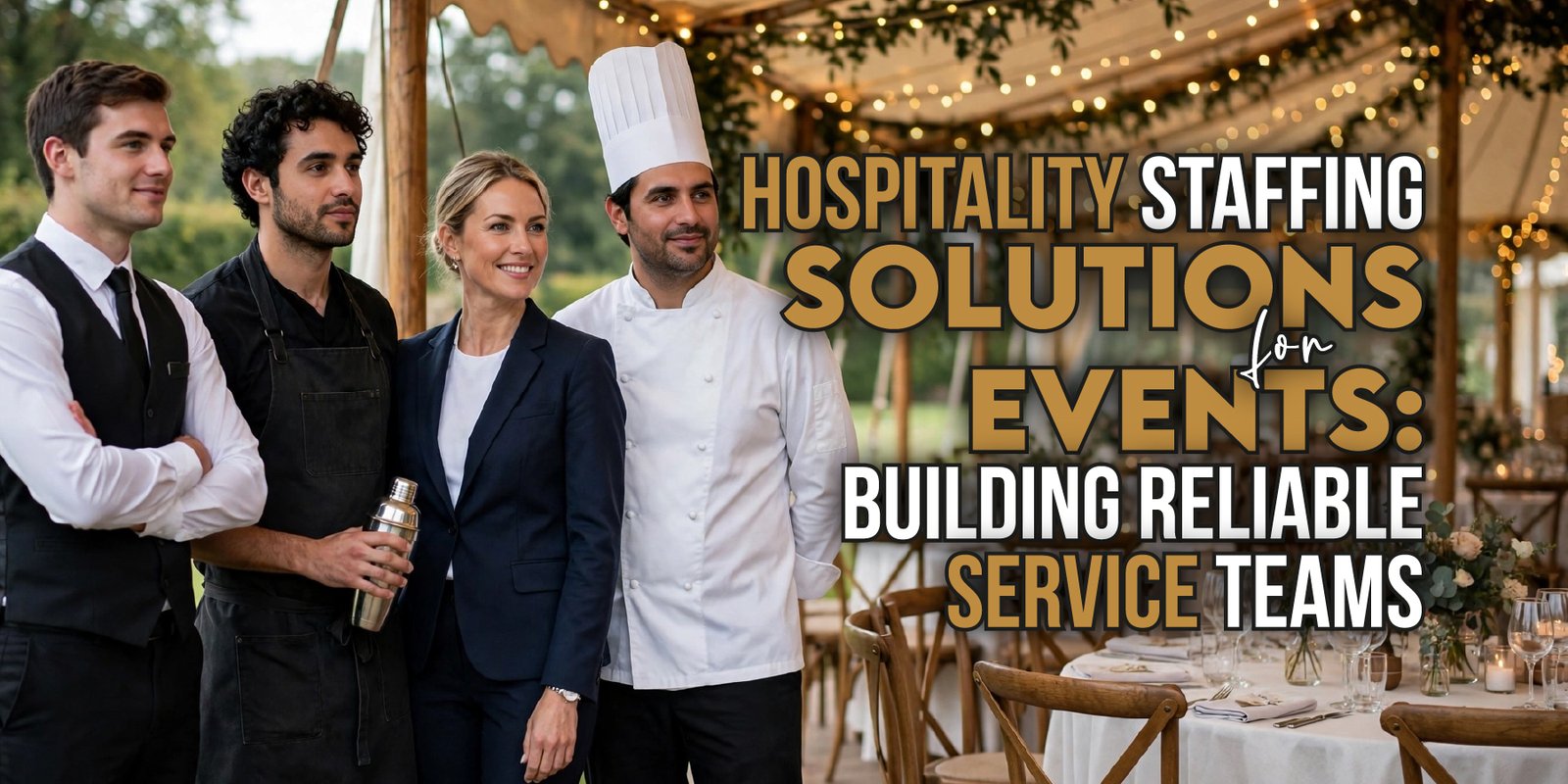
Hospitality shift cover helps hotels, restaurants, event venues and catering businesses keep service moving when staffing pressure appears. In hospitality, one missing housekeeper, waiter, bar worker, kitchen porter or front-of-house assistant can affect the whole guest experience. Therefore, venues need a practical way to fill shifts before small rota gaps become service problems.
Hotels and venues cannot afford staffing gaps during busy service periods. Staff absence, no-shows, late bookings, event demand, housekeeping pressure, restaurant rushes and last-minute rota changes can affect guest experience, service quality, staff morale and operational flow.
Because of this, hospitality shift cover should form part of wider workforce planning. With the right staffing partner, venues can access hotel staff cover, event venue staffing, temporary hospitality workers and last minute hospitality staff when demand changes quickly.
Quick Answer: What Is Hospitality Shift Cover?
Hospitality shift cover helps hotels, venues, restaurants and event spaces fill staffing gaps quickly when absence, bookings, seasonal peaks, large events or last-minute changes put pressure on service delivery. It can support housekeeping, waiting staff, bar staff, kitchen porters, front-of-house teams and event operations.
General Guidance Note
This article gives general business guidance only. It does not replace legal, HR or employment compliance advice. Where temporary hospitality workers, agency staffing, right to work, pay, contracts or workforce compliance are mentioned, businesses should check current UK guidance or seek professional advice.
Key Takeaways
- Hospitality shift cover helps venues protect service when rota gaps appear.
- Hotel staff cover can support housekeeping, breakfast service, reception, portering and banqueting.
- Event venue staffing helps with weddings, conferences, private functions and post-event cleaning.
- Temporary hospitality workers work best when venues provide clear shift details and briefings.
- Last minute hospitality staff can help urgent gaps, but stronger planning usually improves service continuity.
What Is Hospitality Shift Cover?
Hospitality shift cover means arranging staff support for specific hospitality shifts when the regular team cannot cover demand. It may involve one urgent shift, several weekend shifts, event support, seasonal cover or repeat staffing for busy periods.
Hospitality shift cover can support:
- Hotels
- Restaurants
- Banqueting venues
- Event venues
- Wedding venues
- Conference centres
- Catering teams
- Housekeeping teams
- Kitchen porters
- Front-of-house teams
- Bar staff
- Waiting staff
- Reception support
- Cleaning teams
- Hospitality operations during busy weekends
For example, a hotel may need extra housekeeping staff after higher occupancy. Meanwhile, a wedding venue may need waiting staff, bar staff, cleaning support and kitchen porters for one large event.
Therefore, hospitality shift cover gives venues flexible staffing support when service needs change quickly.
Why Hotels and Venues Need Hospitality Shift Cover
Hotels and venues need hospitality shift cover because hospitality demand rarely stays predictable. Bookings can rise, staff can call in sick and events can require more support than expected.
Common reasons include:
- Staff absence
- No-shows
- Large bookings
- Event peaks
- Seasonal demand
- Weekend pressure
- Wedding season
- Conference periods
- Hotel occupancy changes
- Restaurant service pressure
- Cleaning needs
- Catering support
- Last-minute rota gaps
For example, a hotel with sudden group bookings may need housekeeping and breakfast service support. Likewise, a restaurant may need last minute hospitality staff if regular workers become unavailable before a busy evening service.
As a result, hospitality shift cover helps venues protect service quality and reduce pressure on core teams.
How Hospitality Shift Cover Helps Avoid Service Gaps
Hospitality shift cover helps avoid service gaps by giving managers access to flexible labour when staffing numbers drop or demand increases.
It can support:
- Urgent staff cover
- Hotel staff cover
- Temporary hospitality workers
- Last minute hospitality staff
- Event venue staffing
- Kitchen support
- Waiting staff
- Bar staff
- Housekeeping cover
- Front-of-house support
- Banqueting support
- Cleaning support
- Weekend and evening shifts
- Repeat staffing demand
Hospitality Shift Cover for Busy Services
Busy services need enough staff to greet guests, serve tables, clear spaces and support back-of-house teams. Without enough cover, delays can spread quickly.
Hospitality Shift Cover for Event Operations
Event venues need staff before, during and after events. Therefore, staffing should include setup, service, guest flow and close-down.
Hospitality Shift Cover for Repeat Demand
If a venue regularly struggles during weekends or peak periods, repeat hospitality shift cover may work better than emergency requests.
Hotel Staff Cover: Where Do Hotels Need Support Most?
Hotel staff cover helps hotels manage occupancy changes, guest expectations and service standards. Because hotels involve multiple departments, one staffing gap can affect several areas.
Hotels may need support with:
- Housekeeping
- Reception
- Breakfast service
- Bar and restaurant teams
- Kitchen porters
- Room service support
- Banqueting
- Cleaning
- Guest-facing support
- Busy check-in and check-out periods
For example, housekeeping teams may need extra workers after high occupancy nights. Meanwhile, reception support may help during group arrivals, conferences or wedding weekends.
Good hospitality shift cover helps hotels keep rooms, public areas and service teams moving without overloading permanent staff.
Event Venue Staffing: Why Planning Matters
Event venue staffing needs strong planning because events create sharp demand peaks. Weddings, conferences, exhibitions, private functions and corporate events all require enough people at the right time.
Event venue staffing can support:
- Guest arrivals
- Catering demand
- Waiting staff
- Bar service
- Banqueting
- Cloakroom support
- Kitchen porter support
- Cleaning teams
- Service flow
- Post-event close-down
For example, a conference venue may need breakfast service, lunch service, refreshments and cleaning support throughout the day. Likewise, a wedding venue may need front-of-house teams, bar staff, waiting staff and cleaning cover into the evening.
Therefore, hospitality shift cover works best when venues plan staffing around the full event timeline, not only the visible service period.
Temporary Hospitality Workers: When Do They Make Sense?
Temporary hospitality workers make sense when a venue needs flexible support but does not need permanent headcount for every busy period.
They can help during:
- Seasonal demand
- Holiday cover
- Sickness absence
- No-shows
- Event peaks
- Wedding season
- Weekend service pressure
- Sudden booking increases
- Short-term contracts
- Trial staffing demand
For example, a catering business may need extra temporary hospitality workers for a large private function. Meanwhile, a restaurant may need additional waiting staff during a short festive period.
Because demand changes quickly, hospitality shift cover allows venues to increase staff numbers only when needed.
Last Minute Hospitality Staff: What Businesses Should Prepare
Last minute hospitality staff can help urgent gaps, but venues should still prepare clear information. A rushed request with missing details can slow down staffing support.
Before requesting last minute hospitality staff, prepare:
- Clear role details
- Accurate shift times
- Venue location
- Dress code
- Required experience
- Reporting contact
- Briefing process
- Timesheet instructions
- Break arrangements
- Service expectations
- Uniform or PPE requirements where relevant
For example, asking for “bar staff tonight” may not give enough detail. However, explaining the shift time, bar type, uniform, venue address, guest numbers and reporting contact gives the staffing agency a stronger brief.
As a result, hospitality shift cover becomes easier to organise, even when time is limited.
How Temporary Hospitality Staff Support Hotels and Venues
Temporary hospitality staff can support hotels, restaurants, event venues, bars, catering teams, housekeeping departments and front-of-house operations when workload rises.
H&D Recruitment explains temporary hospitality staff for businesses that need flexible hospitality staff, hotel staff cover, waiting staff, bar staff, housekeeping support and event teams.
This support can help with:
- Hotel staff cover
- Restaurant service
- Event venue staffing
- Waiting staff
- Bar staff
- Kitchen porters
- Housekeeping teams
- Public area cleaning
- Catering support
- Banqueting support
- Front-of-house teams
For example, hotels can use temporary hospitality workers to cover occupancy pressure. Meanwhile, venues can use hospitality staffing support when event demand increases.
Because of this, hospitality shift cover helps venues stay flexible without committing to permanent staffing for every peak.
How to Choose the Right Staffing Agency for Hospitality Cover
Choosing the right staffing agency matters because hospitality roles are customer-facing and time-sensitive. The wrong staffing partner may not understand service standards, shift pressure or venue requirements.
H&D Recruitment has a useful guide on how to choose the right staffing agency before relying on external staffing support.
When comparing providers, check:
- Hospitality sector experience
- Response speed
- Screening process
- Communication quality
- Compliance awareness
- Replacement process
- Understanding of hospitality shift patterns
- Ability to support repeat demand
- Role matching
- Service quality
- Clear timesheet process
A strong hospitality staffing agency should understand the difference between housekeeping support, bar work, waiting staff, banqueting, cleaning and front-of-house roles.
Therefore, hospitality shift cover works best when venues choose agency recruitment support that understands hospitality operations.
Hospitality Shift Cover vs Permanent Hiring
Hospitality shift cover and permanent hiring both have value. However, each option suits different staffing needs.
| Staffing Option | Best For | Speed Level | Flexibility Level | Main Limitation | Planning Tip |
|---|---|---|---|---|---|
| Hospitality shift cover | Urgent gaps, events and short-term demand | Fast | High | Needs clear briefing | Use for peaks and absence |
| Permanent hiring | Stable long-term roles | Slower | Lower | Less flexible for sudden peaks | Use for core staffing |
| Temporary hospitality workers | Seasonal and event support | Fast | High | May need induction | Prepare shift details early |
| Last minute hospitality staff | No-shows and urgent cover | Very fast where available | High | Availability can vary | Keep role briefs ready |
| Mixed staffing model | Venues with changing demand | Balanced | High | Needs planning | Combine core staff with flexible cover |
This table shows why hospitality shift cover can support busy periods while permanent teams maintain consistency.
How to Request Hospitality Shift Cover
To request hospitality shift cover, venues should give the staffing agency complete shift information. Clear details help the agency match staff quickly and reduce first-shift confusion.
The process should include:
- Define the role
- Confirm shift dates
- Share start and finish times
- Confirm venue location
- Explain required experience
- Share dress code or uniform needs
- Confirm reporting contact
- Explain service expectations
- Agree timesheet process
- Track attendance and performance
- Review future staffing needs
For example, a banqueting hall should confirm guest numbers, service style, uniform, arrival time and supervisor contact. Meanwhile, a hotel should confirm department, shift duties, break times and reporting lines.
Good preparation makes hospitality shift cover more effective.
Hospitality Shift Cover Costs UK: What Affects the Price?
Hospitality shift cover costs in the UK vary because role type, shift timing and urgency all matter.
Cost factors include:
Role Type
Waiting staff, bar staff, kitchen porters, housekeeping and reception support may have different costs.
Skill Level
Specialist or experienced workers may cost more than general support.
Number of Workers
Larger bookings need more coordination.
Shift Length
Longer shifts increase the total cost.
Day or Night Work
Evening and late-night shifts may affect pricing.
Weekend or Bank Holiday Demand
Weekend and bank holiday demand can increase costs.
Location
Worker availability and travel expectations can vary by area.
Notice Period
Short-notice requests may require faster coordination.
Urgency
Last-minute hospitality staff can be harder to arrange than planned cover.
Event Size
Large events need more staffing planning.
Contract Length
Repeat bookings may differ from one-off urgent cover.
To understand the right cost, venues can get a hospitality staffing quote based on role type, location, shift dates and service needs.
Need Staff Before the Next Busy Service?
If your next service, event or hotel shift is at risk, early action can reduce pressure on your core team.
H&D Recruitment can support venues that need hospitality shift cover, hotel staff cover, event venue staffing, temporary hospitality workers or last minute hospitality staff.
You can request hospitality shift cover or speak to H&D Recruitment about staffing support built around your service times, venue demand and operational needs.
Hospitality Shift Cover Checklist for Hotels and Venues
Use this checklist before requesting hospitality shift cover.
- Define the role clearly
- Confirm how many workers you need
- Confirm shift times
- Share venue location
- List required experience
- Confirm dress code or uniform needs
- Prepare briefing notes
- Assign a venue contact
- Confirm timesheet process
- Share service expectations
- Plan future event and seasonal demand
- Confirm break arrangements
- Review repeat staffing needs
- Request staffing support before service gaps grow
This checklist helps hotels and venues request staff with more confidence.
Common Mistakes When Using Hospitality Shift Cover
Asking Too Late
Late requests reduce planning time and can limit availability.
Not Defining the Role Properly
A vague role brief can create confusion during service.
Underestimating Staffing Numbers
Too few staff can still leave the shift under pressure.
Ignoring Experience Requirements
Hospitality roles often need customer-facing confidence and pace.
Not Preparing a Shift Briefing
Temporary hospitality workers need clear duties and reporting lines.
Poor Communication With the Agency
Weak communication can slow role matching and shift confirmation.
Choosing Only by Price
Low-cost support may not suit the venue, role or service pressure.
Forgetting Dress Code or Uniform Needs
Presentation matters in hospitality, especially for guest-facing roles.
Not Tracking Attendance
Attendance feedback helps improve future staffing decisions.
Ignoring Future Event Staffing Demand
Repeat service gaps often signal a planning issue.
Not Comparing Staffing Support Properly
Compare sector experience, response and communication quality.
Waiting Until Service Gaps Affect Guests
Early support helps protect guest experience.
Avoiding these mistakes helps hospitality shift cover support service more effectively.
How Hospitality Shift Cover Protects Service Continuity
Hospitality shift cover can help hotels and venues improve service continuity, reduce pressure on core teams, cover urgent demand, support event operations, protect guest experience and manage staffing gaps more confidently.
It supports:
- Faster rota recovery
- Better guest flow
- Reduced pressure on permanent staff
- More consistent service during events
- Stronger housekeeping support
- Better front-of-house cover
- Additional kitchen support
- More flexible event staffing
- Better weekend planning
- Improved operational confidence
Therefore, hospitality shift cover should not only solve emergency gaps. It should also help venues prepare for predictable demand, such as weekends, weddings, conferences, festive periods and seasonal peaks.
People Also Ask
What is hospitality shift cover?
Hospitality shift cover helps hotels, restaurants, event venues and catering businesses fill staffing gaps when absence, seasonal peaks, large bookings or last-minute changes affect service delivery.
How quickly can hotels get temporary hospitality workers?
Hotels may access temporary hospitality workers quickly when they provide clear role details, shift times, location, dress code, experience needs and reporting contacts. Availability depends on timing and demand.
What is hotel staff cover?
Hotel staff cover means arranging temporary or flexible staff for housekeeping, reception, breakfast service, bar teams, restaurant support, kitchen porters, cleaning and guest-facing roles.
How does event venue staffing work?
Event venue staffing works by matching staff to event needs, such as waiting service, bar work, guest arrivals, banqueting, catering support, cleaning and post-event close-down.
When should venues use last minute hospitality staff?
Venues should use last minute hospitality staff when no-shows, sickness, late bookings, event pressure, weekend demand or rota gaps put service delivery at risk.
How do I request hospitality shift cover?
Request hospitality shift cover by confirming the role, number of workers, shift times, venue location, dress code, experience needs, reporting contact, briefing notes and timesheet process.
Conclusion
Hospitality shift cover helps hotels, restaurants, event venues, catering teams and hospitality businesses avoid service gaps when demand changes. Staff absence, no-shows, large bookings, wedding season, conferences, housekeeping pressure and last-minute rota changes can all affect guest experience.
With hotel staff cover, event venue staffing, temporary hospitality workers and last minute hospitality staff, venues can protect service standards and reduce pressure on permanent teams. However, the best results come from clear role details, early planning, proper shift briefings and strong communication with the staffing agency.
For UK hospitality venues, hospitality shift cover can support operational confidence during busy services, urgent gaps and repeat seasonal demand.
Keep Your Hospitality Team Covered When Demand Changes
Need hospitality shift cover for hotels, restaurants, event venues, catering teams, housekeeping, front-of-house roles, or last-minute rota gaps? Request a quote from H&D Recruitment today and get staffing support built around your service times, venue demand, and operational needs.
Whether you need hotel staff cover, event venue staffing, temporary hospitality workers, last minute hospitality staff or flexible hospitality staffing support, H&D Recruitment can help you prepare before service gaps grow.