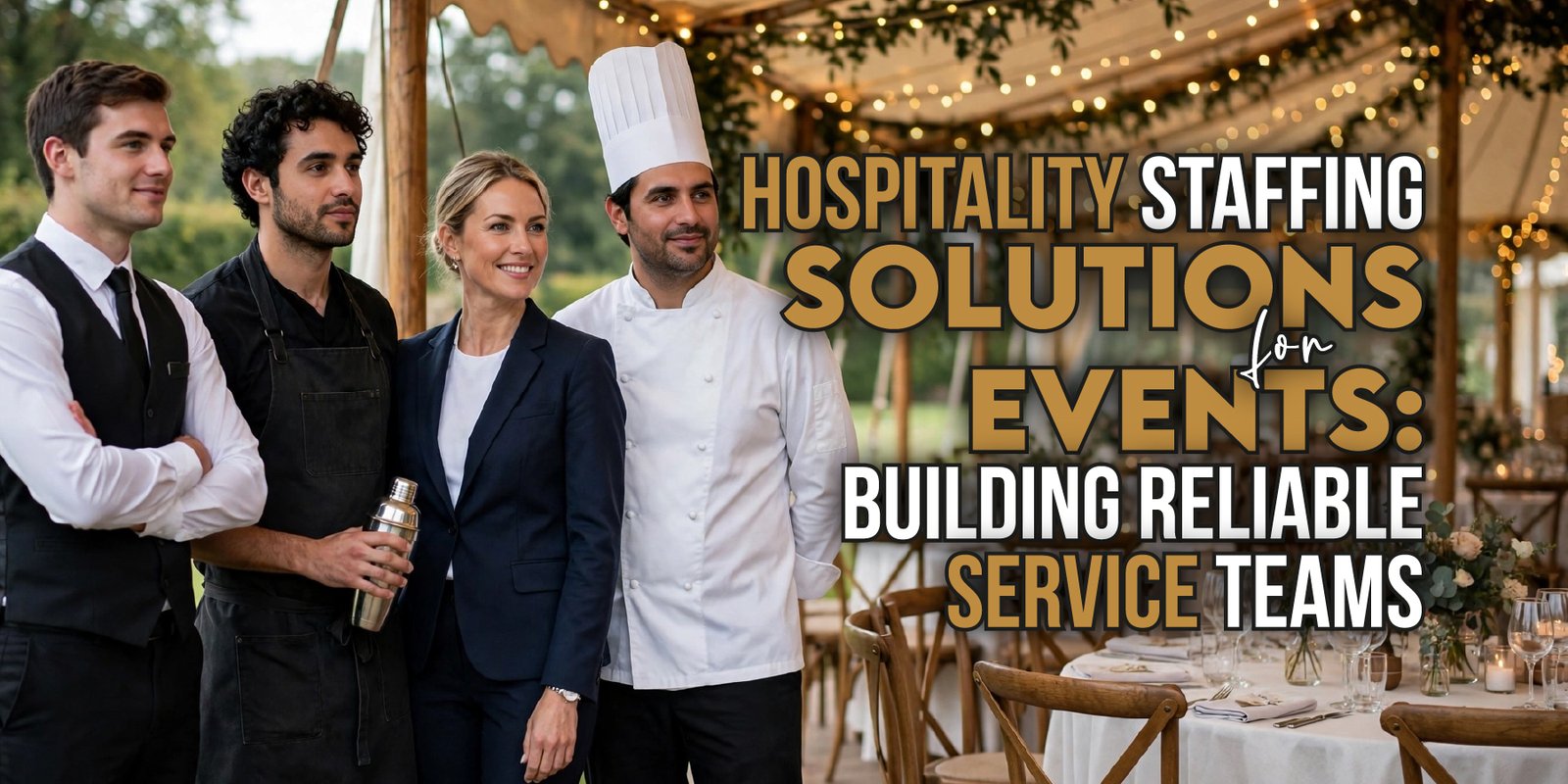
Busy venues cannot rely only on their regular team. Restaurants, hotels, event venues, cafés, bars, banqueting halls and catering businesses often face sudden bookings, staff absence, weekend demand, seasonal rushes and large events. Therefore, temporary hospitality staff can help businesses cover service gaps before they affect customers.
Hospitality moves quickly. One missing waiter can slow table service. One absent housekeeper can delay room turnaround. One understaffed bar can create long queues. Meanwhile, event venues may need extra porters, public area cleaners, front-of-house teams and event staff at short notice.
For UK hospitality operators, the challenge is not only finding people. The bigger challenge is finding reliable workers who can step into busy shifts, follow instructions, support service standards and reduce pressure on permanent teams.
This is where temporary hospitality staff become a practical solution. When planned properly, they help venues manage peak demand, urgent shift cover, staff sickness, event bookings and short-term labour gaps without overcommitting to permanent hiring.
What Are Temporary Hospitality Staff?
Temporary hospitality staff are workers supplied for short-term, flexible or demand-based hospitality roles. They may work one shift, several days, a full event period, a seasonal peak or ongoing flexible cover depending on the business need.
Temporary hospitality staff can support roles such as:
- Waiters and waitresses
- Bar staff
- Front-of-house staff
- Reception support
- Event staff
- Porters
- Housekeeping teams
- Public area cleaners
- Catering assistants
- Banqueting staff
- Restaurant staff
- Venue support teams
A restaurant may use temporary hospitality staff for a fully booked weekend. A hotel may need extra housekeeping staff during high occupancy. Similarly, an event venue may need event staff for weddings, conferences, banquets or private functions.
The purpose is simple. Temporary staff help hospitality businesses stay operational when demand rises or regular staffing falls short.
Why Busy Venues Need Temporary Hospitality Staff
Busy venues need temporary hospitality staff because demand in hospitality rarely stays flat. Some days feel manageable. However, other days bring more guests, more bookings, more rooms, more events and more pressure than the regular team can handle.
Hospitality demand changes quickly
A venue may receive a last-minute booking. A hotel may reach higher occupancy than expected. A restaurant may experience a weekend rush. Because of this, businesses need a staffing model that can adjust quickly.
Permanent teams can become overloaded
Even strong permanent teams can struggle when shifts run short. Overworked staff may make more mistakes, feel stressed and deliver slower service. Therefore, temporary support can protect morale and service quality.
Customers notice service gaps immediately
Hospitality is customer-facing. If service slows, guests notice. If rooms are delayed, guests complain. If bar queues become too long, event experience suffers. Temporary hospitality staff help businesses maintain standards during pressure.
Costs stay more flexible
Permanent hiring works well for regular long-term demand. However, not every busy period justifies permanent headcount. Temporary staff give businesses flexible cover when demand rises.
Managers gain more control
Instead of chasing staff at the last minute, managers can plan cover earlier. As a result, temporary staffing support creates better operational control.
How Temporary Hospitality Staff Support Restaurants, Hotels and Events
Temporary hospitality staff support different hospitality environments in practical ways.
Restaurants
Restaurants use temporary restaurant staff to manage peak service, large bookings, holiday periods, staff absence and weekend rushes.
Temporary waiters, waitresses, runners and bar staff can help with:
- Table service
- Food running
- Drinks service
- Table clearing
- Customer support
- Setup and close-down
- Busy lunch or dinner periods
For example, a restaurant may use temporary hospitality staff when a large group booking overlaps with normal weekend demand. This helps protect table turnover and customer experience.
Hotels
Hotels often need flexible support for housekeeping, portering, public areas and reception. High occupancy, events, conferences and seasonal demand can quickly increase workload.
Temporary hospitality staff can help hotels with:
- Room turnaround
- Linen movement
- Public area cleaning
- Porter support
- Guest flow
- Breakfast service
- Event support
- Front-of-house assistance
When hotels plan temporary cover early, they can reduce delays and protect guest satisfaction.
Event venues
Event venues face sharp demand peaks. Weddings, banquets, conferences, exhibitions and private functions often require extra staff for a short period.
Event staff can support:
- Guest arrival
- Bar service
- Banqueting service
- Setup and breakdown
- Public area cleaning
- Portering
- Cloakroom support
- Crowd flow
- Close-down work
A venue that underestimates staffing needs may struggle during the event. Therefore, temporary hospitality staff help protect the guest experience and reduce operational stress.
Catering businesses
Catering businesses may need extra support when several functions happen at once. Temporary staff can support food service, event setup, clearing, customer care and venue coordination.
Temporary Hospitality Staff vs Permanent Hospitality Staff
Temporary and permanent staff both have value. However, they serve different purposes.
Permanent hospitality staff work best when a venue has consistent demand. They understand the brand, culture, processes and regular customers. They also support long-term team stability.
Temporary hospitality staff work best when demand changes. They help cover short-term pressure, urgent gaps and busy periods without forcing the business to hire permanently.
A useful comparison looks like this:
| Staffing Option | Best For | Main Benefit | Main Limitation |
|---|---|---|---|
| Temporary hospitality staff | Busy periods, events, sickness cover, seasonal demand | Flexible and fast support | Needs clear briefing |
| Permanent hospitality staff | Regular roles and long-term service needs | Stability and brand knowledge | Less flexible during demand spikes |
| Mixed staffing model | Venues with changing demand | Balance between stability and flexibility | Needs planning |
Hospitality businesses can also learn from wider staffing models. This guide on temporary vs permanent staffing explains how businesses can choose temporary or permanent staff based on workload, cost, flexibility and long-term planning.
For busy venues, the best answer often involves both. Permanent teams provide consistency. Temporary hospitality staff provide extra capacity when pressure rises.
When Should Venues Use Temporary Hospitality Staff?
Venues should use temporary hospitality staff when regular teams cannot cover demand without affecting service quality.
Weekend rushes
Restaurants, bars and cafés often need more staff on Fridays, Saturdays and Sundays. Temporary restaurant staff can support table service, bar operations and customer flow.
Seasonal demand
Holiday periods, summer events, winter functions and tourist seasons can increase hospitality demand. Temporary hospitality staff help businesses respond without permanent overhiring.
Holiday periods
Staff may request time off during holidays. Meanwhile, customer demand may rise. Temporary cover helps venues stay prepared.
Large events
Weddings, conferences, banquets, exhibitions and private events often need additional event staff, porters, bar staff and cleaners.
Staff sickness
Unexpected sickness can leave rota gaps. Temporary hospitality staff can help cover shifts at short notice.
Last-minute bookings
A sudden group booking or private event can create extra workload. Flexible staffing support helps the venue respond quickly.
Weddings and banquets
Banqueting teams often need extra waiters, bar staff, setup teams and close-down support.
Hotel occupancy peaks
When occupancy rises, hotels may need more housekeeping, linen porters, public area cleaners and breakfast staff.
Restaurant service pressure
Busy service periods need enough staff to protect table turnover and guest experience.
Short-term labour gaps
Temporary hospitality staff can support a venue while it recruits permanent staff or covers notice periods.
How a Hospitality Staffing Agency Helps Busy Venues
A hospitality staffing agency helps busy venues access suitable staff when demand increases. Instead of starting from scratch each time a gap appears, businesses can work with a partner that understands hospitality roles, shift pressure and customer-facing standards.
A hospitality staffing agency can supply:
- Restaurant staff
- Event staff
- Front-of-house staff
- Bar staff
- Porters
- Public area cleaners
- Housekeeping teams
- Catering staff
- Temporary hospitality staff for peak periods
The right agency also helps with role matching. For example, a formal banqueting event may need polished service staff. A busy bar may need fast, confident workers. A hotel may need housekeeping staff who can meet room turnaround standards.
In addition, a hospitality staffing agency can help venues plan staffing before peak demand arrives. This matters because rushed hiring often leads to weak decisions.
Hospitality businesses can also learn from other fast-moving sectors. For example, logistics teams use staffing support during busy periods to keep operations moving during peak demand. Venues can apply the same thinking by preparing flexible workforce support before service pressure builds.
Common Temporary Hospitality Staffing Mistakes to Avoid
Temporary staffing works best with planning. However, many venues make avoidable mistakes.
Hiring too late
Waiting until the day before a major event creates pressure. Instead, plan staff numbers early.
Choosing staff only by availability
Availability matters, but attitude, reliability and service skills matter too.
Ignoring customer service skills
Temporary hospitality staff still represent the venue. They need the right communication style and guest-focused attitude.
Poor briefing before shifts
Temporary workers need clear instructions. Explain uniform, tasks, reporting lines, service standards and break arrangements before the shift starts.
Weak shift planning
Poor shift planning can leave the wrong areas short. For example, a venue may have enough waiters but not enough porters or cleaners.
Not checking reliability
Punctuality matters. Late arrivals can damage the whole service plan.
Underestimating event staffing needs
Events need staff for setup, service, guest flow, cleaning and close-down. Do not plan only for the visible service period.
Not planning for seasonal peaks
Seasonal demand should not surprise managers. Review previous years and plan early.
Poor communication with agency staff
Agency staff need site details, arrival times, uniform instructions and duty lists. Better communication leads to better performance.
Choosing the wrong recruitment partner
The wrong partner may not understand hospitality standards. Choose an agency that knows restaurants, hotels and venues.
Temporary Hospitality Staff Checklist
Use this checklist before booking temporary hospitality staff.
Demand planning
- Do you know your busiest dates?
- Have you reviewed event calendars?
- Have you checked weekend demand?
- Have you forecast hotel occupancy?
- Have you planned for holiday periods?
Role planning
- Do you need restaurant staff?
- Do you need event staff?
- Do you need bar staff?
- Do you need housekeeping support?
- Do you need porters or public area cleaners?
Shift planning
- Have you confirmed shift times?
- Have you planned breaks?
- Have you assigned supervisors?
- Have you covered setup and close-down?
- Have you prepared a clear duty list?
Staff quality
- Do workers need previous hospitality experience?
- Do they need customer service skills?
- Do they need specific uniform?
- Do they understand service standards?
- Do you need reliable temporary hospitality staff?
Agency support
- Have you briefed the hospitality staffing agency properly?
- Have you confirmed numbers early?
- Have you shared site instructions?
- Have you planned backup cover?
- Are you ready to request temporary hospitality staff?
This checklist helps venues reduce confusion and improve shift performance.
How Better Staffing Planning Improves Venue Performance
Better staffing planning improves service quality, reduces pressure on permanent teams and supports stronger venue performance.
When venues plan temporary hospitality staff properly, they can:
- Serve customers faster
- Reduce waiting times
- Improve table turnover
- Keep bar queues moving
- Support room turnaround
- Improve event delivery
- Reduce stress on permanent teams
- Protect guest experience
- Respond better to sudden demand
- Maintain service standards during peak periods
For example, a restaurant with enough temporary restaurant staff can manage a full dining room more smoothly. A hotel with extra housekeeping support can prepare rooms faster after high occupancy. Similarly, an event venue with enough event staff can manage guest arrivals, service flow and close-down more effectively.
Better staffing also supports morale. Permanent teams perform better when they do not feel stretched beyond capacity.
Lessons from Temporary vs Permanent Staffing and Busy-Period Workforce Planning
Hospitality venues can improve staffing decisions by learning from other operational sectors. Warehouses, logistics companies and production environments often face similar challenges around peak demand, labour gaps and urgent shift cover.
The lesson is clear. Businesses should match staffing models to workload patterns.
If demand stays consistent, permanent staff may work best. However, when demand rises suddenly or changes week by week, temporary hospitality staff can provide more flexibility.
This is why choosing temporary or permanent staff matters across many sectors. The same logic applies to hospitality venues that need stable core teams plus flexible backup support.
In addition, businesses dealing with busy periods often use busy period staffing support to reduce operational pressure. Hospitality venues can follow the same approach by planning staff around bookings, occupancy, event calendars and seasonal demand.
Practical lessons include:
- Forecast busy periods early
- Use temporary workers for demand spikes
- Keep permanent staff focused on core standards
- Brief temporary workers clearly
- Track performance after shifts
- Build a trusted staffing partner relationship
- Avoid last-minute recruitment where possible
- Review staffing needs after every busy period
When venues apply these lessons, temporary hospitality staff become part of a smarter staffing strategy, not just an emergency fix.
People Also Ask
What are temporary hospitality staff?
Temporary hospitality staff are flexible workers who support restaurants, hotels, venues, cafés, bars and catering businesses during busy periods, staff absence, events, seasonal demand and urgent shift gaps.
When should venues use temporary hospitality staff?
Venues should use temporary hospitality staff during weekend rushes, holiday periods, large events, staff sickness, last-minute bookings, hotel occupancy peaks and short-term labour gaps.
What roles can temporary hospitality staff cover?
Temporary hospitality staff can cover waiters, waitresses, bar staff, front-of-house teams, event staff, porters, housekeeping teams, public area cleaners and catering support roles.
How does a hospitality staffing agency help?
A hospitality staffing agency helps venues access suitable staff quickly, plan for busy periods, cover absences and support restaurants, hotels and events with flexible staffing options.
Are temporary hospitality staff better than permanent staff?
Temporary hospitality staff are better for short-term demand, urgent cover and seasonal pressure. Permanent staff are better for stable, ongoing roles. Many venues benefit from using both.
Conclusion
Temporary hospitality staff give busy venues a practical way to manage demand without overloading permanent teams. Restaurants, hotels, event venues, cafés, bars, banqueting halls and catering businesses often face sudden bookings, staff absence, weekend rushes and seasonal pressure. Therefore, flexible staffing support can protect service quality when demand rises.
A strong plan helps venues use temporary hospitality staff effectively. Managers should forecast demand, brief workers clearly, plan shifts properly, choose the right roles and work with a hospitality staffing agency that understands hospitality standards.
Temporary support works best when it forms part of a wider staffing strategy. Permanent staff provide stability, while temporary workers provide flexibility during busy periods. Together, they help venues maintain service quality, reduce stress and protect the guest experience.
If your venue struggles during peak periods, now is the right time to review your staffing plan and prepare flexible support before the next busy shift arrives.
Get Temporary Hospitality Staffing Support
Need temporary hospitality staff for your restaurant, hotel, or event venue? Request a quote from H&D Recruitment today and get reliable hospitality staffing support for your next busy period.
Whether you need restaurant staff, event staff, bar staff, waiters, waitresses, porters, housekeeping teams, public area cleaners, front-of-house staff or flexible venue staffing support, H&D Recruitment can help you cover shifts and maintain service standards.
If you want dependable temporary hospitality staff and better planning for peak demand, speak to H&D Recruitment and get a hospitality staffing quote today.