Manufacturers cannot afford to wait until demand has already increased before looking for workers. When production demand rises suddenly, labour gaps can slow output, increase overtime costs, delay orders, reduce quality, and put heavy pressure on existing teams. Therefore, seasonal manufacturing staffing should start before peak periods begin.
For UK food manufacturing businesses, packaging facilities, production lines, assembly lines, warehouses, distribution centres, FMCG factories, picking and packing teams, and logistics operations, seasonal demand can create serious pressure. Christmas and holiday demand, summer production peaks, promotional campaigns, new contracts, and urgent order volumes can all stretch the workforce quickly.
Without proper planning, managers may struggle to find temporary factory workers at the right time. As a result, supervisors may rely on overtime, move staff away from key duties, or accept slower production. However, with a clear seasonal manufacturing staffing plan, businesses can prepare earlier, cover urgent shifts, support warehouse operations, and keep production moving.
This guide explains how UK manufacturers can plan better, reduce labour gaps, and use reliable manufacturing recruitment support before demand increases.
What Is Seasonal Manufacturing Staffing?
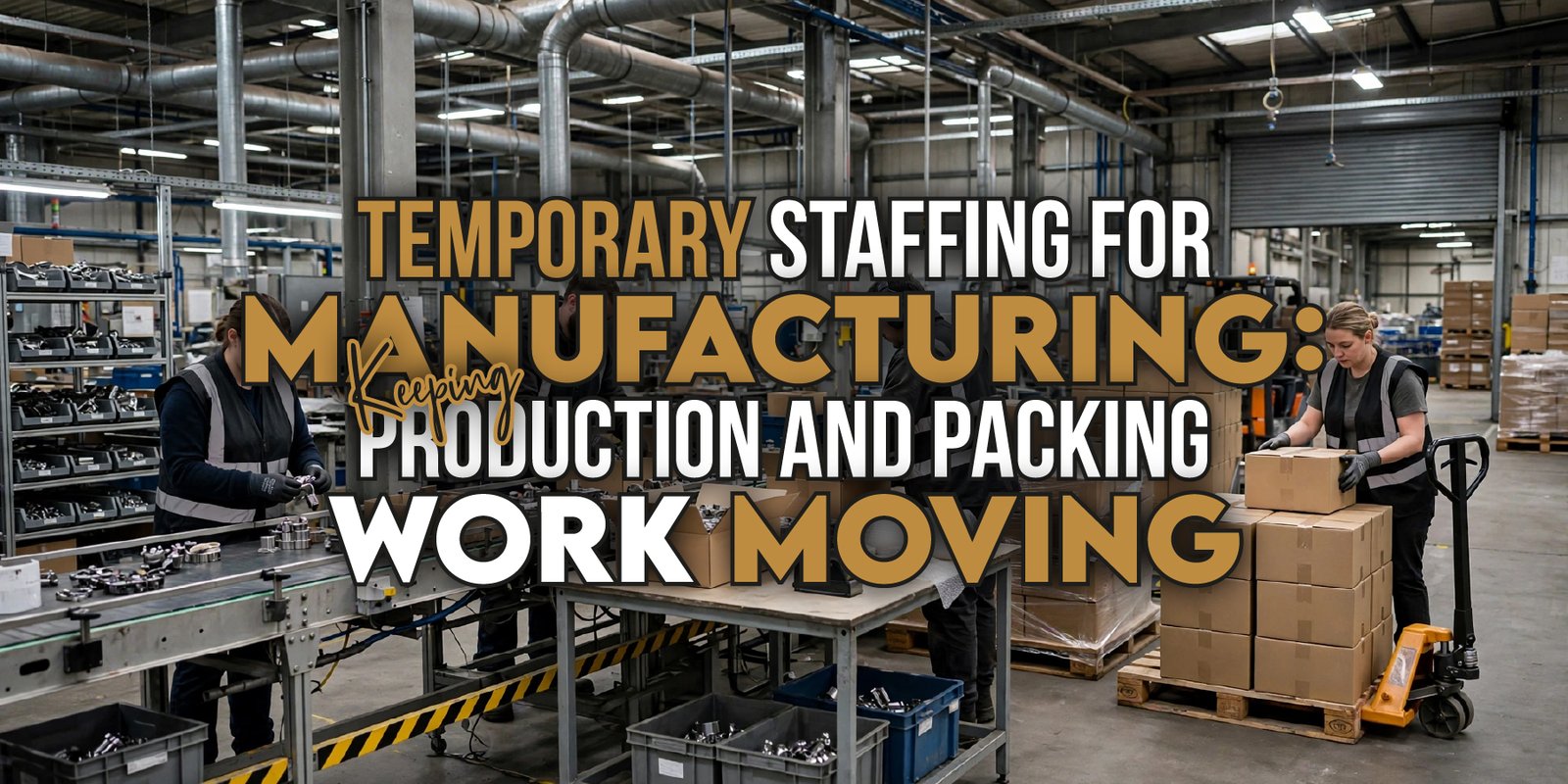
Seasonal manufacturing staffing means planning and supplying additional workers during predictable or temporary increases in production demand. These workers may support production lines, packing teams, warehouses, assembly areas, forklift movements, fulfilment operations, and distribution centres.
Seasonal staffing does not always mean hiring permanent employees. In many cases, manufacturers use temporary factory workers to cover busy periods, staff absence, weekend shifts, night shifts, short-term contracts, and urgent order fulfilment.
For example, a food manufacturing site may need extra production operatives before a holiday sales period. A packaging facility may need more packing staff during a product launch. Similarly, a distribution centre may need additional warehouse workers and forklift drivers to move higher volumes of goods.
A strong seasonal manufacturing staffing plan helps businesses match labour supply with demand. It also helps managers avoid last-minute panic when order volumes increase.
Why Production Demand Spikes Create Staffing Pressure
Production demand spikes can affect every part of a manufacturing operation. When demand rises, businesses need more than extra workers on the production line. They may also need more warehouse staff, packing teams, quality support, logistics staff, and material handling workers.
Demand spikes can create pressure through:
- Higher order volumes
- Faster dispatch deadlines
- Longer production runs
- Increased packing requirements
- More raw material movement
- Extra warehouse activity
- More picking and packing work
- Shorter customer lead times
- Greater absence impact
- Higher overtime dependency
If staffing does not match demand, downtime can follow. For example, a production line may run below capacity because packing cannot keep up. A warehouse may delay dispatch because too few staff can pick and pack orders. A forklift driver shortage may slow material movement between storage and production areas.
Therefore, seasonal manufacturing staffing helps manufacturers prepare for these pressure points before they damage output.
How Seasonal Manufacturing Staffing Helps Businesses Prepare
A planned approach to seasonal manufacturing staffing gives manufacturers better control during busy periods. Instead of reacting to labour shortages, businesses can forecast demand, identify staffing gaps, and arrange support before production pressure increases.
1. It helps cover peak production demand
When order volumes rise, manufacturers need enough workers to maintain output. Seasonal manufacturing staffing helps businesses bring in extra labour for production lines, packing teams, assembly lines, and warehouses.
This matters for food manufacturing, FMCG factories, packaging facilities, and distribution centres where deadlines often depend on high-volume labour.
2. It reduces pressure on existing teams
If existing workers carry every seasonal spike, fatigue can increase quickly. Overtime may help in the short term, but repeated overtime can affect morale, quality, attendance, and retention.
To support workforce stability, manufacturers should also focus on reducing seasonal workforce churn. When businesses keep reliable workers and reduce unnecessary pressure, seasonal staffing becomes easier to manage.
3. It improves shift cover
Seasonal peaks often overlap with holidays, sickness, and staff availability issues. Therefore, seasonal manufacturing staffing helps companies prepare for temporary shift cover before gaps appear.
4. It supports warehouse and fulfilment operations
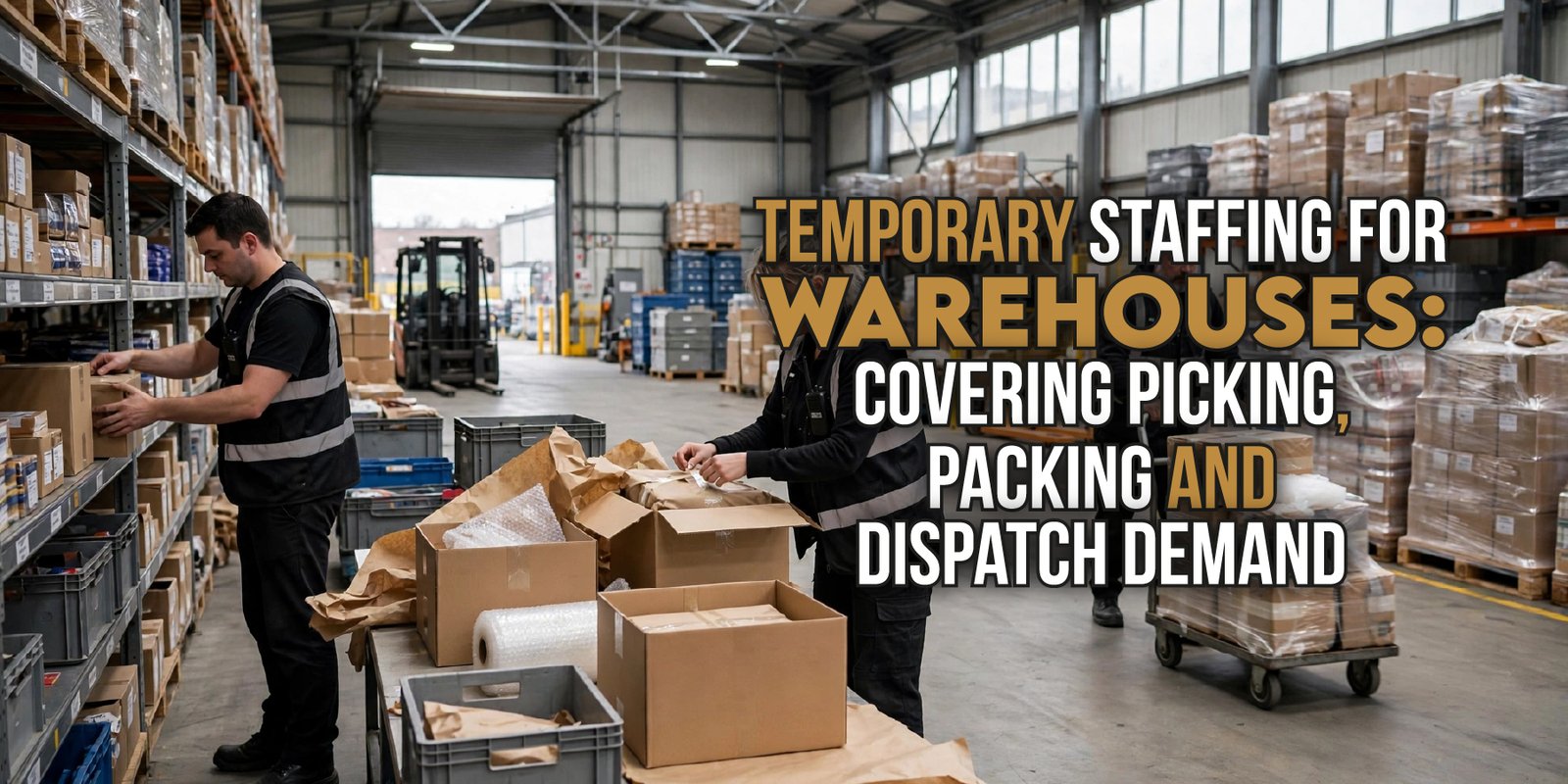
Manufacturing does not stop at production. Goods still need picking, packing, labelling, loading, and dispatching. Therefore, peak periods often require extra warehouse and packing staff.
5. It supports skilled logistics roles
Some sites need forklift drivers, reach truck drivers, or other material handling workers during busy periods. H&D Recruitment can help with forklift drivers recruitment when manufacturers need reliable forklift drivers for peak-period warehouse operations.
When Manufacturers Should Start Planning Seasonal Staffing
Manufacturers should start seasonal manufacturing staffing planning as early as possible. Waiting until demand has already increased leaves less time to find suitable workers, arrange onboarding, confirm shift patterns, and prepare supervisors.
A good planning timeline may look like this:
8 to 12 weeks before peak demand
Review previous seasonal data, order forecasts, production schedules, warehouse pressure, staff absence patterns, and expected labour gaps.
6 to 8 weeks before peak demand
Confirm which roles need extra cover. This may include production operatives, packers, assembly workers, forklift drivers, warehouse workers, and picking and packing staff.
4 to 6 weeks before peak demand
Start manufacturing recruitment activity. Agree shift patterns, worker numbers, start dates, training needs, and site requirements.
2 to 4 weeks before peak demand
Finalise temporary workers, brief supervisors, prepare induction materials, and confirm attendance expectations.
During peak demand
Monitor attendance, output, quality, overtime, and workforce pressure. Then adjust staffing levels where needed.
Early seasonal manufacturing staffing gives businesses better choice, better preparation, and better control.
How Temporary Factory Workers Support Peak Periods
Temporary factory workers can support manufacturers during busy periods without requiring long-term permanent hiring. This gives businesses flexibility when demand rises for a limited time.
Temporary workers can help with:
- Production line support
- Packing and labelling
- Assembly work
- Food manufacturing tasks
- FMCG production support
- Warehouse picking and packing
- Order fulfilment
- Loading and unloading
- Stock movement
- Quality support
- Temporary shift cover
- Weekend and night shifts
For example, a packaging facility may need extra workers to pack promotional stock. A food manufacturer may need temporary factory workers to support increased order volumes. A warehouse may need more pickers and packers to clear seasonal dispatch backlogs.
In addition, peak periods often need skilled warehouse movement. When materials need moving quickly, skilled forklift staff can help maintain flow between storage, production, packing, and loading areas.
The key is to match workers to the task. Not every role needs the same experience, but every role needs reliability, punctuality, and clear instructions.
How Better Workforce Planning Reduces Downtime
Workforce planning helps manufacturers avoid last-minute labour gaps. It connects expected production demand with the number of workers needed to meet that demand.
A strong workforce plan should include:
- Forecasted production volumes
- Required workers per shift
- Skills needed per department
- Temporary labour requirements
- Forklift driver needs
- Warehouse staffing requirements
- Absence cover
- Overtime limits
- Training and induction plans
- Backup staffing support
Better workforce planning supports seasonal manufacturing staffing because it helps managers prepare before gaps become urgent. Instead of reacting when a shift is short, businesses can plan cover earlier.
Workforce planning also helps reduce production downtime. If a factory knows it needs 12 extra workers for a seasonal packing line, it can arrange support before the line starts. If a distribution centre expects higher dispatch volumes, it can prepare warehouse staff and forklift cover earlier.
In addition, workforce planning supports retention. When businesses rely less on overtime and last-minute pressure, they can improve morale. For practical ideas, manufacturers and warehouse managers can review how to reduce warehouse staff turnover during busy and quieter periods.
Seasonal Manufacturing Staffing Checklist
Use this checklist before seasonal demand increases.
Demand forecasting
- Have you reviewed last year’s peak demand?
- Do you know when production demand will increase?
- Have you confirmed expected order volumes?
- Do you know which departments will feel the most pressure?
- Have you planned for Christmas, holiday, or summer production peaks?
Role planning
- Do you need production operatives?
- Do you need temporary factory workers?
- Do you need packing and labelling staff?
- Do you need warehouse workers?
- Do you need reliable forklift drivers?
- Do you need picking and packing teams?
Shift cover
- Have you checked staff holidays?
- Have you planned absence cover?
- Do you need weekend or night shift support?
- Can supervisors manage extra workers?
- Have you prepared induction and site rules?
Workforce stability
- Are current staff already under pressure?
- Are overtime levels too high?
- Have you reviewed attendance patterns?
- Do you have a plan for stable warehouse staffing?
- Can temporary support reduce pressure on permanent teams?
Recruitment support
- Have you started manufacturing recruitment early?
- Do you have a reliable recruitment partner?
- Can you access workers quickly if demand rises further?
- Have you agreed worker numbers and start dates?
- Can you request manufacturing staffing support before peak demand starts?
If several answers are unclear, your business should review its seasonal manufacturing staffing plan before demand increases.
Common Manufacturing Recruitment Mistakes During Peak Demand
Peak periods expose weak recruitment processes quickly. Therefore, manufacturers should avoid these common mistakes.
Waiting too long to recruit
Late recruitment creates fewer options and more pressure. If production demand is predictable, start planning early.
Relying only on overtime
Overtime can support short periods, but it should not become the main seasonal plan. Too much overtime can increase fatigue, errors, and staff churn.
Treating every role the same
Production operatives, warehouse workers, forklift drivers, packing staff, and assembly workers all have different requirements. Good seasonal manufacturing staffing matches workers to specific tasks.
Ignoring warehouse pressure
Some manufacturers focus only on production lines. However, goods still need picking, packing, movement, and dispatch. If the warehouse cannot keep up, production success may not turn into timely delivery.
Forgetting forklift driver requirements
Forklift drivers can become critical during peak periods. If material movement slows, production and dispatch can suffer. Therefore, plan warehouse driver recruitment early.
Not planning for retention
Temporary and permanent workers both need clear expectations, fair treatment, and organised supervision. Better planning can support improving warehouse staff retention and reduce avoidable churn.
Choosing support only on price
Low-cost staffing can become expensive if attendance, reliability, or quality falls short. Choose a manufacturing recruitment partner that understands operational pressure.
When Should Manufacturers Use Seasonal Staffing Support?
Manufacturers should use seasonal manufacturing staffing when production demand increases for a limited period or when the business needs flexible labour to protect output.
Seasonal staffing support makes sense when:
- Order volumes rise before holiday periods
- Summer production peaks increase workload
- A new contract creates temporary labour needs
- A packaging project requires more workers
- A warehouse backlog affects dispatch
- Existing staff cannot cover every shift
- Absences create labour gaps
- Forklift movements increase
- Picking and packing teams need support
- Permanent hiring would take too long
Temporary factory workers can support changing demand without locking the business into permanent headcount before it is needed. However, manufacturers should still treat seasonal staffing as a planned business function, not an emergency fix.
How H&D Recruitment Supports Seasonal Manufacturing Staffing
H&D Recruitment helps UK manufacturers, warehouses, logistics businesses, production sites, packaging facilities, and distribution centres prepare for seasonal labour needs.
Whether you need temporary factory workers, production operatives, warehouse workers, picking and packing teams, forklift drivers, or urgent shift cover, a planned recruitment process can help you reduce disruption and protect output.
H&D Recruitment can support:
- Seasonal manufacturing staffing
- Temporary factory workers
- Manufacturing recruitment
- Production demand planning
- Warehouse staffing
- Packing and fulfilment roles
- Forklift driver recruitment
- Urgent shift cover
- High-volume recruitment
- Flexible workforce support
If demand is increasing soon, now is the time to get seasonal staffing help. You can also speak to H&D Recruitment to review your workforce plan before peak pressure starts.
People Also Ask
What is seasonal manufacturing staffing?
Seasonal manufacturing staffing means supplying extra workers during temporary increases in production demand. It helps manufacturers cover production lines, packing teams, warehouses, forklift movements, and urgent order fulfilment during busy periods.
When should manufacturers start planning seasonal staffing?
Manufacturers should start planning seasonal manufacturing staffing at least 6 to 12 weeks before expected demand spikes. Early planning gives more time for recruitment, onboarding, training, and shift preparation.
How do temporary factory workers help during peak demand?
Temporary factory workers help manufacturers cover production lines, packing, assembly, warehouse support, picking and packing, and urgent shift gaps when demand increases for a short period.
Why does production demand create staffing pressure?
Production demand creates staffing pressure because higher order volumes need more workers across production, packing, warehousing, material handling, quality support, and dispatch. Without planning, labour gaps can cause downtime.
Can recruitment agencies supply forklift drivers for seasonal peaks?
Yes, recruitment agencies can help manufacturers find forklift drivers for peak-period warehouse operations, material handling, loading, unloading, and production support.
Request Seasonal Staffing Support from H&D Recruitment
If your manufacturing business expects a demand spike, do not wait until shifts are already short. A clear seasonal manufacturing staffing plan can help you protect output, reduce overtime pressure, and avoid last-minute labour gaps.
H&D Recruitment supports UK manufacturers with temporary factory workers, production staff, warehouse workers, forklift drivers, picking and packing teams, and flexible manufacturing recruitment support.
Before production demand increases, review your staffing needs and get a staffing quote from H&D Recruitment. If you need urgent cover, you can also request temporary factory workers before peak demand affects output.
Conclusion
Seasonal demand can create major staffing pressure for UK manufacturers. Without planning, businesses may face production delays, overtime costs, missed orders, staff burnout, quality issues, and pressure on existing teams. Therefore, seasonal manufacturing staffing should start early.
A strong seasonal manufacturing staffing plan helps businesses prepare for production demand, recruit temporary factory workers, cover urgent shifts, support warehouse operations, arrange forklift driver requirements, and reduce production downtime.
For food manufacturing, packaging facilities, production lines, assembly lines, warehouses, distribution centres, FMCG factories, picking and packing teams, and logistics operations, early manufacturing recruitment can protect output during the busiest periods.
If your business expects a seasonal order spike, speak to H&D Recruitment and request manufacturing staffing support before demand increases.