Hotels rarely lose service quality all at once. More often, standards slip in small but visible ways. Rooms take longer to turn around, check-in queues grow, public areas lose polish, breakfast service slows, and guest complaints become harder to absorb calmly.
That is why hospitality staffing for hotels how to maintain service quality is not just a recruitment question. It is an operations question, a reputation question, and, ultimately, a revenue question. In the UK, this matters even more because hotels continue to operate in a labour market shaped by uneven staffing availability, local competition for workers, and fluctuating occupancy patterns. The Office for National Statistics shows accommodation and food services vacancies remain significant, while VisitBritain’s latest reporting shows hotel occupancy in England remains strong enough to keep service pressure high in many periods.
A well-run hotel can use temporary and flexible staffing without damaging the guest experience. However, that only works when recruitment quality, onboarding, supervision, and role matching are handled properly. Simply filling shifts is not the same as protecting standards.
This guide explains where service quality usually comes under pressure, which hotel roles matter most, what good staffing support looks like in practice, and how UK hotels can use a recruitment partner more intelligently.
Why hospitality staffing matters for hotel service quality in the UK
Service quality in hotels is built through consistency. Guests notice whether the room is ready on time, whether the reception desk feels organised, whether breakfast runs smoothly, and whether issues are resolved without friction. Because of that, staffing gaps hit hotels faster than many other businesses.
In a UK hotel environment, labour pressure often comes from several directions at once. Occupancy can rise quickly, event calendars can shift demand, seasonal peaks can tighten local labour supply, and guest expectations remain high regardless of how stretched a team feels. Even where headline occupancy is stable, service pressure can still intensify because ADR and RevPAR growth usually increase expectations around delivery, cleanliness, responsiveness, and presentation.
For independent hotels, the challenge is often limited bench strength. For larger branded sites, the issue may be scale, service consistency, and cross-department coordination. Meanwhile, boutique hotels may depend heavily on a smaller number of guest-facing team members, so one absence can have an outsized effect.
When staffing is strong, hotels gain flexibility without losing control. When staffing is reactive, even capable managers spend too much time patching rotas instead of protecting the guest journey.
Why hotels struggle to maintain service quality when staffing gaps appear
Service quality drops quickly when hotels respond late to workforce pressure.
A missing team member rarely affects only one task. One housekeeping absence can delay room release, which then affects reception, early arrivals, guest sentiment, and sometimes food and beverage timing. In the same way, a shortfall at front of house can create longer waits, weaker communication, and more pressure on supervisors who should be overseeing service rather than firefighting.
Several issues tend to happen when staffing gaps are not addressed early:
- remaining staff work at a faster pace, which increases mistakes
- supervisors become operationally overloaded
- handovers become weaker
- guest-facing warmth declines because teams are stretched
- quality checks get rushed or skipped
- departments start protecting themselves rather than supporting the wider operation
Therefore, the real risk is not only under-staffing. It is the chain reaction that follows. Hotels may still have enough people on site to open and operate, but not enough capacity to deliver the service level the property promises.
This is especially damaging in hotels because service perception is cumulative. A room that is mostly clean, a polite but rushed check-in, or a breakfast service that is functional but disorganised can still leave a guest with the sense that standards were off. Reviews, repeat bookings, and brand perception are all influenced by those small moments.
The core hospitality staffing roles that affect guest experience most
Not every role affects guest perception in the same way. Some positions are visible and immediate. Others work behind the scenes but shape the whole stay.
Housekeeping staffing
Housekeeping is one of the clearest drivers of service quality. Guests may forgive minor delays more readily than cleanliness issues. Because of that, staffing shortages in housekeeping tend to show up quickly in reviews and internal quality reports.
Strong housekeeping staffing is about more than numbers. Productivity varies by room mix, stay pattern, hotel layout, brand standard, and supervisor oversight. A hotel with many departures, family rooms, suites, or event-related turnover pressure will need different planning than a smaller business hotel with steadier midweek occupancy.
Hotels usually perform better when temporary housekeeping staff are placed into structured teams, paired with clear room standards, and supported by floor-level supervision. On the other hand, standards often slip when agency workers arrive with minimal briefing and are expected to interpret property-specific expectations on the go.
Room attendants
Room attendants directly influence guest confidence in the hotel. Their work affects first impressions, readiness times, defect levels, and service recovery volume.
Because room attendants work at the sharp end of cleanliness delivery, the wrong staffing decision can create more rework than productivity. A less experienced worker may complete rooms more slowly, miss finishing details, or create quality issues that cost the hotel extra labour later. By contrast, a properly matched temporary worker with hotel experience can provide genuine continuity during absences, busy weekends, or seasonal peaks.
Reception support
Reception is a service pressure point because it combines operational control with guest-facing interaction.
If the desk is understaffed, queues grow, communication becomes reactive, and problem resolution slows down. That does not just affect arrivals. It also affects departures, guest requests, room status coordination, and the tone of the whole property.
Flexible reception support can work well, but only when the person has suitable experience, system familiarity where possible, and a concise induction covering escalation paths, service expectations, and local property knowledge. Guest-facing roles cannot be treated like simple vacancy filling.
Concierge support
Concierge and guest services roles matter more in full-service, premium, luxury, and city-centre hotels, where personalised interaction is a larger part of the product.
During high-demand periods, concierge gaps can reduce service quality even if core operations continue. Guests notice slower response times, weaker local recommendations, reduced assistance with luggage or transport coordination, and a less polished arrival experience.
In boutique and higher-end hotels especially, concierge support is part of brand identity. Therefore, staffing decisions should reflect service tone as well as headcount need.
Food and beverage staff
Breakfast pressure alone can affect the perception of an entire stay.
Food and beverage staffing influences pace, presentation, cleanliness, replenishment, and guest interaction. A shortage in this department can create visible queues, table delays, stock gaps, and rushed service. Moreover, it often places additional strain on kitchen, management, and front-of-house teams.
Hotels with variable occupancy should forecast breakfast and event-linked demand more carefully than many do. Temporary F&B staff can support standards well, especially for banqueting, breakfast rushes, restaurant peaks, and conference-linked activity, but only where role clarity and floor supervision are in place.
Public area attendants
Public areas shape guest impressions before a room is even seen.
Lobbies, lifts, corridors, washrooms, meeting spaces, and shared facilities tell guests whether a hotel feels controlled and cared for. As a result, public area attendants are often undervalued in workforce planning.
When hotels are busy, these spaces deteriorate faster. Extra footfall, events, food service activity, and wet weather can all increase maintenance and cleaning pressure. Additional support in these roles often protects standards more cost-effectively than dealing with complaints after presentation has slipped.
Linen support
Linen roles are operational rather than visible, yet they affect room turnaround, housekeeping pace, and service recovery.
If linen flow breaks down, room attendants lose time, supervisors lose control, and readiness targets become harder to hit. Hotels sometimes underestimate how quickly a back-of-house bottleneck becomes a guest-facing issue.
During periods of high occupancy, event turnover, or staffing disruption, linen support can stabilise operations more than expected.
Event-related hospitality support
Hotels with conferencing, weddings, banqueting, or seasonal event business face a different kind of staffing pressure.
Events do not only create extra covers or extra cleaning. They create spikes across reception, concierge, public areas, F&B, housekeeping, porterage, and late-shift supervision. Therefore, headcount planning needs to reflect the wider operational impact, not just the event itself.
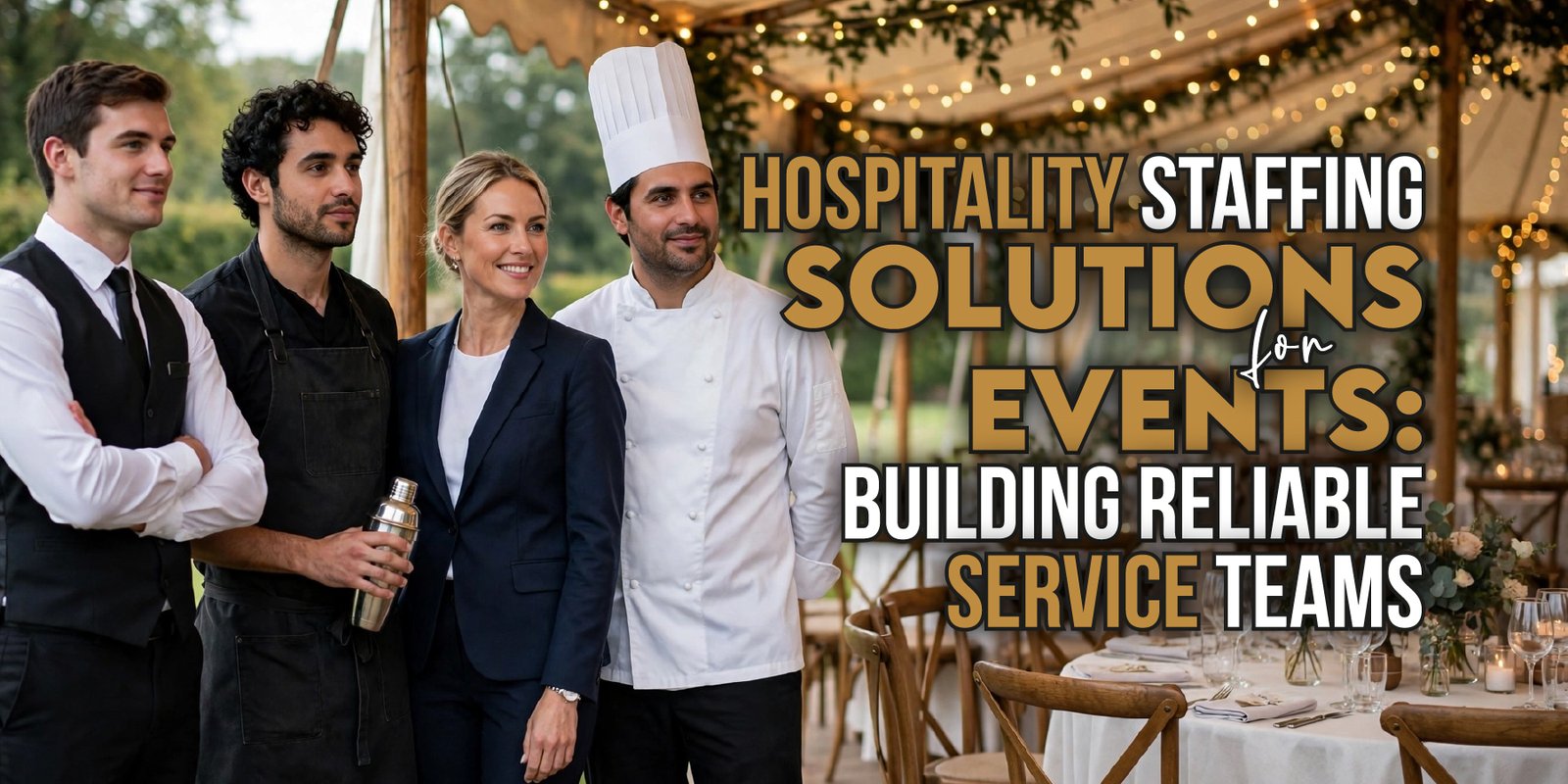
This is where broader staffing coordination matters. Hotels that also need guest-facing event support or linked security and crowd-management planning may benefit from integrated workforce thinking across departments. H&D Recruitment’s pages on security recruitment for hotels, hospitality and events and event staffing planning, costs and compliance support are relevant here because service continuity during events often depends on more than hospitality labour alone.
How hotels can maintain service quality while using temporary or flexible staff
Temporary staffing does not automatically lower standards. Poor implementation does.
Hotels usually get better results from flexible staffing when they focus on five basics:
1. Match skill level to service risk
A shortage is not just a shortage. Replacing a room attendant, breakfast runner, or receptionist with anyone available is risky if the role directly shapes guest perception. Hotels should prioritise proven hospitality experience where service sensitivity is highest.
2. Use concise but practical induction
Even experienced temporary staff need property-specific guidance. That should include service standards, reporting lines, uniform expectations, room or floor allocation, defect escalation, timing standards, and what matters most at that site.
A 10-minute rushed briefing is rarely enough. However, induction does not need to be long to be effective. It needs to be focused.
3. Give supervisors room to supervise
Many hotels make the mistake of loading supervisors with operational tasks when agency staff are on shift. In practice, the opposite is needed. Supervisors should have enough capacity to quality-check, answer questions, reallocate work, and maintain flow.
4. Build repeat staffing where possible
Standards improve when hotels reuse the same capable temporary staff. Familiarity reduces briefing time, increases accountability, and improves team cohesion. Instead of treating each shift as a separate emergency, better hotels build a known flexible pool.
5. Review performance, not just attendance
A filled shift is not always a successful shift. Hotels should assess punctuality, productivity, guest feedback, quality levels, communication, and supervisor confidence. That is how a reactive staffing model becomes a more reliable one.
How recruitment quality, onboarding, and supervision influence guest experience
Recruitment quality is often misunderstood in hospitality. Speed matters, but speed without screening can create more disruption than support.
A hotel may urgently need cover, yet the cost of a poor placement is often hidden. There may be re-cleaning, guest complaints, front-desk friction, management escalation, or extra pressure on permanent staff. Therefore, the better question is not “Can someone start tomorrow?” but “Can the right person support standards tomorrow?”
Good recruitment quality usually includes:
- realistic role briefing from the hotel
- clear understanding of service level and guest profile
- honest assessment of required experience
- attendance reliability checks
- role matching by department and environment
- quick feedback loops after placement
Onboarding is the next dividing line. Even good candidates can underperform if the hotel assumes they will simply “pick it up”. That approach tends to fail fastest in guest-facing roles. Meanwhile, back-of-house roles also need clarity because small misunderstandings can disrupt operational flow.
Supervision then determines whether service quality holds steady during the shift. Hotels that maintain standards best usually combine flexible staffing with visible floor leadership, practical checklists, and quick correction when something starts to drift.
How staffing needs change by hotel type, occupancy, seasonality, and event activity
There is no universal hotel staffing model in the UK. What works for one property can be inefficient or risky for another.
By hotel type
Independent hotels often need versatile staff and local recruitment support because bench strength is smaller. Branded hotels may need stronger consistency across larger teams and tighter brand-standard control. Boutique properties often depend more heavily on personality, detail, and guest interaction, so guest-facing recruitment needs extra care. Group hotels may also have central processes, but local delivery still varies by market and management strength.
By service level
Limited-service hotels may be less complex operationally, yet they still feel service pressure when housekeeping or reception is stretched. Full-service hotels have more service touchpoints, so staffing issues can spread across departments more quickly.
By occupancy pattern
A hotel with stable corporate demand may need predictable midweek support. By contrast, leisure-led hotels often see heavier weekend turnover, later guest requests, and more variable cleaning intensity. High occupancy does not only increase volume. It reduces recovery margin when anything goes wrong.
By seasonality
Coastal, tourism-led, airport-adjacent, city-centre, and event-led hotel markets all behave differently. In some areas, summer pressure is the main issue. In others, conference seasons, festive trade, wedding demand, or school holidays create the real pinch points.
By event activity
Events create wider operational pressure than many headcount plans allow for. A conference, wedding, sports fixture, or local attraction surge can affect arrivals, porterage, breakfast, public areas, housekeeping sequencing, and departures across several days.
By labour availability and area
Hotel staffing needs also vary sharply by local labour market. A central London hotel, for example, may face different pay pressure, transport expectations, and worker competition than a regional town hotel, resort property, or airport hotel. Likewise, hotels in areas with heavy hospitality activity may have access to more candidates, but they also face stronger competition for dependable people. In contrast, sites in tighter labour markets may need earlier planning, broader shift flexibility, or a recruitment partner with stronger local reach. Because of that, hospitality staffing in your area should never be planned purely on national averages. It should reflect local recruitment conditions, commute patterns, service style, and how attractive the site is to workers. UK-wide vacancy pressure and continued service demand reinforce the need for local planning rather than last-minute guesswork.
Common hospitality staffing mistakes hotels make
Hotels do not usually damage service quality through one major decision. More often, problems come from repeated smaller mistakes.
Waiting too long to act
Reactive staffing nearly always costs more in quality, management time, or both. Once the rota is already under strain, even good temporary staff are harder to integrate.
Hiring for availability instead of fit
Fast availability matters, but guest-facing roles demand judgement, communication, and role-appropriate experience.
Under-briefing agency workers
A vague briefing leads to vague delivery. Property standards, shift priorities, and escalation routes should be clear from the start.
Ignoring supervisor capacity
Temporary staffing needs stronger operational control, not less.
Treating all hotels the same
A city business hotel, a country house hotel, a branded airport hotel, and a boutique leisure property do not need the same staffing strategy.
Focusing only on labour cost per hour
Cheap cover can become expensive if quality falls, rooms are reworked, or guest complaints rise.
How to balance service standards, labour costs, and staffing flexibility
Hotels often feel pushed between three competing goals: keep standards high, keep labour spend under control, and stay flexible enough to respond to demand changes.
The balance is rarely found by cutting too aggressively or overstaffing routinely. Instead, better results usually come from smarter role planning.
A commercially sensible approach often includes:
- identifying truly service-critical roles
- forecasting pressure points by occupancy and event activity
- creating a trusted flexible staffing bench
- mixing permanent stability with temporary cover
- measuring the cost of service failure, not just hourly rate
- reviewing which shifts and departments create repeat problems
For example, it may be cheaper overall to add targeted breakfast, public area, or housekeeping support on high-turnover days than to absorb the hidden cost of complaints, slow room release, and overloaded managers.
Permanent recruitment also matters here. Temporary staffing supports continuity, but some issues are structural rather than seasonal. If a hotel repeatedly relies on emergency cover in the same department, that may indicate a deeper workforce planning problem that needs permanent hiring support.
How the right recruitment partner helps hotels protect guest satisfaction
A strong staffing partner does more than send CVs or fill ad hoc shifts.
The right recruitment partner helps a hotel understand role risk, local labour reality, service sensitivity, and what kind of workforce model is actually sustainable. That includes identifying when temporary staffing is appropriate, when repeat flexible workers should be built into the rota, and when permanent recruitment is the better answer.
In practical terms, a good hospitality recruitment partner should help with:
- faster access to relevant hospitality candidates
- better role matching by department and property type
- dependable shift coverage
- clearer communication during busy periods
- support across temporary and permanent hiring needs
- local recruitment support aligned to the hotel’s area and market conditions
- broader operational workforce planning where hotels also manage events or guest-facing security needs
For UK hotels, that matters because staffing decisions sit close to guest satisfaction. A recruitment partner who understands hotel operations can support service continuity far better than one focused only on filling numbers.
Conclusion
Hospitality staffing for hotels how to maintain service quality comes down to one core principle. Hotels protect standards best when staffing is planned around the guest experience, not just the rota gap.
Housekeeping, reception, public areas, concierge, food and beverage, linen, and event-linked support all shape how a stay feels. Therefore, the goal should not be last-minute cover alone. It should be reliable workforce support that protects flow, presentation, responsiveness, and consistency during normal trading and busy periods alike.
The right solution depends on hotel size, location, labour availability, occupancy levels, service model, onboarding quality, supervisor strength, and how early staffing is planned. However, hotels that combine flexible staffing with good induction, realistic supervision, and stronger recruitment decisions are far more likely to maintain standards under pressure.
If your hotel needs hospitality staffing support, temporary cover, or broader workforce planning help in the UK, contact H&D Recruitment. We can help you think beyond emergency cover and build staffing support that protects service continuity where it matters most.
People Also Ask Questions
How do hotels maintain service quality when using temporary staff?
Hotels maintain service quality with temporary staff by matching people to the right roles, giving concise site-specific induction, and providing active supervision. Temporary staffing works best when expectations are clear, repeat workers are used where possible, and managers review quality, not just attendance.
Can agency staff work well in hotels during busy periods?
Yes, agency staff can work well during busy periods if the hotel plans early and uses workers with relevant hospitality experience. Results are usually strongest in housekeeping, F&B support, and event-related shifts where onboarding is clear and supervisors have time to guide performance.
Which hotel roles affect guest satisfaction the most?
Housekeeping, reception, concierge, breakfast service, and public area support often affect guest satisfaction most. These roles shape cleanliness, waiting times, communication, first impressions, and overall flow. Because they are highly visible, poor staffing choices in these areas are noticed quickly.
Why does hotel service quality drop when staffing is reactive?
Reactive staffing creates pressure across multiple departments at once. Managers spend more time firefighting, supervisors lose oversight, and existing staff become stretched. As a result, cleanliness, speed, communication, and consistency tend to decline before the hotel realises how much service has slipped.
Is housekeeping the most important staffing area in a hotel?
Housekeeping is one of the most important staffing areas because it directly affects room readiness, cleanliness, and guest confidence. However, it is not the only one. Reception, public areas, and food and beverage teams also influence service perception and operational flow throughout the stay.
How can hotels cover staffing gaps without harming reviews?
Hotels can reduce review risk by planning cover early, using trained hospitality workers, focusing on service-critical roles first, and supporting temporary staff with clear induction. In addition, supervisors should check standards during shifts so small issues are corrected before they reach the guest.
What should hotels look for in a hospitality staffing partner?
Hotels should look for a staffing partner that understands hotel operations, local labour conditions, role-specific requirements, and the difference between short-term cover and long-term workforce planning. Fast response matters, but role fit, reliability, and communication matter just as much.
Do different hotel types need different staffing strategies?
Yes, different hotel types need different staffing strategies. A boutique hotel, a branded city hotel, and a resort property each face different service expectations, occupancy patterns, staffing pressures, and labour availability. Good workforce planning reflects the property’s service model and local market.