Choosing between temporary warehouse staff and permanent warehouse recruitment can affect productivity, cost control, staff reliability, order fulfilment and long-term growth. For UK fulfilment centres, distribution centres, retail warehouses, e-commerce warehouses, manufacturing warehouses and logistics operations, the right staffing model keeps goods moving and reduces pressure on existing teams.
Warehouse demand rarely stays the same every week. Some periods need extra pickers, packers, dispatch workers and logistics staff. Other periods need stable permanent warehouse operatives who understand stock control, goods-in, goods-out and site-specific processes. Therefore, businesses need to choose carefully instead of hiring reactively.
For many employers, temporary warehouse staff work best during seasonal peaks, urgent shift cover, sickness cover, short-term contracts and sudden order increases. However, permanent warehouse recruitment makes more sense when the role supports long-term operations, team leadership, stock accuracy or consistent workload.
This guide explains the difference between both options and shows how a warehouse staffing agency can help UK businesses build a practical staffing plan.
What Are Temporary Warehouse Staff?
Temporary warehouse staff are workers hired for a limited period to support warehouse, logistics, fulfilment or manufacturing-linked operations. They may work for a few days, several weeks, a seasonal period or a specific project.
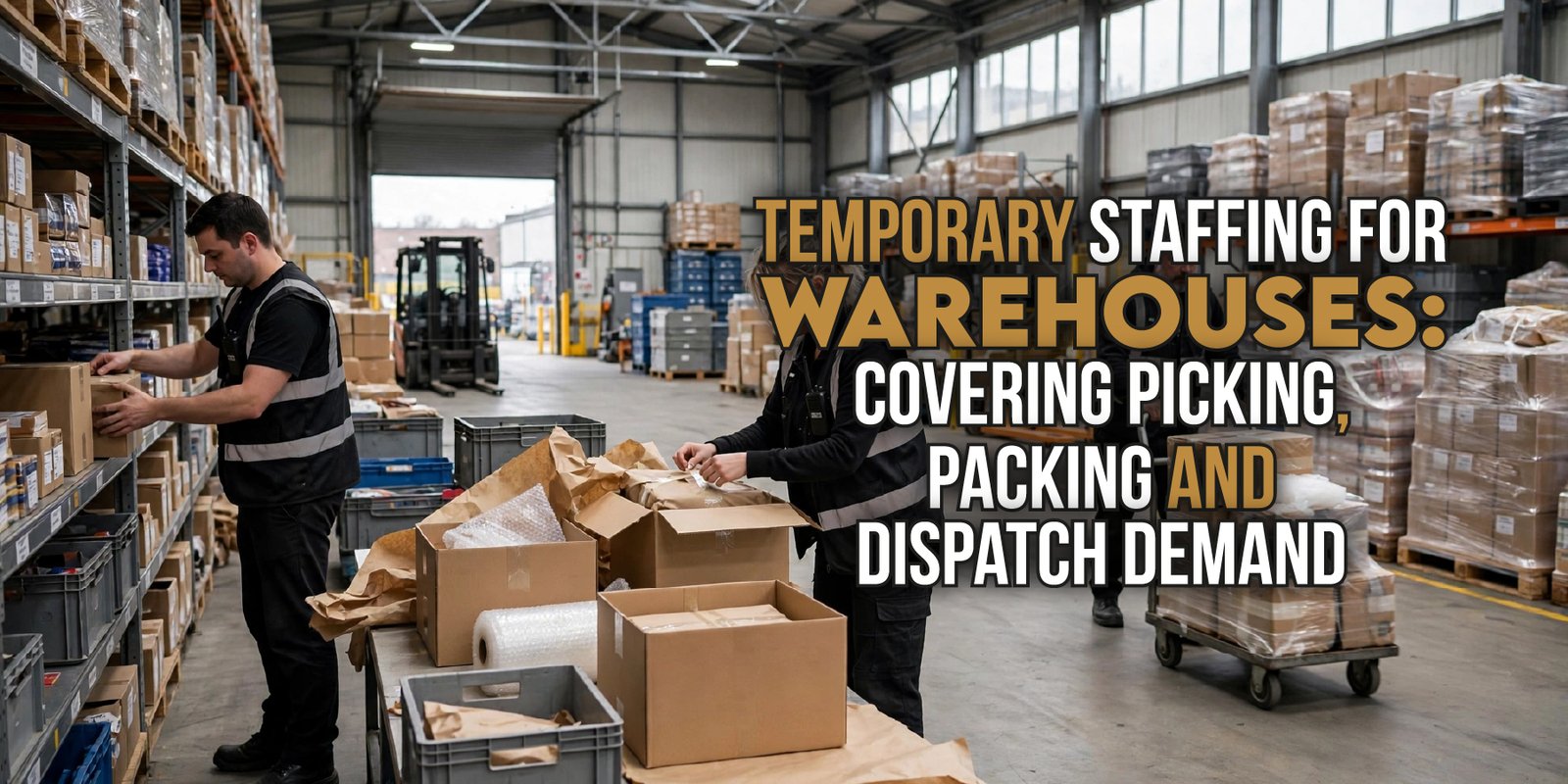
Businesses often use temporary warehouse staff when workload increases quickly or when permanent teams need extra support. These workers can help with picking, packing, labelling, loading, unloading, returns, dispatch, stock movement, goods-in and goods-out tasks.
For example, an e-commerce warehouse may need temporary warehouse staff during a sales campaign. A distribution centre may need extra workers before a major delivery deadline. Similarly, a manufacturing warehouse may need additional warehouse operatives when production volumes increase.
Temporary workers can support:
- Seasonal warehouse demand
- Urgent shift cover
- Sickness and absence cover
- Short-term projects
- Increased order volumes
- Picking and packing teams
- Dispatch backlogs
- Goods-in and goods-out pressure
- Temporary production support
- Trial periods before permanent hiring
Because temporary warehouse staff provide flexibility, they help businesses respond quickly without committing to permanent headcount too early.
What Is Permanent Warehouse Recruitment?
Permanent warehouse recruitment means hiring workers for long-term warehouse roles. These employees usually become part of the core team and support daily operations over a longer period.
Permanent warehouse recruitment works well when a business has consistent workload, regular shift requirements and roles that need site knowledge. These roles may include experienced warehouse operatives, stock control staff, dispatch coordinators, goods-in team members, warehouse supervisors and logistics staff.
Permanent workers usually suit positions where training, process knowledge and team stability matter. For example, a stock control role may need someone who understands systems, accuracy and long-term inventory routines. A dispatch team leader may need strong site knowledge and consistent communication with transport teams.
In short, permanent warehouse recruitment gives businesses stability, while temporary warehouse staff give businesses flexibility.
Temporary vs Permanent Warehouse Staff: Key Differences
Choosing between temporary warehouse staff and permanent warehouse recruitment depends on workload, cost, speed, training needs and future plans.
Flexibility
Temporary warehouse staff offer strong flexibility. Businesses can increase labour during busy periods and reduce support when demand returns to normal.
Permanent warehouse recruitment offers less short-term flexibility, but it gives businesses a stable core workforce.
Cost control
Temporary staffing can help control costs during seasonal demand because employers can avoid hiring permanent workers for short-term peaks. However, permanent workers may offer better long-term value when the workload stays consistent.
Training
Permanent warehouse operatives can receive deeper training over time. They can learn systems, stock locations, site routines and process details.
Temporary warehouse staff still need clear induction, but employers usually focus training on specific tasks.
Productivity
Productivity depends on role matching. Temporary warehouse staff can improve productivity during busy periods by adding labour quickly. Permanent workers can improve productivity through experience and site knowledge.
Retention
Permanent warehouse recruitment supports long-term retention and team culture. However, temporary workers can still return for repeat assignments if the business treats them well and communicates clearly.
Operational planning
A strong staffing plan often uses both models. Permanent workers handle core daily activity, while temporary warehouse staff support peaks, absences and short-term demand.
When Temporary Warehouse Staff Make Sense
Temporary warehouse staff make sense when the business needs flexible labour without long-term commitment. This can help employers avoid overstaffing during quieter periods and understaffing during demand spikes.
Seasonal peaks
Retail warehouses, e-commerce operations and fulfilment centres often experience seasonal order spikes. During these periods, temporary warehouse staff can support picking, packing, labelling and dispatch.
Urgent shift cover
Absences can disrupt warehouse operations quickly. If several workers are off sick or unavailable, temporary workers can help keep goods moving.
Increased order volumes
A sudden contract, product launch or promotional period can create extra workload. Therefore, temporary warehouse staff help businesses respond without slowing fulfilment.
Short-term contracts
Some warehouses need workers for a defined project. This may include stock movement, returns processing, warehouse reorganisation or short-term production support.
Trial periods
Temporary staffing can also help employers assess worker suitability before considering longer-term opportunities.
Manufacturing and warehouse pressure
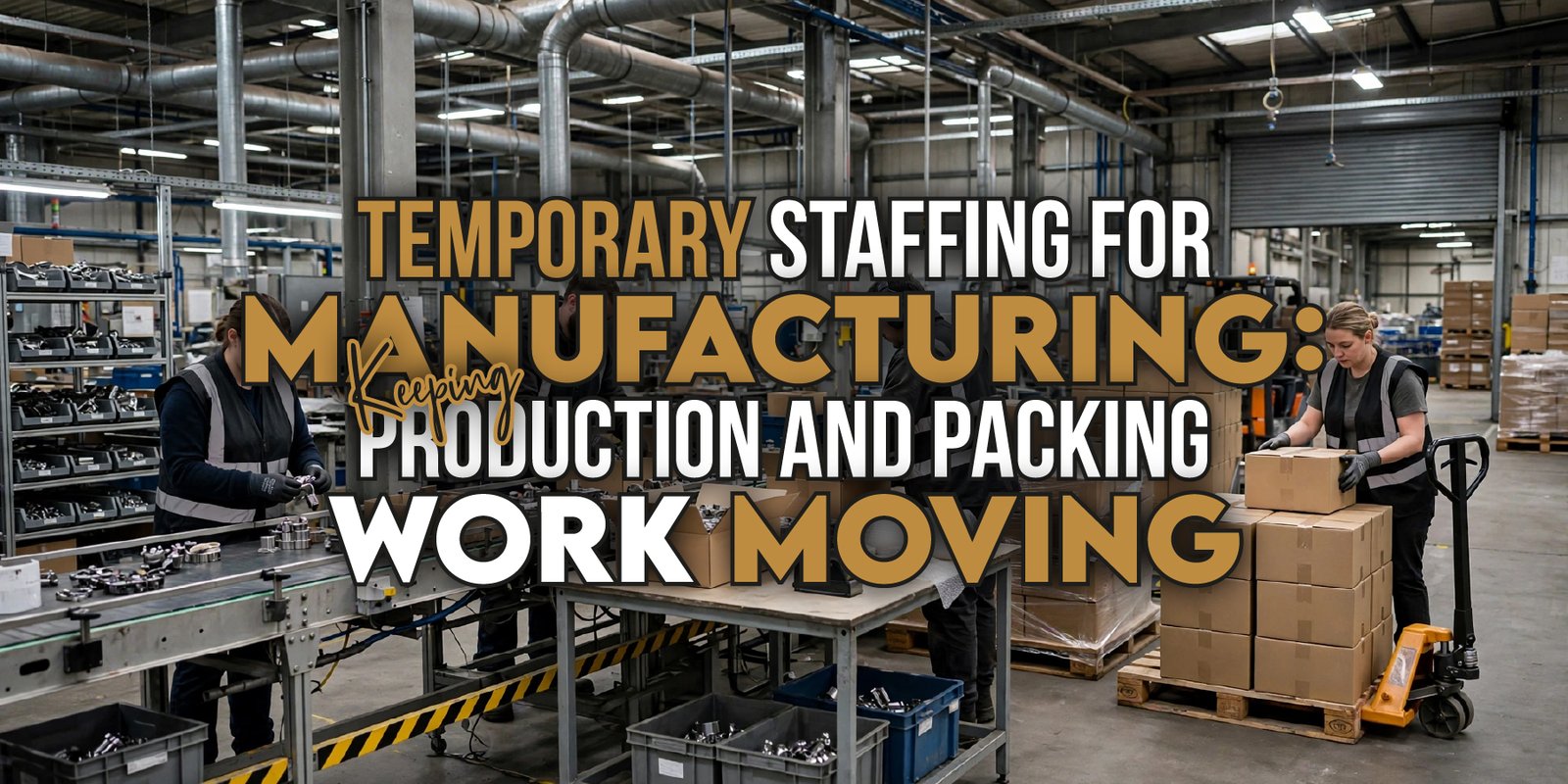
Manufacturing businesses often need warehouse support when production volumes rise. In these cases, factory staffing solutions can support temporary labour supply, production workforce support and warehouse-linked operations.
For example, a manufacturing warehouse may use temporary warehouse staff to move finished goods, support packing teams or help dispatch larger production volumes.
When Permanent Warehouse Recruitment Makes More Sense
Permanent warehouse recruitment works best when a business needs stability, deeper training and consistent performance.
Long-term growth
If order volumes have increased permanently, relying only on temporary warehouse staff may not be enough. Permanent recruitment can help build a stronger foundation for future growth.
Specialist roles
Some roles need experience, accuracy and responsibility. Stock control, warehouse supervision, goods-in coordination and dispatch planning often suit permanent workers.
Consistent workloads
If the warehouse needs the same number of workers every week, permanent warehouse recruitment usually makes commercial sense.
Team leadership
Supervisors and team leaders should usually sit in the permanent workforce because they manage standards, communication and productivity.
Operational stability
Permanent warehouse operatives help build process knowledge. They understand site layout, systems, regular customers, stock routines and internal expectations.
For manufacturing-linked warehouses, manufacturing staff recruitment can also help employers plan permanent staffing across production teams, skilled and unskilled workers and warehouse operations.
How a Warehouse Staffing Agency Helps You Choose the Right Option
A warehouse staffing agency can help employers decide when to use temporary warehouse staff, permanent warehouse recruitment or a mix of both.
Many businesses struggle because they treat staffing as a single decision. However, a good agency looks at workload patterns, shift requirements, seasonal demand, absence risks, training needs and long-term growth.
A reliable warehouse staffing agency can support:
- Temporary warehouse staff
- Permanent warehouse recruitment
- Logistics staff
- Warehouse operatives
- Picking and packing teams
- Goods-in and goods-out roles
- Dispatch workers
- Manufacturing warehouse support
- Urgent shift cover
- Flexible recruitment support
For example, if a fulfilment centre needs extra workers for eight weeks, temporary staffing may work best. However, if a distribution centre has steady growth and repeat vacancies, permanent warehouse recruitment may offer better stability.
In many cases, the answer is both. A core permanent team handles daily operations, while temporary warehouse staff cover peaks, absence and urgent demand.
How Logistics Staff and Warehouse Operatives Fit Into Staffing Plans
Warehouse staffing plans should include more than general labour. Different roles support different parts of the operation.
Warehouse operatives
Warehouse operatives usually support picking, packing, stock movement, labelling, loading, unloading and general warehouse duties. Businesses may use permanent workers for core roles and temporary warehouse staff for demand spikes.
Logistics staff
Logistics staff help goods move through the wider operation. They may support dispatch, transport coordination, goods movement, loading schedules and delivery preparation.
Picking and packing teams
Picking and packing teams often need flexibility because order volumes can change quickly. Therefore, temporary warehouse staff can help when fulfilment pressure increases.
Goods-in and goods-out teams
Goods-in and goods-out operations need accuracy and timing. Permanent staff may suit core roles, while temporary workers can support peak intake or dispatch periods.
Production support workers
Manufacturing warehouses may need workers who understand both warehouse and production flow. Production workforce support can help where warehouse staffing connects with factory output.
Skilled and unskilled manufacturing staff
Some warehouse environments sit close to production teams. In these cases, businesses may need skilled and unskilled manufacturing staff alongside warehouse operatives and logistics staff.
Temporary Warehouse Staff vs Permanent Recruitment Checklist
Use this checklist before deciding which staffing model fits your business.
Workload
- Is the workload temporary or long-term?
- Do order volumes rise during seasonal peaks?
- Do you need workers for a specific project?
- Does the role exist every week?
- Could demand fall again after the busy period?
Role type
- Does the role need deep site knowledge?
- Can the task be taught quickly?
- Does the role involve stock control or supervision?
- Does the task support picking and packing?
- Do you need logistics staff or general warehouse operatives?
Cost and flexibility
- Would permanent recruitment create unnecessary cost?
- Would temporary warehouse staff reduce pressure during peaks?
- Do you need urgent shift cover?
- Would flexible labour help avoid overtime?
- Do you need a warehouse staffing agency to respond quickly?
Training and performance
- How much training does the role need?
- Can temporary workers perform the task with clear instructions?
- Would permanent workers improve long-term productivity?
- Do supervisors have time to train new starters?
- Can you monitor performance early?
Growth planning
- Is your business growing steadily?
- Do you need permanent warehouse recruitment for stability?
- Do you need temporary workers before committing long-term?
- Does your staffing plan support future demand?
- Could workforce planning for manufacturing support wider operational planning?
If several answers point to short-term demand, temporary warehouse staff may fit best. If the role supports daily operations over the long term, permanent warehouse recruitment may make more sense.
Common Warehouse Staffing Mistakes Employers Should Avoid
Hiring reactively
Waiting until shifts become short can create rushed decisions. Instead, plan ahead and use temporary warehouse staff before demand damages output.
Using temporary staff for every long-term role
Temporary workers can help with flexibility, but some roles need permanent ownership. Stock control, supervision and dispatch planning often need long-term stability.
Hiring permanently for short-term spikes
Permanent recruitment for a short-term peak can increase costs after demand falls. In this situation, temporary warehouse staff may offer better flexibility.
Ignoring training
Every worker needs induction. Temporary workers also need clear instructions, site rules and task expectations.
Choosing only on price
Cheap labour can become expensive if errors, absence and rework increase. A good warehouse staffing agency should focus on suitability, not just speed.
Not planning for manufacturing links
Warehouses that support production need staffing plans that match factory output. This is where flexible factory staffing support can help.
Forgetting long-term workforce planning
Even if a business uses temporary staff, it still needs a long-term plan. Permanent recruitment, logistics staffing and temporary labour should work together.
How to Choose the Right Staffing Model for Your Business
Start with your business need. If you need short-term flexibility, temporary warehouse staff may be the best choice. If you need stability, process knowledge and long-term performance, permanent warehouse recruitment may work better.
Ask these questions:
- Is the demand temporary or ongoing?
- Do we need workers urgently?
- Can we train new staff quickly?
- Will the role support long-term operations?
- Do we need specialist knowledge?
- Are existing workers under pressure?
- Can a warehouse staffing agency help us plan better?
A balanced staffing model often works best. For example, a distribution centre may use permanent warehouse operatives for stock control and dispatch leadership, while using temporary warehouse staff for picking and packing during seasonal peaks.
Similarly, a manufacturing warehouse may use permanent logistics staff for daily goods movement while using temporary workers during higher production demand.
People Also Ask
What are temporary warehouse staff?
Temporary warehouse staff are workers hired for short-term warehouse needs such as seasonal peaks, urgent shift cover, absence cover, increased order volumes, picking and packing, dispatch support and short-term projects.
When should I use temporary warehouse staff?
Use temporary warehouse staff when demand increases for a limited period, shifts need urgent cover, staff are absent, order volumes rise, or your business needs flexible labour without long-term commitment.
What is permanent warehouse recruitment?
Permanent warehouse recruitment means hiring long-term warehouse workers for ongoing roles. It suits consistent workloads, specialist tasks, stock control, team leadership and operational stability.
Is temporary staffing cheaper than permanent recruitment?
Temporary staffing can help control costs during short-term demand because businesses avoid permanent headcount for temporary peaks. However, permanent recruitment may offer better value for ongoing roles.
How can a warehouse staffing agency help?
A warehouse staffing agency can help employers choose between temporary staff, permanent recruitment and flexible support. It can also provide workers faster during urgent shifts, seasonal demand and operational pressure.
Speak With H&D Recruitment About Warehouse Staffing
If you are unsure whether your business needs temporary warehouse staff, permanent warehouse recruitment or a mixed staffing model, H&D Recruitment can help you review your options.
We support UK warehouses, logistics companies, fulfilment centres, retail warehouses, distribution businesses and manufacturing warehouses with practical staffing support. Whether you need warehouse operatives, logistics staff, temporary warehouse workers, permanent recruitment or wider workforce planning, our team can help.
H&D Recruitment can also support connected factory and production needs through factory staffing solutions and manufacturing staff recruitment.
Speak with H&D Recruitment today to review your staffing needs and build a workforce plan that supports productivity, flexibility and long-term growth.
Conclusion
Choosing between temporary warehouse staff and permanent warehouse recruitment can affect cost control, productivity, staff reliability, fulfilment speed and long-term growth. The right option depends on demand, role type, training needs, shift pressure and future plans.
Temporary warehouse staff work well for seasonal peaks, urgent shift cover, sickness cover, short-term contracts, increased order volumes and trial periods. Permanent warehouse recruitment makes more sense for long-term growth, specialist roles, stock control, team leadership and operational stability.
For many UK warehouses, the strongest approach combines both. A core permanent team gives stability, while temporary warehouse staff provide flexibility when demand changes. With support from a reliable warehouse staffing agency, businesses can choose the right model, improve workforce planning and keep operations moving.