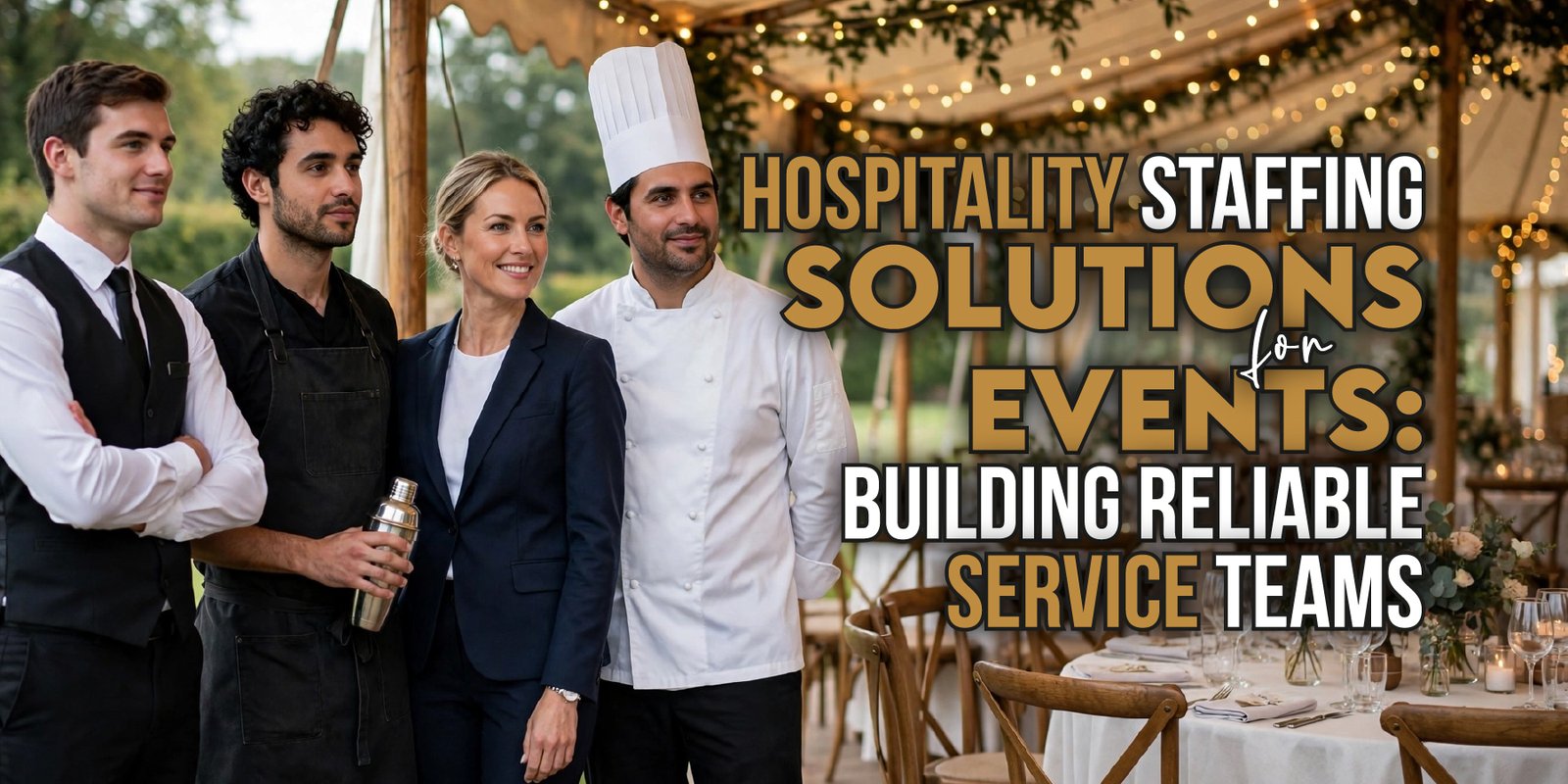
When tourist demand rises, hospitality teams feel it immediately. Occupancy climbs, table turns accelerate, check-ins become heavier, and guest expectations remain just as high. A hotel that looked comfortably staffed in April can suddenly feel under pressure in July. Likewise, a coastal venue, city-centre restaurant, or serviced accommodation operator may find that one busy stretch exposes every weak point in workforce planning.
That is exactly why temporary hospitality staffing for peak tourist seasons matters. The best operators do not wait for service issues to appear before acting. Instead, they build flexible staffing capacity early enough to absorb rising demand without damaging guest satisfaction, staff morale, or labour cost control.
Across the United Kingdom, tourist season pressure varies by location and business type. Coastal destinations often see sharp summer surges. City-break markets can experience weekend spikes, event-led demand, and heavy short-stay turnover. Leisure venues, meanwhile, may face a mix of daytime footfall and evening service pressure. In each case, the staffing question is not simply how to fill shifts. It is how to protect service consistency while keeping the operation commercially sensible.
Temporary staffing can help achieve that balance. However, it works best when supported by proper planning, realistic role briefs, fast onboarding, and a recruitment partner that understands hospitality operations in the UK. Businesses that take that approach are usually better placed to manage peak demand calmly, maintain standards, and avoid overcommitting to permanent headcount before demand settles.
Why Peak Tourist Seasons Create Hospitality Staffing Pressure in the UK
Peak tourist seasons increase volume, but they also increase complexity. More guests mean more room turnovers, more breakfast covers, more cleaning requirements, more queue pressure, and more service recovery moments if anything slips. Because hospitality is so visible, staffing problems show up quickly in guest feedback, online reviews, and operational stress.
In the UK, this pressure often arrives in uneven waves. A seaside hotel may have compressed summer peaks. A city hotel may face tourism demand layered on top of conferences, weekend breaks, and event traffic. Restaurants in tourist hotspots can see sudden rises in walk-ins and turnover speed, while serviced accommodation operators may struggle with same-day cleaning and arrival coordination.
Labour shortages make the problem harder. In many areas, hospitality businesses compete for the same pool of temporary workers. Therefore, employers that start recruiting late often find fewer options, slower onboarding, and weaker fit. By contrast, operators that plan ahead tend to protect both service levels and staffing costs more effectively.
Why Temporary Hospitality Staffing Is Essential During High-Demand Periods
Temporary hospitality staffing is essential because peak demand is rarely stable enough to justify a permanent headcount increase across every role. A business may need more room attendants, waiting staff, front-of-house support, or bar staff for ten weeks, not twelve months. In that situation, temporary staffing adds labour flexibility without locking the employer into unnecessary fixed costs.
It also provides breathing room. If managers try to absorb tourist-season demand with only their permanent team, fatigue often rises, service slows, and absence risk can increase. Meanwhile, supervisors spend more time plugging operational gaps and less time leading the guest experience.
A well-managed temporary staffing model helps businesses stay responsive. For example, a hotel can add housekeeping support during high-occupancy weeks. A restaurant can strengthen waiting staff for weekend surges. A mixed-use venue can bring in temporary support for events, guest arrivals, and food-and-beverage demand without reshaping the whole permanent structure.
This is where many operators benefit from learning how to recruit the best seasonal workers and get them onboarded quickly, especially when tourist-season pressure leaves little room for delays.
Main Staffing Challenges Hospitality Businesses Face During Tourist Peaks
Tourist season demand does not only stretch headcount. It affects how the whole operation runs. Some of the most common pressures appear repeatedly across UK hotels, restaurants, venues, and serviced accommodation businesses.
Sudden Occupancy Increases
A sharp rise in bookings can place immediate pressure on housekeeping, reception, breakfast service, and guest support. Even if the business expected a busy period, the speed of increase can still create problems.
Guest-Service Pressure
More guests means more interactions, more requests, and more opportunities for service failure. Therefore, staffing levels need to support not just volume but also responsiveness and presentation.
Housekeeping Demand
Housekeeping support often becomes one of the first pinch points during tourist peaks. High turnover days, early arrivals, late departures, and variable room standards can quickly stretch room attendants and supervisory teams.
Restaurant and Bar Pressure
Restaurants and bars within hotels or leisure venues often feel demand in waves. Breakfast, lunch, evening service, and event-linked trade can all rise at once. As a result, waiting staff and bar staff shortages can affect both revenue and guest satisfaction.
Event-Linked Demand
Tourist periods often overlap with weddings, local festivals, conferences, and summer events. That means hospitality businesses may need temporary staff not only for general trading but also for one-off service spikes.
Shift Cover
Busy seasons increase the impact of absences. A missing team member on a quiet weekday is one thing. A missing worker during a full house or a high-turnover evening service is something else entirely.
Onboarding Speed
Fast hiring matters, but speed alone is not enough. New temporary workers still need clear role expectations, site guidance, and service standards. Otherwise, the business may gain numbers while losing consistency.
Labour Shortages
In many UK tourist hotspots, labour availability becomes tighter during summer and holiday periods because multiple employers are recruiting at the same time. Consequently, businesses that rely on last-minute recruitment often face weaker candidate choice.
How Temporary Hospitality Staffing Helps Businesses Protect Service Quality During Busy Seasons
Temporary staffing helps protect service quality because it creates operational capacity before existing teams become overstretched. That matters because guest experience usually declines before managers fully recognise how strained the team has become.
A hotel, for instance, may keep check-in smooth by adding front-of-house support during busy arrival windows. At the same time, extra room attendants can reduce pressure on housekeeping teams and improve room readiness. Similarly, a busy venue can use temporary waiting staff and bar support to maintain speed without overloading its permanent team.
However, temporary staffing protects service quality only when the fit is right. Reliability, presentation, attitude, and role suitability matter just as much as quick placement. A worker who turns up but cannot match the service style may still create friction for supervisors and guests. Therefore, the goal should be well-matched temporary staffing, not staffing volume for its own sake.
This is especially relevant in hospitality because service failures are public. Guests notice delayed tables, slow room turns, poor communication, or a strained team very quickly. As a result, a good seasonal staffing plan often protects reviews, repeat trade, and staff morale at the same time.
How Seasonal Recruitment and Fast Onboarding Improve Operational Continuity
Seasonal recruitment works best when it begins early enough to give the business options. Waiting until the rota is already under pressure usually narrows the pool and increases the risk of rushed decisions. By contrast, earlier planning allows operators to define their needs properly, build a shortlist, and prepare the operation for new starters.
Onboarding then becomes the bridge between recruitment and real performance. Even experienced temporary hospitality staff need clear instruction on layout, service standards, reporting lines, guest expectations, and shift flow. In addition, simple onboarding tools such as checklist-based inductions, role-specific briefs, and site walkthroughs can improve confidence very quickly.
Operational continuity depends on this. A temporary worker who is well briefed can support the team from day one far more effectively than someone who arrives with little context. Meanwhile, better onboarding reduces supervisor disruption because less time is spent correcting avoidable errors mid-shift.
Many businesses also find that temporary and permanent staffing work best together. Temporary staff absorb seasonal peaks, while permanent teams maintain core consistency and culture. That combination usually creates stronger service resilience than relying too heavily on either model alone.
How Staffing Needs Change by Hospitality Setting, Such as Hotels, Restaurants, Coastal Venues, Leisure Venues, and Serviced Accommodation
Not all hospitality businesses experience tourist demand in the same way. A staffing plan that works for a city hotel may not suit a coastal pub, a leisure-led venue, or a serviced accommodation operator.
Hotels often need a layered staffing model. During busy periods, they may require extra room attendants, front desk support, breakfast teams, waiting staff, and back-of-house help at the same time. Therefore, temporary hotel staff UK employers use often need to fit into several linked departments.
Restaurants are usually more exposed to front-of-house timing pressure. Waiting staff, bar support, and kitchen porter or back-of-house help may be the immediate concern, especially where walk-ins rise sharply during tourist weekends.
Coastal venues often face compressed seasonal peaks. Labour supply can be tighter in these areas, especially if transport links or accommodation for staff are limited. Because of that, hospitality staffing in your area may require earlier planning than it would in a larger city.
Leisure venues and mixed-use destinations may need broader flexibility. Guest demand might stretch across ticketing, food service, cleaning, event support, and public-area staffing. As a result, the labour model often needs to be more adaptable.
Serviced accommodation creates a different type of pressure again. Turnover speed, cleaning standards, guest communication, and scheduling precision usually matter more than traditional restaurant coverage. Therefore, housekeeping support and operational coordination can become the priority rather than front-of-house volume alone.
Common Peak-Season Staffing Mistakes Hospitality Businesses Make
One of the biggest mistakes is starting too late. When recruitment begins only after demand has already surged, businesses usually face fewer choices, higher pressure, and weaker onboarding.
Another common error is focusing only on numbers. More staff can help, but poorly matched staff may still weaken service quality. Because of that, employers should pay close attention to reliability, attitude, presentation, and role fit.
Some businesses also under-brief temporary workers. Even capable people can perform poorly if they do not understand the service style, shift expectations, or guest profile. In contrast, a short and structured briefing often improves performance noticeably.
Overworking permanent staff is another risk. Managers sometimes try to protect labour costs by pushing the existing team harder for too long. However, fatigue, reduced morale, and avoidable absences can end up costing more.
Finally, some operators fail to connect seasonal staffing to wider workforce strategy. Reviewing how to scale your workforce without increasing overheads can help decision-makers think more clearly about flexible labour rather than defaulting to permanent expansion too early.
How to Build a Flexible Seasonal Staffing Plan Without Overspending
The most effective seasonal staffing plans are built around demand patterns, not guesswork. Start by identifying when occupancy, covers, or guest arrivals usually rise. Then map which departments feel pressure first and which roles are hardest to fill locally.
Next, separate core roles from flexible peak roles. A business may want a stable permanent base in key positions while using temporary hospitality staff for seasonal uplift. That approach often improves labour cost control because it aligns spending more closely with actual demand.
It also helps to build role-specific contingencies. For example, the operation may need backup room attendants during high turnover periods, extra waiting staff for weekend demand, or additional back-of-house support during event-heavy weeks. Because these needs are different, the recruitment plan should not treat all staffing gaps the same way.
In addition, forecast onboarding capacity honestly. If supervisors can only integrate a certain number of new workers per week, the hiring pace should reflect that. Otherwise, the business may create confusion instead of support.
Ultimately, a flexible seasonal staffing plan is not about cutting costs at all costs. It is about controlling spend while protecting service continuity and guest experience.
How to Choose the Right Recruitment Partner for Peak Tourist Seasons
The right recruitment partner should understand more than vacancy numbers. They should understand tourist-season pressure, hospitality standards, local labour conditions, and the difference between fast cover and good cover.
Start by looking for practical sector knowledge. A partner that understands UK hotels, restaurants, venues, and seasonal trading patterns is more likely to shortlist workers who fit the operation.
Local recruitment support matters too. Labour availability differs across city centres, coastal destinations, tourist hotspots, and mixed-use leisure areas. Therefore, a staffing partner with real awareness of hospitality operations in the UK and in your area can often improve both speed and fit.
Communication is equally important. Clear briefs, realistic timelines, and honest role expectations help agencies match workers more effectively. On the other hand, vague requirements usually lead to weaker outcomes.
Finally, choose a partner that balances urgency with quality. Speed of supply matters during peak tourist seasons. However, reliability, service attitude, and operational fit matter just as much if the goal is strong guest experience rather than simply a filled rota.
Conclusion
Peak tourist seasons can be highly profitable, but they also test hospitality operations quickly. Rising occupancy, heavier service demand, housekeeping pressure, and labour shortages can all expose weak workforce planning within days. That is why temporary hospitality staffing for peak tourist seasons should be treated as a practical business strategy, not just a last-minute fix.
The strongest operators plan ahead, recruit early, onboard properly, and combine temporary flexibility with a stable permanent base. As a result, they are better able to protect guest satisfaction, maintain service consistency, and control labour costs without overcommitting to long-term overheads.
If your business needs temporary hospitality staffing support during busy tourist periods, or broader help with seasonal workforce planning, H&D Recruitment can help you build a more flexible and commercially sensible staffing approach for your operation.
People Also Ask Questions
1. What is temporary hospitality staffing for peak tourist seasons?
Temporary hospitality staffing for peak tourist seasons means bringing in short-term workers to help hotels, restaurants, venues, and serviced accommodation handle busy periods. These workers may support housekeeping, front-of-house, waiting service, bar operations, or back-of-house tasks. The aim is to absorb demand spikes without increasing permanent headcount too early.
2. Why do UK hospitality businesses need seasonal staff during tourist peaks?
UK hospitality businesses often need seasonal staff because tourist demand can rise quickly during summer, holidays, festivals, and major local events. As occupancy and footfall increase, permanent teams may struggle to keep up alone. Temporary support therefore helps protect service quality, guest satisfaction, and operational continuity during busier weeks.
3. How quickly can temporary hospitality staff be onboarded?
That depends on the role, site, labour availability, and how organised the onboarding process is. Some workers can be integrated quickly, especially if the role brief and site induction are clear. However, even fast onboarding should still cover service expectations, reporting lines, and practical role guidance to support better performance.
4. Can temporary staff maintain guest service quality?
Yes, they can, provided they are well matched, properly briefed, and supported on shift. Temporary staffing works best when reliability, presentation, and service attitude are treated as priorities rather than afterthoughts. In addition, clear supervision and role allocation help temporary workers contribute positively during busy periods.
5. What hospitality roles are most affected during tourist season?
Housekeeping support, room attendants, front-of-house teams, waiting staff, bar staff, and back-of-house support are often affected first. The exact pressure depends on the venue type and guest demand pattern. For example, hotels may feel occupancy and cleaning pressure early, while restaurants may feel the strain through service speed and table turnover.
6. How can hospitality businesses control costs during seasonal peaks?
Cost control usually improves when businesses forecast demand early, define flexible roles clearly, and use temporary staffing where volume is seasonal rather than permanent. That approach helps avoid unnecessary long-term overheads. However, cutting labour too aggressively can damage service quality, which often proves more expensive over time.
7. Is it better to hire temporary or permanent hospitality staff for busy seasons?
In many cases, the strongest strategy uses both. Temporary staff help absorb seasonal spikes and short-term labour gaps, while permanent staff maintain core consistency and operational knowledge. Therefore, the best mix depends on the venue’s demand pattern, service model, labour market, and long-term growth plans.
8. How do I choose the right hospitality staffing agency in the UK?
Look for an agency that understands hospitality operations, seasonal demand, local labour availability, and guest-facing service standards. Strong communication and realistic role briefing matter too. Most importantly, choose a partner that balances recruitment speed with worker quality, reliability, and operational fit.