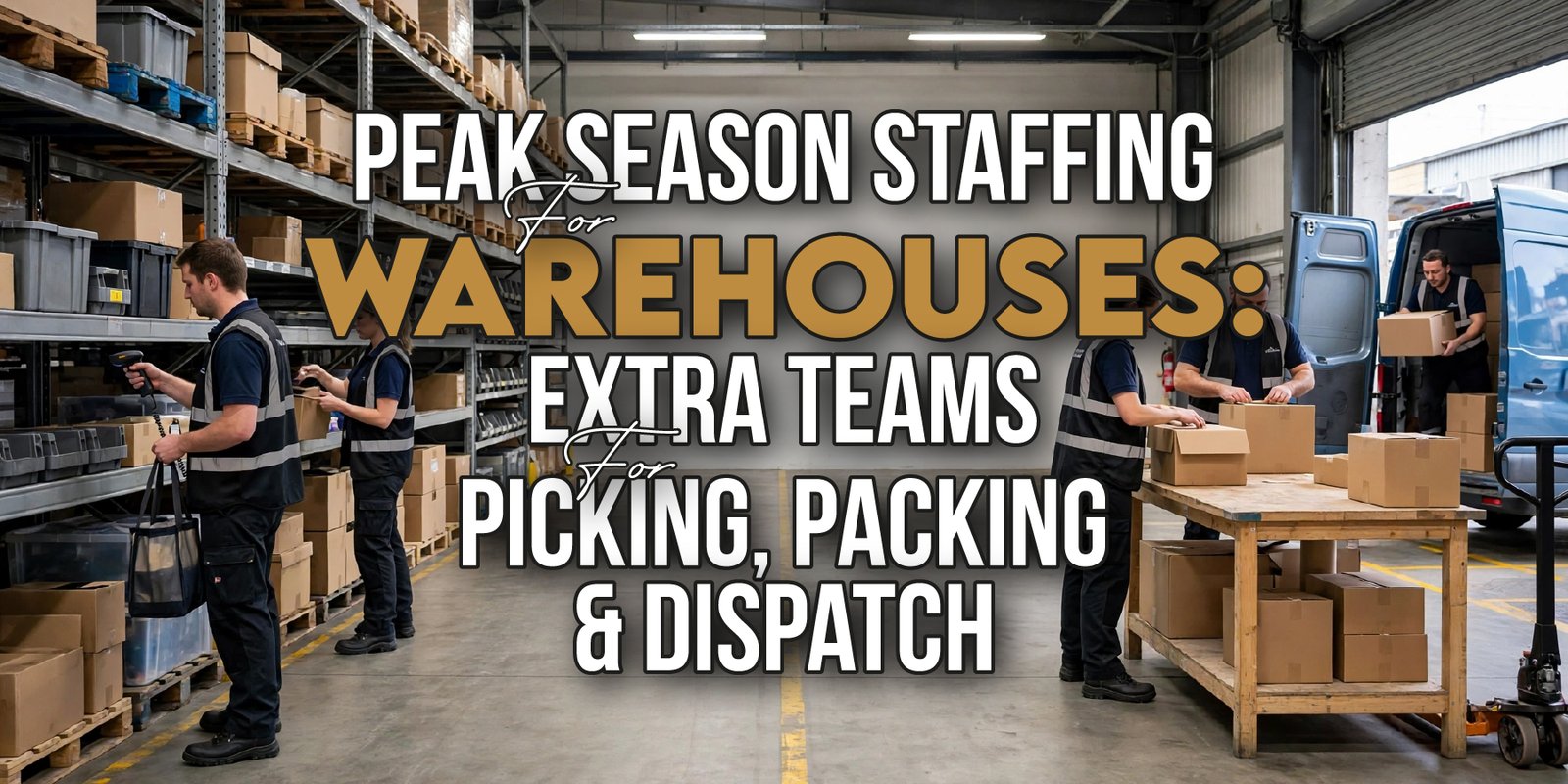
A warehouse receives an unusually large order just as several team members book annual leave. A hotel prepares for a busy weekend while its housekeeping rota is already stretched. In both cases, waiting until the busiest shift begins leaves managers with fewer choices. Temporary staffing gives employers a way to plan additional capacity for defined periods without treating every increase in demand as a permanent vacancy.
Quick Answer: How Does Temporary Staffing Help During Peak Demand?
Temporary staffing helps employers add suitable people during seasonal peaks, large orders, events and short-term absences. First, estimate the work and identify gaps in existing shift coverage. Then specify roles, working hours, location and essential experience. Early temporary recruitment planning can improve your options, although candidate suitability and availability must still be assessed.
What Is Temporary Staffing?
Temporary staffing is an arrangement for recruiting people to work for a defined period or assignment, often through an agency. Employers may use it for a one-off project, additional weekend shifts, seasonal operations or temporary staff cover during absences.
Why Do Businesses Need Temporary Staffing During Peak Periods?
Demand rarely increases evenly. Warehouses can face order surges, hotels may experience concentrated bookings, and event organisers may need extra personnel for particular dates. Meanwhile, manufacturing schedules can tighten when a project deadline changes.
Temporary staffing can support these short-term changes without assuming the same headcount will be necessary throughout the year. It may also help employers explore arrangements during recruitment gaps or planned leave.
However, peak demand staffing should begin with a practical question: which duties cannot be covered by the existing team during the forecast busy period? The answer determines the recruitment brief, rather than a general request for additional staff.
How Can Employers Forecast Peak Demand Staffing Requirements?
Start with operational evidence already available inside the business. Review previous order volumes, expected hotel occupancy, confirmed event bookings, dispatch schedules or production deadlines. Next, compare that workload against the capacity of existing staff.
For example, a warehouse manager can estimate the picking hours associated with confirmed orders and compare them with scheduled hours. This is a planning illustration, not a claim that every order requires the same time. Adjust the estimate for task complexity, equipment and training requirements.
Then identify the gap by day and shift. Seasonal staff may be necessary on only two evenings each week rather than across every operating hour. Consequently, temporary staffing requests should specify the shifts where the business actually needs additional support.
When Should Businesses Start Planning Seasonal Staff?
Begin planning when reliable evidence of an upcoming peak becomes available, even if the final headcount remains uncertain. Advance discussions give employers time to define roles and review recruitment possibilities before work intensifies.
The appropriate lead time depends on experience requirements, location, shift patterns and candidate availability. For instance, a role involving specialist equipment may require more careful assessment than a general packing assignment.
Temporary Staffing vs Permanent Recruitment
Both approaches can support business growth, but they address different needs. Compare the expected duration and stability of demand before deciding which arrangement to explore.
| Staffing approach | Typical requirement | Main advantage | Important consideration |
|---|---|---|---|
| Temporary staffing | Seasonal peak, short project or defined shift gaps | Capacity matched to a limited period | Assignment dates, briefing and availability |
| Part-time recruitment | Regular demand on selected days | Recurring coverage without a full-time rota | Predictable hours and scheduling |
| Full-time recruitment | Ongoing operational requirement | Continuity for a stable position | Long-term suitability and induction |
| Combined approach | Core team plus fluctuating demand | Continuity alongside flexible capacity | Clear responsibilities and handovers |
A flexible workforce plan may use more than one approach. However, avoid repeatedly treating a lasting vacancy as a short-term issue when the underlying requirement has become permanent.
Temporary Warehouse Staffing for Busy Logistics Operations
Warehouses often experience uneven demand around dispatch deadlines, large deliveries and seasonal fulfilment. Temporary staffing may be relevant for picking, packing, loading, unloading, returns processing and other defined logistics tasks.
Match the role to the work
A picker and packer may need familiarity with scanning procedures and accuracy expectations. Meanwhile, a forklift or reach truck assignment involves equipment-specific competence that must be checked before work begins.
Specify whether temporary warehouse staff will handle manual tasks, use machinery or support dispatch. The required shift times, loading areas and supervisor contacts also affect suitability.
Hospitality Temporary Staffing for Events and Seasonal Demand
Restaurants, hotels and event venues can face concentrated demand during weekends, holidays, conferences and private functions. Temporary staffing can address defined requirements for waiting staff, bartenders, kitchen porters, chefs, housekeepers and other relevant hospitality roles.
However, roles should not be treated as interchangeable. A kitchen porter, room attendant and waiter need different experience and instructions. Therefore, employers should identify each duty and the expected level of customer contact before requesting cover.
For weddings, conferences and busy functions, the venue can review hospitality staffing solutions for events alongside its wider recruitment plan.
Temporary Security Staffing for Busy Events and Sites
Events and commercial sites may need additional personnel when visitor numbers, operating hours or access requirements change. Depending on the assignment, relevant roles can include Event Stewards, Event Supervisors, Security Officers, SIA Door Supervisors or CCTV Operators.
Importantly, stewarding and licensable security duties are not identical. Employers should describe the actual tasks, then confirm any applicable SIA licensing requirements and other role-specific checks through appropriate processes.
Manufacturing and Production Staffing During Demand Peaks
A production facility may need extra capacity for packing, machine operation, material handling or quality control when orders rise. Temporary staffing can be considered for suitable defined tasks, subject to skills and availability.
Before making a request, identify the specific production stage creating the bottleneck. For example, adding packing personnel will not necessarily address an equipment limitation elsewhere on the line.
Temporary Staffing in Hounslow and Near Heathrow
Hounslow and the Heathrow area include varied operating environments, from hotels and hospitality venues to distribution and airport-linked logistics. For businesses with early starts, late finishes or weekend shifts, accurate travel and site-access information matters.
H&D Recruitment is based at 4 Bell Parade, Bell Road, Hounslow, TW3 3NU. It can discuss temporary staffing requirements across relevant sectors, depending on roles, locations and candidate availability.
Businesses considering staffing support near Heathrow should explain which entrance to use, where staff report and whether the shift begins before or ends after common public transport services.
How to Build a Flexible Workforce Plan
An organised plan turns expected demand into specific recruitment decisions:
- Identify demand: Review orders, bookings, events and operational deadlines.
- Define duties: Separate general tasks from roles requiring particular skills.
- Estimate headcount: Calculate additional task hours, then compare them with available shift capacity.
- Confirm patterns: Identify exact dates, start times, breaks and expected finishes.
- Prepare the site: Plan induction, supervision, access and relevant equipment.
- Discuss recruitment: Share the brief with an appropriate provider and review options.
- Agree communication: Decide who handles attendance changes and urgent questions.
- Review afterwards: Record what the business actually needed and improve the next forecast.
What Information Should Employers Share With a Temporary Staffing Agency?
A clear written brief is essential when requesting temporary staffing. Use the table below to prepare information before discussing recruitment options.
| Information required | Why it matters | Example of what to provide |
|---|---|---|
| Role and duties | Establishes the actual assignment | Picking and packing, not simply warehouse support |
| Headcount | Clarifies the required capacity | Number needed on each shift |
| Location | Supports travel and site planning | Full postcode and reporting entrance |
| Dates and hours | Defines the assignment | Start date, finish date and shift times |
| Essential experience | Helps assess suitability | Equipment competence or service experience |
| Site procedures | Supports a workable handover | Induction and supervisor details |
| Commercial requirements | Prevents booking misunderstandings | Requested quotation and amendment terms |
Common Temporary Staffing Mistakes Businesses Should Avoid
A peak-demand plan can fail when the recruitment request does not match the operation. Frequent problems include:
- Starting recruitment discussions only when the busiest shift has begun.
- Giving a job title without describing the work involved.
- Estimating headcount without checking actual order or booking demand.
- Ignoring late-shift transport or access arrangements.
- Forgetting site induction and direct supervision.
- Assuming an urgent replacement will always be available.
- Failing to record whether extra shifts solved the identified capacity gap.
Instead, treat temporary staffing as part of normal business planning and revisit the forecast as conditions change.
How H&D Recruitment Supports Peak Demand Staffing
H&D Recruitment supports employers with relevant recruitment requirements across warehouse and logistics, hospitality, security, manufacturing and production. Its recruitment offering includes temporary, part-time and full-time arrangements.
For peak demand, employers can describe the roles, headcount, site location, working hours and assignment duration. H&D Recruitment can then discuss applicable temporary staffing options, subject to candidate suitability and availability.
If your operational dates are approaching, discuss your peak staffing requirements using a clear job and shift brief.
Temporary Staffing Opportunities for Jobseekers
Candidates interested in short-term assignments can explore temporary job opportunities through H&D Recruitment.
Employer Checklist Before Booking Temporary Staff
Before confirming a temporary staffing assignment, check the following:
- Role title, duties and essential experience are clearly defined.
- Headcount and assignment duration match the forecast workload.
- Shift dates, hours and break arrangements are confirmed.
- Full site address, entrance and supervisor contact are supplied.
- Relevant qualifications and checks have been identified.
- Induction, equipment and supervision responsibilities are agreed.
- Attendance, absence and shift-change reporting routes are clear.
- Recruitment charges, overtime and cancellation terms are understood.
- Contingency arrangements have been discussed without assuming availability.
- A post-peak review date has been identified.
Frequently Asked Questions
What is temporary staffing?
Temporary staffing involves recruiting people for a defined period or assignment, often to cover seasonal work, projects, busy shifts or absences. The employer should clearly identify the tasks, location, working hours and relevant experience. Suitable recruitment arrangements depend on the role and the availability of candidates.
How can temporary staffing help during peak demand?
Temporary staffing can add capacity for specific shifts or duties when expected workload exceeds a business’s existing rota. For example, a warehouse might need additional pickers during a fulfilment peak. However, good outcomes depend on realistic headcount estimates, role suitability, supervision and clear communication rather than simply adding people.
When should businesses arrange seasonal staff?
Begin reviewing seasonal staff requirements when reliable forecasts, bookings or orders indicate higher demand. Earlier planning allows time to prepare accurate roles and discuss candidate options. The appropriate timescale varies according to the skills needed, location, working hours and availability, so no single deadline suits every employer.
Can temporary staffing cover employee absence?
Temporary staffing may help a business explore short-term cover for sickness, annual leave or other gaps in a rota. However, a provider cannot assume an appropriate candidate is available for every urgent request. Share the exact duties, location and shift time so the requirement can be assessed quickly and accurately.
Which industries use temporary recruitment?
Hospitality, warehousing, logistics, security, manufacturing and production may all have time-limited recruitment needs. The appropriate roles differ considerably between sectors. For instance, an event steward and an SIA-licensed security officer have different duties, while a general warehouse operative and a forklift operator require different competence assessments.
How do employers calculate extra staffing requirements?
Estimate the work needed for each shift and compare that with available staff capacity. Consider orders, bookings, deadlines, absences and any time required for induction. Then review the gap by role rather than using one overall headcount. Update the forecast whenever demand or existing staff availability changes.
What should I provide before requesting temporary staff?
Give the recruiter a precise role description, headcount, dates, working hours, full site address and essential experience requirements. Also include any relevant qualification checks, induction arrangements and supervisor contact. These details help a temporary staffing provider understand the assignment and discuss realistic recruitment options.
Can businesses request temporary staffing in Hounslow?
Yes. H&D Recruitment is based in Hounslow and can discuss relevant staffing enquiries from businesses in Hounslow, West London and the Heathrow area. Employers should provide location, roles, shift times and the expected assignment duration. Recruitment options depend on the specific requirements and suitable candidate availability.
Planning Temporary Staffing Before the Next Busy Period
The strongest temporary staffing plan starts with a realistic demand forecast, not an urgent request made after operations become stretched. Define the duties, check existing capacity and agree the dates when additional people may be needed.
Then review actual demand after the peak. This makes the next temporary staffing decision more informed and helps employers distinguish recurring vacancies from short-term requirements.
Prepare Your Business for Peak Demand With H&D Recruitment
If your business expects busy trading weeks, larger orders, events or additional shifts, H&D Recruitment can discuss relevant recruitment arrangements. Share your sector, location, required roles, headcount and proposed working hours so the enquiry is specific.
Request a temporary staffing quote from H&D Recruitment or contact the team on 0208 476 7676 or info@handdservices.co.uk.