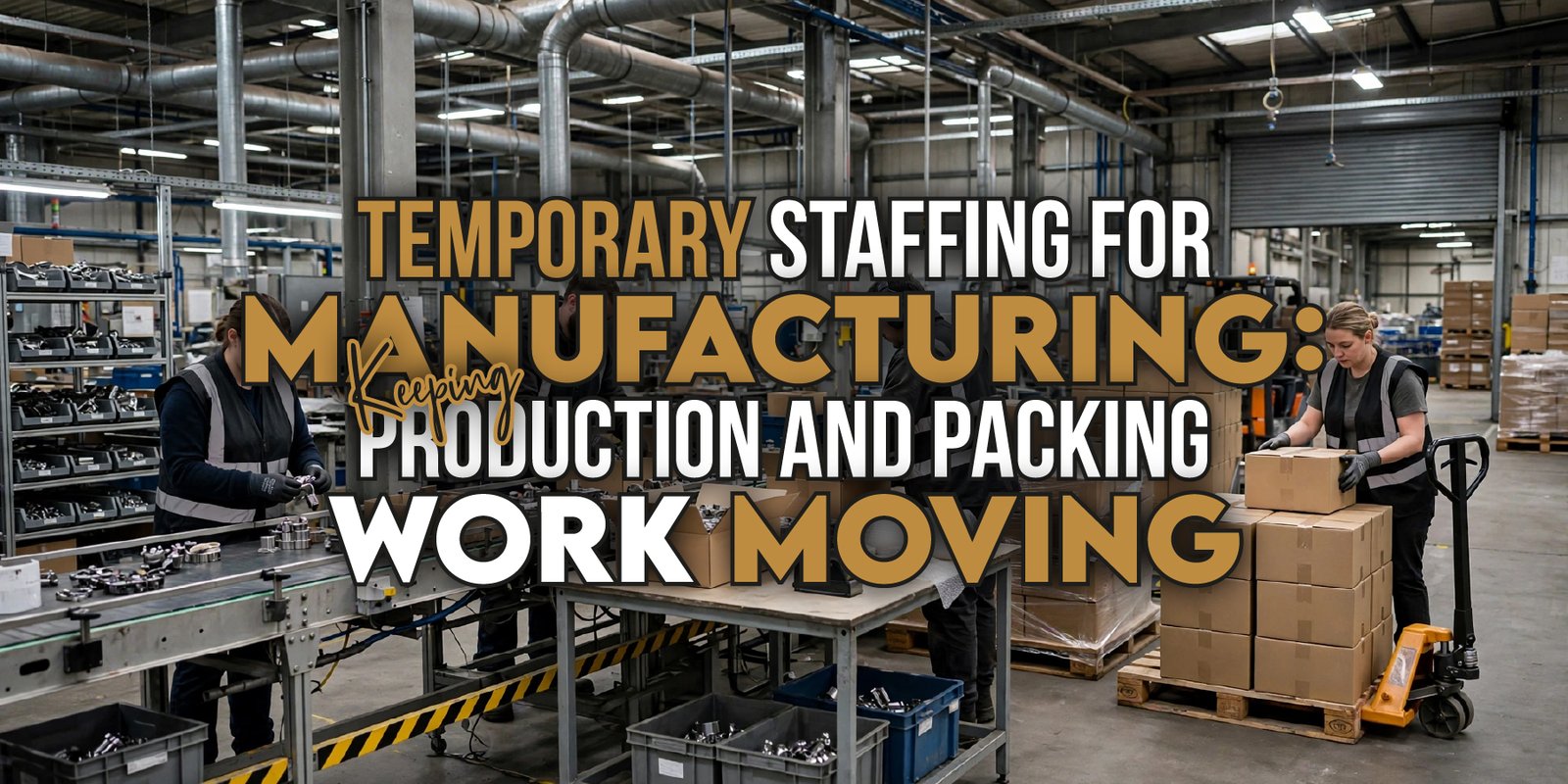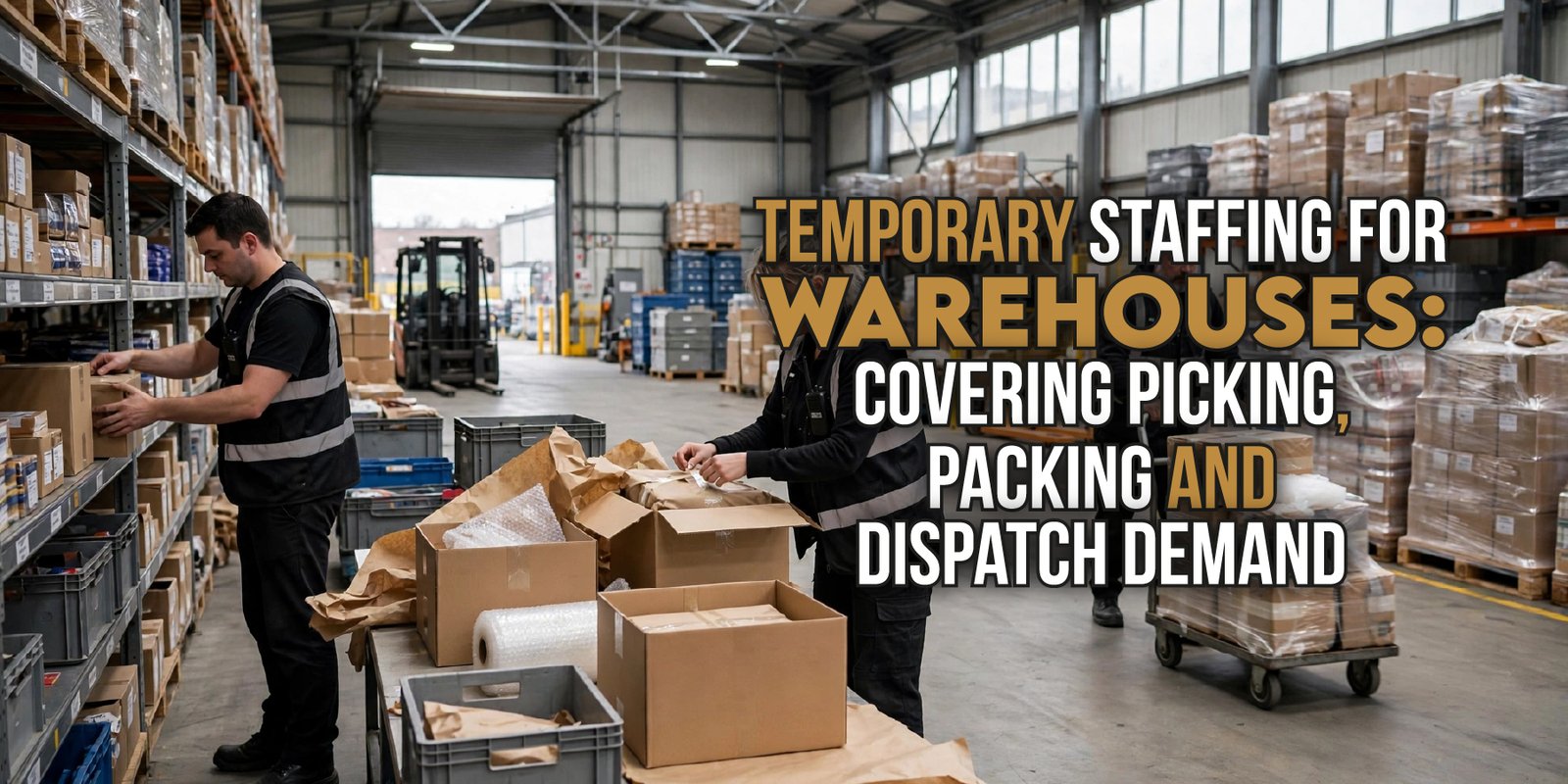
Warehouse productivity depends on having the right people in the right roles at the right time. In fulfilment centres, distribution centres, retail warehouses, e-commerce warehouses, manufacturing sites and logistics operations, staffing affects every part of the workflow. Therefore, warehouse staffing solutions can directly influence picking speed, order accuracy, dispatch performance, staff pressure and customer satisfaction.
When staffing goes wrong, problems appear quickly. Orders move slowly, dispatch teams fall behind, goods-in areas become crowded, goods-out operations lose rhythm, and supervisors spend more time fixing gaps than improving performance. In addition, poor staffing can cause missed deadlines, overtime costs, staff burnout, inaccurate orders and customer service problems.
That is why UK warehouse managers, logistics managers, operations managers, HR teams and business owners need a structured approach. Good warehouse staffing solutions do more than fill empty shifts. They help businesses reduce delays, manage seasonal demand, improve warehouse productivity and build a reliable workforce that supports long-term growth.
For H&D Recruitment, the goal is clear. Businesses need dependable warehouse operatives, practical logistics recruitment support, flexible temporary workers and a staffing plan that keeps operations moving.
What Are Warehouse Staffing Solutions?
Warehouse staffing solutions are recruitment and workforce support services that help businesses find, place and manage suitable workers for warehouse and logistics roles. These roles may include picking, packing, stock control, dispatch, goods-in, goods-out, loading, unloading, returns processing and general warehouse support.
In many UK operations, warehouse operatives work closely with logistics staff, supervisors, forklift drivers, production teams and transport teams. Therefore, the recruitment process needs to consider reliability, attendance, accuracy, speed, communication and the ability to follow warehouse processes.
Effective warehouse staffing solutions can support:
- Temporary warehouse staff
- Permanent warehouse operatives
- Seasonal warehouse workers
- Picking and packing teams
- Goods-in and goods-out support
- Stock control teams
- Dispatch workers
- Logistics staff
- Urgent shift cover
- Manufacturing and warehouse operations
- Flexible recruitment support
For businesses using external workforce support, it is also important to maintain standards, communication and process visibility. This is where advice on manage outsourcing without losing control can help companies keep stronger control over outsourced support and agency-led staffing.
Why Warehouse Productivity Depends on the Right Staff
Warehouse productivity relies on people as much as systems. Even the best warehouse software, racking layout and equipment cannot deliver results if the workforce lacks reliability or role suitability.
The right staff help improve:
- Picking accuracy
- Packing speed
- Dispatch timing
- Goods-in flow
- Goods-out control
- Stock handling
- Order fulfilment
- Shift consistency
- Team morale
- Customer service
However, unsuitable workers can slow down the entire operation. For example, if warehouse operatives do not follow picking instructions, order errors increase. If staff regularly miss shifts, supervisors need to move people between departments. Meanwhile, if logistics recruitment fails to match workers to the right duties, goods movement and dispatch can suffer.
This is why warehouse staffing solutions play such an important role in warehouse productivity. They help employers place the right people into the right functions, whether the business needs temporary staff, permanent workers, seasonal support or urgent cover.
Reactive Warehouse Hiring vs Strategic Warehouse Staffing Solutions
Reactive hiring happens when businesses start recruitment after the problem has already affected operations. A shift becomes short. Orders begin to fall behind. Staff start working overtime. Then managers rush to find workers.
This approach can create avoidable pressure.
Reactive hiring often leads to:
- Rushed recruitment decisions
- Poor worker suitability
- Higher overtime costs
- More absence pressure
- Weak onboarding
- Slower dispatch
- More picking errors
- Lower staff morale
- Repeated staffing gaps
Strategic warehouse staffing solutions work differently. They help businesses forecast demand, understand labour needs, plan flexible cover and prepare staffing support before productivity drops.
For example, a fulfilment centre that expects a busy sales period should plan temporary staff in advance. Likewise, a manufacturing warehouse that expects production increases should review seasonal workforce support before demand spikes affect output.
Strategic planning helps employers manage labour before it becomes a crisis.
How Warehouse Staffing Solutions Improve Productivity
1. They reduce labour gaps
Labour gaps reduce productivity quickly. If a picking team lacks staff, orders wait. If dispatch teams fall short, goods leave late. If goods-in lacks support, stock movement slows down.
Warehouse staffing solutions help businesses reduce these gaps by giving managers access to planned recruitment, temporary staff and urgent shift cover.
2. They improve order accuracy
Accuracy matters in every warehouse. Wrong picks, missing items, poor labelling and incorrect packing can create returns, complaints and extra costs.
With better warehouse staffing solutions, businesses can focus on warehouse operatives who understand accuracy, follow process and work well under pressure.
3. They support faster dispatch
Dispatch depends on several teams working together. Picking, packing, stock control, goods-out and logistics staff all affect final delivery performance.
When the right workers are in place, orders move faster through the warehouse. Therefore, strong staffing directly supports faster dispatch and better customer service.
4. They reduce pressure on existing teams
When warehouses run short-staffed, existing workers often carry extra duties. They may work overtime, cover more zones or rush to meet targets. Over time, this can increase fatigue and errors.
Good warehouse staffing solutions reduce pressure by adding support before teams become overloaded.
5. They help manage seasonal demand
Seasonal warehouse demand can place sudden pressure on staffing. E-commerce warehouses may need extra workers during sales campaigns. Retail warehouses may need more support before peak trading periods. Manufacturing-linked warehouses may need additional labour when production demand rises.
This is where temporary staffing for demand spikes becomes useful. With early planning, businesses can prepare temporary workers before the pressure starts.
6. They improve supervisor focus
Supervisors should focus on output, workflow, standards and team performance. However, constant staffing gaps force them to solve labour problems instead.
Reliable warehouse staffing solutions reduce this pressure and help supervisors spend more time improving warehouse productivity.
7. They support better workforce planning
A strong staffing plan helps employers understand when to use temporary warehouse staff, permanent warehouse operatives, logistics staff, seasonal workers and flexible recruitment support.
As a result, businesses can plan labour around real operational needs instead of guessing.
When to Use Temporary, Permanent, Seasonal and Flexible Staff
Different staffing needs require different solutions. Therefore, employers should match staffing type to demand, role complexity and long-term workload.
Use temporary warehouse staff when:
- Seasonal demand increases
- Dispatch backlogs appear
- Staff absence affects shifts
- E-commerce orders spike
- A short-term project raises workload
- Urgent shift cover is needed
- Picking and packing teams need extra support
Temporary workers help businesses stay flexible without committing to permanent headcount too early.
Use permanent warehouse operatives when:
- Demand stays consistent
- The role needs strong site knowledge
- Training investment needs stability
- Stock control or dispatch knowledge matters
- The business needs long-term team continuity
Permanent warehouse operatives help build operational consistency and long-term productivity.
Use logistics staff when:
- Goods-in activity increases
- Goods-out pressure rises
- Distribution work grows
- Dispatch teams need better flow
- Loading and unloading pressure increases
Logistics staff support the wider movement of goods across the warehouse and distribution process.
Use seasonal workers when:
- Peak trading periods approach
- Production demand increases
- Retail or e-commerce orders rise
- Manufacturing and warehouse operations need extra capacity
- Temporary shift cover becomes predictable
For these periods, seasonal manufacturing staffing can help businesses plan labour before demand affects output.
Use flexible recruitment support when:
- Internal hiring takes too long
- Several roles need filling quickly
- Managers need backup staffing options
- The business needs external workforce support
- Demand changes from week to week
Flexible recruitment support allows employers to respond without losing control of standards or communication.
How Logistics Recruitment Supports Long-Term Growth
Logistics recruitment plays a major role in warehouse growth. As order volumes increase, warehouses need more than extra hands. They need people who understand goods movement, timing, accuracy and teamwork.
Better logistics recruitment can help businesses:
- Improve warehouse productivity
- Reduce absence pressure
- Support seasonal demand
- Improve order accuracy
- Strengthen dispatch performance
- Reduce overtime reliance
- Support warehouse expansion
- Protect customer service
- Improve long-term workforce stability
For example, a distribution centre planning growth may need warehouse operatives, goods-in workers, dispatch staff, stock control support and logistics staff. Meanwhile, a manufacturing warehouse may need teams who understand the connection between production, packing and dispatch.
Strong warehouse staffing solutions make this growth easier to manage. Instead of reacting to pressure, employers can build a staffing pipeline that supports future workload.
How to Use Outside Staffing Support Without Losing Control
Many businesses worry that outside staffing support means losing control. However, the right process should do the opposite. It should give managers more structure, better reporting and clearer standards.
To keep control while using warehouse staffing solutions, businesses should:
- Define the role clearly
- Share shift times and expectations
- Explain warehouse processes
- Provide basic induction
- Set quality standards
- Track attendance and performance
- Keep communication clear
- Review agency worker suitability
- Give feedback quickly
- Use data to improve future recruitment
For example, if agency workers support picking and packing teams, supervisors should explain accuracy expectations, scanner processes, packing standards and escalation routes. Likewise, if temporary staff support goods-in, they should understand delivery flow, stock movement and site rules.
Businesses that use external staffing should also review keeping control of outsourced support so they can maintain standards, communication and performance without micromanaging every task.
Good staffing support should help the business gain control, not create confusion.
Warehouse Staffing Solutions Checklist
Use this checklist to review whether your current staffing process supports productivity.
Workforce demand
- Do you know how many workers each shift needs?
- Do you forecast seasonal warehouse demand?
- Do you track picking and packing pressure?
- Do you review goods-in and goods-out workload?
- Do you plan temporary staff before peak periods?
Worker suitability
- Do workers understand warehouse processes?
- Can they work accurately at pace?
- Do they have the right physical ability for the role?
- Can they follow safety expectations?
- Do they communicate well with supervisors and logistics staff?
Productivity and accuracy
- Do you track picking speed?
- Do you monitor order errors?
- Do you review dispatch delays?
- Do you track stock control issues?
- Do supervisors report staffing bottlenecks?
Agency and outside support
- Do you have clear standards for agency workers?
- Do you communicate shift requirements properly?
- Do you review attendance and performance?
- Do you maintain better control over staffing support?
- Do you provide feedback to your recruitment partner?
Seasonal and flexible planning
- Do you prepare for seasonal demand?
- Do you need staffing support during peak demand?
- Do you have backup cover for urgent shifts?
- Do your warehouse staffing solutions support long-term growth?
- Do you need to request staffing support?
If several answers are unclear, your business may need stronger warehouse staffing solutions.
Common Warehouse Staffing Mistakes That Reduce Productivity
Hiring too late
Late hiring creates pressure. If you wait until shifts become short, managers may rush recruitment decisions and accept unsuitable workers.
Choosing workers only on cost
Low-cost labour can become expensive if attendance, accuracy or productivity suffers. Employers should judge value by output, reliability and role fit.
Ignoring attendance and reliability
Warehouse productivity depends on attendance. If workers do not turn up consistently, teams fall behind and overtime increases.
Poor onboarding
New workers need clear instructions. Without proper onboarding, even experienced warehouse operatives may make mistakes.
Weak shift planning
Poor shift planning can leave one department overloaded while another has spare capacity. Therefore, staffing should match real workflow.
Not planning for seasonal demand
Seasonal peaks should not surprise warehouse managers every year. Flexible manufacturing staffing can support manufacturing and warehouse operations before demand spikes.
Not using temporary staff when needed
Some businesses rely too heavily on permanent teams during busy periods. Temporary workers can reduce pressure and protect productivity.
Poor communication with agency staff
Agency workers need the same clarity as internal staff. Explain duties, standards, reporting lines and shift expectations.
Failing to track productivity
Without productivity data, businesses cannot see where staffing gaps affect performance. Track picking rates, order errors, dispatch delays and absence patterns.
Choosing the wrong recruitment partner
A weak recruitment partner can send unsuitable workers, communicate poorly or fail to understand warehouse pressure. Choose a partner that understands warehouse staffing, logistics recruitment and operational needs.
People Also Ask
What are warehouse staffing solutions?
Warehouse staffing solutions help businesses find and manage warehouse operatives, temporary staff, logistics staff, picking teams, packing teams, dispatch workers and stock control support for daily operations and peak demand.
How do warehouse staffing solutions improve productivity?
Warehouse staffing solutions improve productivity by reducing labour gaps, improving shift cover, increasing order accuracy, speeding up dispatch and reducing pressure on existing teams.
When should a business use temporary warehouse staff?
A business should use temporary warehouse staff during seasonal demand, urgent shift cover, staff absence, dispatch backlogs, e-commerce order spikes and short-term workload increases.
Why is logistics recruitment important?
Logistics recruitment helps warehouses find workers who support goods movement, loading, unloading, dispatch, stock flow and fulfilment. Better logistics staffing can improve warehouse productivity and reduce delays.
How can businesses use agency staff without losing control?
Businesses can keep control by setting clear role expectations, giving proper induction, tracking attendance, reviewing performance, maintaining communication and working with a reliable recruitment partner.
Speak With H&D Recruitment About Warehouse Staffing Solutions
If your warehouse struggles with labour gaps, slow dispatch, order errors, seasonal demand, absence pressure or unreliable staffing, H&D Recruitment can help.
We support UK warehouse, logistics, fulfilment, retail, distribution and manufacturing businesses with practical warehouse staffing solutions. Whether you need warehouse operatives, logistics staff, temporary workers, seasonal staff, urgent shift cover or flexible recruitment support, our team can help you build a more reliable workforce.
H&D Recruitment can also support businesses that need seasonal workforce support or help managing outsourced operations while keeping standards clear.
If your current staffing process is slowing productivity, get a warehouse staffing quote or speak to H&D Recruitment about reliable warehouse operatives.
Conclusion
The right people directly affect warehouse productivity. When businesses have reliable warehouse operatives, suitable logistics staff, planned temporary workers and flexible recruitment support, they can reduce delays, improve order accuracy, manage seasonal demand and protect long-term growth.
That is why warehouse staffing solutions matter for UK fulfilment centres, distribution centres, retail warehouses, e-commerce warehouses, manufacturing businesses and logistics operations. Reactive hiring may fill a short-term gap, but strategic warehouse staffing solutions create a stronger workforce plan.
With better logistics recruitment, clearer standards, stronger communication and the right outside staffing support, businesses can improve productivity without losing control. If your warehouse needs stronger staffing support, now is the right time to review your process and request reliable warehouse operatives from H&D Recruitment.