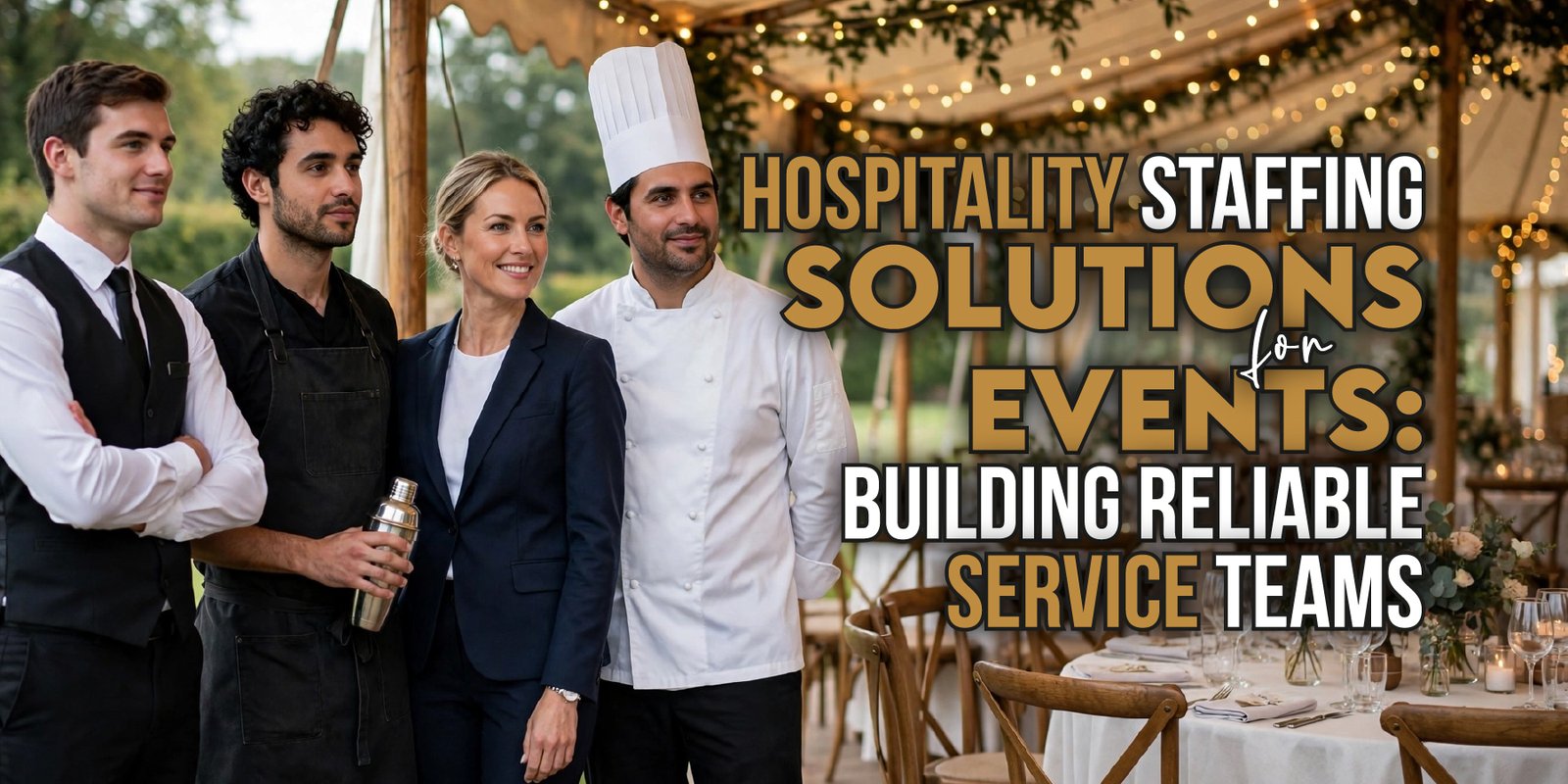
A hospitality staff shortage can damage service quality quickly. In restaurants, hotels, cafés, bars, event venues and catering businesses, staffing gaps often lead to slower service, unhappy guests, cancelled bookings, overworked teams, lower standards and lost revenue. Therefore, hospitality businesses cannot afford to treat staffing as a last-minute problem.
When the right people are missing, everything feels harder. Restaurant teams struggle with table turnover. Hotel teams miss room turnaround targets. Event venues face pressure during setup, service and close-down. Meanwhile, managers spend valuable time chasing cover instead of improving guest experience.
A strong staffing plan helps businesses reduce the impact of a hospitality staff shortage before it affects customers. It also supports restaurant staffing, hotel staff recruitment and access to temporary hospitality staff when demand rises.
This guide explains why staff shortages happen, how they affect UK hospitality businesses and how better planning, screening, onboarding and agency support can help restaurants, hotels and venues build more reliable teams.
What Causes a Hospitality Staff Shortage?
A hospitality staff shortage usually happens when demand for staff grows faster than the business can recruit, train and retain suitable workers. Sometimes the problem appears suddenly. However, in many cases, staffing gaps build slowly because businesses rely too heavily on reactive hiring.
Common causes include:
- High staff turnover
- Seasonal demand
- Weekend and evening shift pressure
- Late rota planning
- Staff sickness and absence
- Poor onboarding
- Weak recruitment screening
- Uncompetitive working conditions
- Limited candidate availability
- Sudden event bookings
- High hotel occupancy
- Increased restaurant footfall
- Poor workforce planning
For example, a restaurant may manage weekdays comfortably but struggle every Friday and Saturday evening. A hotel may cope during quieter weeks but face pressure during tourist seasons, conferences or large events. Similarly, an event venue may need extra bar staff, porters, public area cleaners and front-of-house teams at short notice.
A hospitality staff shortage becomes more serious when businesses wait until the rota is already broken. At that point, managers often rush recruitment and make weaker hiring decisions.
Why Hospitality Staff Shortages Hurt Restaurants, Hotels and Venues
A hospitality staff shortage does more than leave empty shifts. It affects the full customer experience and the commercial performance of the business.
Service quality drops
When teams work short-staffed, service slows. Guests wait longer for food, drinks, rooms, directions or support. As a result, even good businesses can receive poor reviews.
Existing staff feel more pressure
Staff shortages increase pressure on reliable employees. They may work longer hours, cover unfamiliar roles or handle more customers than expected. Over time, this can reduce morale and increase turnover.
Revenue can fall
A restaurant may turn away bookings if it lacks enough staff. A hotel may struggle to maintain room availability. A venue may limit event capacity if staffing feels uncertain.
Customer reviews suffer
Hospitality customers often judge a business by the service experience. Slow service, poor communication or tired staff can damage online reputation.
Operations become reactive
Managers spend too much time solving urgent staffing problems. Meanwhile, training, service improvement and customer experience often receive less attention.
Brand reputation becomes weaker
Restaurants, hotels and event venues rely on trust. If customers see inconsistent standards, they may choose another provider next time.
Because of this, reducing a hospitality staff shortage should become a priority for any hospitality operator that wants long-term stability.
How to Reduce Hospitality Staff Shortages
Reducing a hospitality staff shortage requires planning, not panic. Businesses need clear forecasting, better recruitment processes, stronger onboarding and flexible staffing options.
Plan staffing needs before peak periods
Start by reviewing your busiest periods. Look at weekends, holidays, school breaks, event calendars, seasonal bookings and known high-demand dates. Then plan cover before the pressure arrives.
Improve shift planning
Good shift planning helps managers match staffing levels to real demand. For example, a restaurant may need extra floor staff during dinner service, while a hotel may need more housekeeping staff after high-occupancy nights.
Use temporary hospitality staff when demand rises
Temporary hospitality staff can help during peak periods, staff absence, large bookings, events and seasonal demand. They also give businesses flexibility without long-term commitment.
Build a reliable candidate pipeline
Do not start searching only when a shift becomes urgent. Build a pool of potential workers, previous agency staff and flexible candidates who can support future needs.
Improve onboarding
Even experienced staff need clear instructions. Explain service standards, shift expectations, uniform rules, reporting lines and site procedures.
Check reliability before hiring
Reliability matters in hospitality. Staff need to arrive on time, follow shift rules and communicate properly. Strong screening helps reduce avoidable staffing issues.
Train staff for service standards
Training improves consistency. Staff should understand guest expectations, communication style, service flow and brand standards.
Avoid last-minute recruitment
Last-minute recruitment often leads to rushed decisions. Instead, review staffing needs weekly and plan ahead.
Use flexible agency support
A recruitment partner can help restaurants, hotels and venues access suitable staff faster. This matters when internal hiring cannot keep up.
Review staffing performance regularly
Track attendance, punctuality, service feedback, shift gaps and performance. Regular review helps prevent the same problems from repeating.
Restaurant Staffing: How to Avoid Service Gaps
Restaurant staffing needs careful planning because customers notice gaps straight away. One missing waiter, bar staff member or runner can slow the whole service.
To avoid service gaps, restaurants should:
- Forecast busy trading periods
- Review booking patterns
- Plan weekend rotas early
- Keep backup staff available
- Train staff for multiple service areas
- Use temporary hospitality staff during peak demand
- Monitor attendance and punctuality
- Review customer feedback after busy shifts
Restaurant staffing should also focus on attitude, speed and communication. A staff member may have experience, but they still need to work well under pressure.
For example, a busy restaurant needs waiters and waitresses who can take orders accurately, support table turnover, communicate with kitchen teams and handle guest questions calmly.
Strong restaurant staffing helps protect service flow, reviews and revenue.
Hotel Staff Recruitment: How to Maintain Service Standards
Hotel staff recruitment needs a different approach because hotels depend on several departments working together. Reception, housekeeping, porters, public area cleaners, linen teams and customer service staff all affect the guest experience.
A hospitality staff shortage in hotels can cause:
- Delayed room turnarounds
- Slower check-ins
- Poor guest communication
- Pressure on housekeeping teams
- Lower cleanliness standards
- More complaints
- Reduced repeat bookings
To maintain standards, hotel managers should plan staffing around occupancy forecasts, event schedules, group bookings and seasonal demand.
Hotel staff recruitment should focus on reliability, presentation, attention to detail and service attitude. For housekeeping teams, accuracy and speed matter. For reception staff, communication and professionalism matter. For porters and public area cleaners, flexibility and teamwork matter.
A staffing partner can help hotels access temporary hospitality staff when occupancy rises or staff absence creates pressure.
Temporary Hospitality Staff: When Should Businesses Use Them?
Temporary hospitality staff can help restaurants, hotels and event venues manage changing demand without overcommitting to permanent hires.
Businesses should use temporary hospitality staff when:
- Weekend demand increases
- Holiday periods create pressure
- Peak seasons require extra cover
- Staff absence affects service
- A major event needs support
- A hotel has high occupancy
- A restaurant receives large bookings
- A venue needs bar staff, porters or cleaners
- Banqueting or conference demand increases
- Internal hiring takes too long
Temporary hospitality staff can support roles such as waiters, waitresses, bar staff, porters, public area cleaners, housekeeping teams, reception support and venue staff.
However, temporary staff still need clear instructions. Managers should explain site rules, service standards, shift duties and reporting lines at the start of the shift. This improves performance and reduces confusion.
When planned properly, temporary hospitality staff can reduce the impact of a hospitality staff shortage and support a smoother customer experience.
Common Hospitality Recruitment Mistakes to Avoid
A hospitality staff shortage often becomes worse when businesses make avoidable recruitment mistakes.
Hiring too late
Waiting until shifts are uncovered creates pressure. Plan staffing before the rota breaks.
Choosing staff only by availability
Availability does not guarantee reliability, communication skills or customer service ability.
Ignoring reliability and punctuality
Late or unreliable staff can damage service flow. Always consider attendance and shift commitment.
Poor onboarding
Staff need clear expectations. Weak onboarding leads to confusion, mistakes and inconsistent service.
Weak shift planning
Poor rota planning creates avoidable gaps. Match staffing levels to demand, not guesswork.
Not planning for peak periods
Events, weekends, holidays and seasonal demand need early preparation.
Not using temporary hospitality staff when needed
Some businesses wait too long before using flexible support. Temporary hospitality staff can reduce pressure when demand rises.
Underestimating event staffing requirements
Events need enough people for setup, service, guest flow, cleaning, bar support and close-down.
Ignoring customer service skills
Hospitality is customer-facing. Communication, patience and professionalism matter.
Choosing the wrong recruitment partner
The wrong partner may send unsuitable workers or fail to understand hospitality standards.
Many of these problems also appear in other operational sectors. H&D Recruitment has explained recruitment mistakes employers should avoid, and the same lessons apply to hospitality businesses that want stronger staffing decisions.
Hospitality Staff Shortage Checklist
Use this checklist to review whether your business is at risk of a hospitality staff shortage.
Staffing demand
- Do you know your busiest days and times?
- Have you planned for weekends and holidays?
- Do you understand seasonal demand?
- Are event dates included in your staffing plan?
- Have you reviewed booking forecasts?
Current workforce
- Do you have enough reliable staff?
- Are existing teams regularly overworked?
- Do you have frequent sickness cover issues?
- Are staff leaving faster than expected?
- Are managers constantly chasing shift cover?
Recruitment process
- Do you start recruitment early enough?
- Do you check reliability before hiring?
- Do you assess customer service skills?
- Do you onboard staff properly?
- Do you review staff performance after shifts?
Temporary support
- Do you use temporary hospitality staff when demand rises?
- Do you have a staffing partner for urgent cover?
- Can you access extra waiters, bar staff or housekeeping staff quickly?
- Do you plan venue staffing before events?
- Are you ready to request temporary hospitality staff?
Service quality
- Are customers waiting longer than expected?
- Are reviews mentioning slow service?
- Are rooms taking longer to prepare?
- Are bar queues becoming too long?
- Are existing staff under too much pressure?
If several answers raise concerns, your business may need stronger staffing planning and recruitment support.
How Better Staffing Planning Supports Long-Term Growth
Better staffing planning helps hospitality businesses improve customer service, reduce pressure on employees, improve productivity, protect brand reputation and support long-term growth.
When staffing works properly, businesses can:
- Serve customers faster
- Increase booking capacity
- Reduce staff burnout
- Improve service consistency
- Support larger events
- Improve table turnover
- Maintain room turnaround standards
- Reduce complaints
- Build stronger customer trust
- Improve operational confidence
Staffing also affects productivity. The right people in the right roles help teams work faster, communicate better and deliver a more consistent service. H&D Recruitment has also covered staffing solutions that improve productivity, and the same thinking applies to restaurants, hotels and venues.
Better staffing does not only solve today’s rota gap. It helps the business build a more reliable operating model.
Recruitment Lessons Hospitality Businesses Can Use
Hospitality businesses can learn from other operational sectors where staffing reliability, shift readiness and productivity matter every day.
For example, warehouses and logistics teams often use structured screening, shift planning and performance tracking to improve reliability. Hospitality businesses can use the same approach to reduce a hospitality staff shortage.
Useful lessons include:
- Avoid rushed hiring decisions
- Screen for reliability early
- Match workers to real shift demands
- Plan staffing before peak periods
- Use flexible staff when workload changes
- Track attendance and performance
- Improve onboarding
- Review common staffing mistakes
- Build a stronger candidate pipeline
- Choose a recruitment partner that understands operational pressure
Avoiding common staffing mistakes helps hospitality businesses reduce disruption. Meanwhile, using reliable staffing solutions can support better service delivery during busy periods.
These lessons can help restaurants, hotels and event venues build stronger teams and reduce dependency on emergency recruitment.
People Also Ask
What causes a hospitality staff shortage?
A hospitality staff shortage can happen because of high turnover, seasonal demand, late recruitment, staff absence, poor onboarding, weak shift planning and limited candidate availability.
How can restaurants reduce staff shortages?
Restaurants can reduce staff shortages by planning rotas earlier, reviewing booking patterns, improving onboarding, checking reliability, using temporary hospitality staff and working with a recruitment partner.
Why is hotel staff recruitment important?
Hotel staff recruitment is important because reception teams, housekeeping staff, porters and public area cleaners directly affect guest experience, room turnaround times and service standards.
When should businesses use temporary hospitality staff?
Businesses should use temporary hospitality staff during weekends, holidays, peak seasons, major events, staff absence, high occupancy periods and sudden booking increases.
How does a hospitality staff shortage affect customer experience?
A hospitality staff shortage can lead to slower service, longer queues, delayed room preparation, overworked employees, poor communication, negative reviews and reduced repeat bookings.
Conclusion
A hospitality staff shortage can affect every part of a restaurant, hotel or event venue. It can slow service, reduce table turnover, delay room preparation, increase pressure on existing teams, damage reviews and reduce revenue. Therefore, hospitality businesses need to plan staffing before gaps become urgent.
Better restaurant staffing, stronger hotel staff recruitment and access to temporary hospitality staff can help businesses stay flexible during busy periods. However, the best results come from early planning, reliable screening, proper onboarding and regular performance review.
A strong staffing plan also protects brand reputation. When the right people support the right shifts, customers receive better service, employees feel less pressure and managers gain more control over operations.
If your business struggles with staffing gaps, now is the right time to review your recruitment process and build a more reliable staffing plan.
Get Hospitality Staffing Support
Struggling with a hospitality staff shortage? Request a quote from H&D Recruitment today and get reliable hospitality staffing support for your restaurant, hotel, or event venue.
Whether you need restaurant staffing, hotel staff recruitment, temporary hospitality staff, waiters, waitresses, bar staff, housekeeping teams, porters, reception support or venue staffing, H&D Recruitment can help you cover shifts and maintain service standards.
If you want dependable hospitality staff and better workforce planning, speak to H&D Recruitment and get a hospitality staffing quote today.