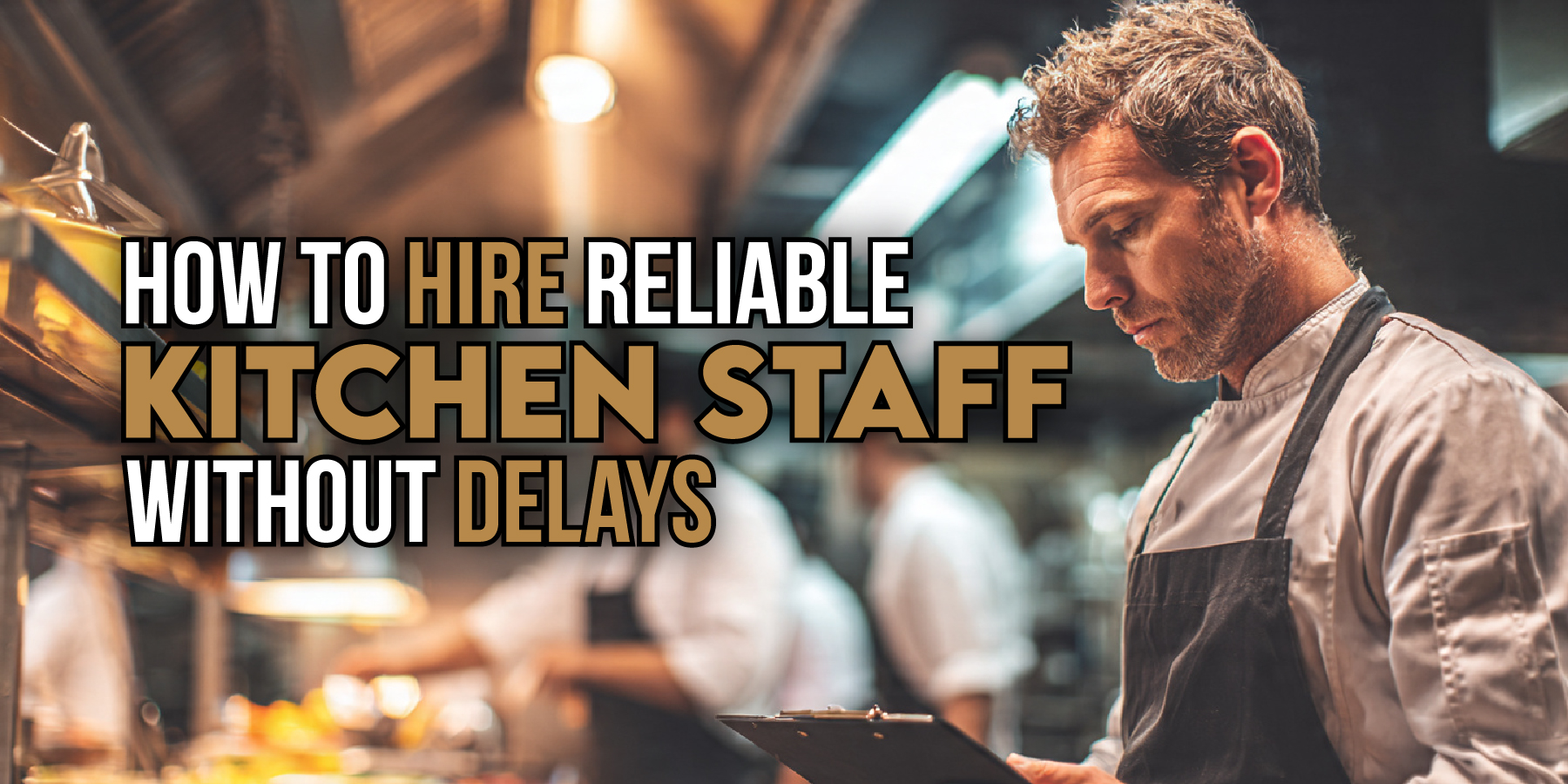
Kitchen staffing problems do not stay in the kitchen.
When a chef calls in sick, a kitchen porter fails to arrive, or a catering assistant leaves during a busy week, the entire hospitality operation feels the pressure almost immediately. As a result, orders slow down, prep falls behind, hygiene routines become inconsistent, and guest satisfaction starts to suffer.
For hotels, restaurants, catering firms, banqueting venues, and event businesses, delayed kitchen recruitment quickly turns into an operational issue rather than a simple HR task.
Therefore, knowing how to hire reliable kitchen staff quickly, without making rushed mistakes, is one of the most valuable recruitment skills in hospitality today.
The challenge is not just finding people.
Instead, it is finding kitchen workers who can:
- turn up on time
- work under pressure
- communicate with the chef team
- follow instructions
- maintain cleanliness
- support service consistently
This guide explains exactly how UK hospitality employers can reduce recruitment delays, avoid unreliable hires, and build stronger kitchen teams without lowering standards.
Why Kitchen Recruitment Delays Create Bigger Problems
A delayed office hire may slow administration.
However, a delayed kitchen hire slows service, productivity, and revenue.
Because back-of-house teams directly affect:
- food preparation speed
- cleaning rotation
- ingredient organisation
- chef efficiency
- customer wait times
- service standards
one missing team member often creates pressure on several others.
For example, a missing kitchen porter means chefs lose time clearing and washing stations. Similarly, a missing commis chef means prep tasks start stacking up before service even begins.
As a result, the kitchen becomes reactive instead of organised.
That is why hospitality businesses need a hiring process built for speed and dependability.
Define the Exact Kitchen Staffing Need First
One of the most common reasons employers lose valuable time is because they recruit too vaguely.
They simply post:
“Kitchen staff needed urgently.”
Unfortunately, that attracts broad and often unsuitable applications.
Instead, hospitality recruitment moves much faster when the role is clearly defined from the beginning.
Ask yourself:
- Do you need a chef de partie?
- Do you need a commis chef?
- Is this kitchen porter cover?
- Do you need a catering assistant?
- Is this banquet prep support?
- Is this hotel breakfast kitchen staffing?
Once the role is clear, candidate filtering becomes far faster and more accurate.
Most importantly, you avoid wasting time interviewing people who do not match the real operational need.
Know Which Kitchen Roles You Actually Need
Not all kitchen shortages are the same. Therefore, employers must identify the exact back-of-house gap before they start recruiting.
Chefs
These are responsible for menu execution, station management, cooking pace, and quality consistency.
Commis Chefs
They support senior chefs with ingredient preparation, station setup, and kitchen readiness.
Kitchen Porters
They handle washing, waste management, cleaning, and kitchen organisation. Although often underestimated, this role keeps the kitchen moving.
Catering Assistants
These staff support plating, basic food prep, service setup, and event assistance.
General Back-of-House Staff
They support deliveries, stock movement, cleaning schedules, and kitchen flow.
If all of these are advertised under one generic “kitchen staff” role, applications become mismatched very quickly.
Temporary vs Permanent Kitchen Staff. Which Is Better?
This depends entirely on urgency.
Temporary Kitchen Staff
Temporary hires are ideal for:
- sickness cover
- holiday cover
- wedding season
- conference demand
- weekend events
- hotel occupancy spikes
In these situations, temporary staffing gives immediate breathing room.
Permanent Kitchen Staff
On the other hand, permanent hires are better suited for:
- long-term restaurant kitchens
- stable hotel staffing
- catering departments with ongoing demand
However, permanent recruitment naturally takes longer because it involves interviews, references, trials, and notice periods.
Therefore, many hospitality businesses use temporary workers to stabilise operations first, then recruit permanent staff properly.
Pre-Screen Candidates Before You Interview
Many employers still waste hours interviewing people who were never suitable.
Instead, pre-screen first.
Check:
- previous kitchen role history
- similar venue experience
- weekend availability
- shift flexibility
- travel distance
- immediate start date
- hospitality references
This instantly removes unsuitable applicants.
For example, a candidate may have kitchen experience, but if they cannot work split shifts or late hotel service, they are not operationally useful.
Because of this, pre-screening saves days of unnecessary back and forth.
Experience Matters, But Reliability Matters More
Technical skill is important.
However, kitchen reliability is often the bigger hiring factor.
Hospitality businesses should assess two things together:
Technical Capability
- prep speed
- food handling
- kitchen familiarity
- cleaning standards
Workplace Behaviour
- punctuality
- shift attendance
- teamwork
- pressure handling
- instruction following
A worker with moderate experience but strong discipline usually adds more value than a highly experienced worker who arrives late or disappears after busy weekends.
Therefore, reliability should be treated as a measurable hiring requirement, not just a personal trait.
Always Check References Before Confirming the Hire
Hospitality employers under pressure often skip references because they want someone on shift immediately.
However, this creates larger problems later.
Ask previous employers:
- Did they attend shifts consistently?
- Were they punctual?
- Could they handle busy service?
- Did they leave unexpectedly?
- Would you rehire them?
Even a short reference check can reveal attendance patterns, attitude issues, or service weaknesses.
As a result, you avoid weeks of rota disruption.
Complete Right-to-Work Checks Early
Another major cause of delay happens when employers choose a candidate first and verify documents later.
This slows onboarding and often causes cancelled first shifts.
Instead, right-to-work verification should happen during the early screening stage.
That way, once the candidate is selected, they can move straight into induction.
Consequently, the hiring process becomes much smoother.
Hotel Kitchens Need Ongoing Staffing Continuity
Hotel kitchens are more demanding than standard restaurant kitchens because they often operate:
- breakfast service
- room service
- lunch cover
- conference catering
- evening dining
- banquet functions
Therefore, one staffing gap can affect several meal windows in the same day.
Because of this, many hospitality operators now rely on structured hotel kitchen staffing support rather than waiting for shortages to become emergencies. Businesses managing wider hospitality kitchen demands often benefit from specialist hotel staffing support through https://handdservices.co.uk/staffing-for-hotels/ to keep all service periods covered efficiently.
Handle Short-Notice Kitchen Staffing Gaps the Smart Way
Kitchen staffing shortages often happen suddenly due to:
- sickness
- no-shows
- resignations
- event demand
- agency dropouts
Therefore, employers need a rapid-response staffing plan.
This should include:
- backup candidate pools
- agency contacts
- role-ready briefs
- fast induction templates
- shift allocation prepared in advance
If you only begin searching after the rota is exposed, the hiring process becomes panic-driven.
Naturally, panic-driven hiring usually leads to poor choices.
Peak Hospitality Periods Need Earlier Planning
Kitchen recruitment pressure becomes much heavier during:
- Christmas parties
- summer occupancy
- wedding season
- race days
- conferences
- major weekend events
During these periods, candidate demand rises sharply.
As a result, waiting until the bookings arrive means you are competing for a smaller talent pool.
The stronger hospitality operators recruit before the demand lands.
Event and Catering Kitchens Need Flexible Support
Banqueting and event kitchens operate differently from regular service kitchens.
For example, they often experience:
- sudden guest increases
- one-day prep surges
- evening-only staffing
- mobile catering demand
Because of this, they need workers who can slot in quickly without long onboarding.
This is exactly where specialist hospitality staffing support reduces delays. Employers needing chefs, kitchen porters, or urgent event kitchen cover can reduce recruitment time significantly through dedicated kitchen hiring support at https://handdservices.co.uk/hire-reliable-kitchen/.
Onboard Quickly Without Losing Standards
Fast hiring does not mean dropping a worker into service with no briefing.
Instead, good rapid onboarding should include:
- kitchen layout explanation
- hygiene station walkthrough
- prep task assignment
- shift lead introduction
- allergen reminders
- waste handling process
- uniform standards
This usually takes less than 20 minutes.
However, it prevents hours of confusion later.
Fast Hiring vs Rushed Hiring in Hospitality Kitchens
| Fast Hiring | Rushed Hiring |
|---|---|
| Clear role brief | Vague urgent advert |
| Pre-screened staff | First available accepted |
| References checked | No checks completed |
| Documents verified early | Compliance delayed |
| Quick induction | No orientation |
| Better shift continuity | Higher no-show chance |
| Stable kitchen output | Service disruption |
In short, speed should come from structure, not desperation.
Kitchen Staff Hiring Checklist
Before confirming any kitchen worker, check:
- exact role defined
- shift hours confirmed
- similar venue experience reviewed
- references checked
- right-to-work verified
- punctuality discussed
- travel practicality checked
- immediate start confirmed
- induction ready
- rota placement planned
This checklist alone removes many common hiring failures.
Common Hiring Mistakes Hospitality Businesses Make
Hiring the First Available Candidate
Availability does not equal suitability.
Ignoring Attendance History
Repeated no-shows damage kitchen flow badly.
Using Generic Job Ads
This attracts weak applications.
Waiting Until the Kitchen Is Already Under Pressure
This creates desperate hiring.
Having No Backup Staffing Source
Hospitality needs contingency.
Skipping Structured Onboarding
Even strong workers underperform without guidance.
Final Thoughts. Fast Kitchen Hiring Should Still Be Smart Hiring
Hospitality kitchens cannot afford long recruitment delays.
At the same time, they also cannot afford unreliable hires.
Therefore, the answer is not random urgency.
The answer is structured urgency.
When employers define the role properly, pre-screen candidates, check references, verify compliance early, and maintain a dependable staffing pipeline, kitchen recruitment becomes faster and much more stable.
Ultimately, the best hospitality businesses do not wait for staffing shortages to become service crises.
They build quick hiring systems before the pressure arrives.
H&D Recruitment helps hotels, restaurants, catering firms, and event venues across the UK hire dependable kitchen staff quickly for both urgent temporary cover and long-term hospitality workforce support.
FAQs
How can I hire kitchen staff quickly?
Start with a clear role brief, pre-screen applicants, verify documents early, and use hospitality recruiters with ready candidate pools.
What should I look for in reliable kitchen staff?
Focus on punctuality, attendance record, shift flexibility, kitchen experience, teamwork, and ability to work under pressure.
How do I avoid unreliable kitchen staff?
Check references, confirm transport practicality, review previous attendance history, and avoid hiring based only on urgency.
When should I use temporary kitchen staff?
Temporary workers are ideal for sickness cover, weddings, hotel occupancy spikes, Christmas demand, and urgent short-notice shifts.
How do recruitment agencies help hospitality businesses hire faster?
They provide pre-screened, right-to-work checked, reference-cleared hospitality workers ready to move into shifts quickly.